 Bug FAQ
Pandorus Sphinx
Eumorpha pandorus · Order: Lepidoptera · Family: Sphingidae
Also called: Pandora Sphinx, Pandorus Sphinx Moth
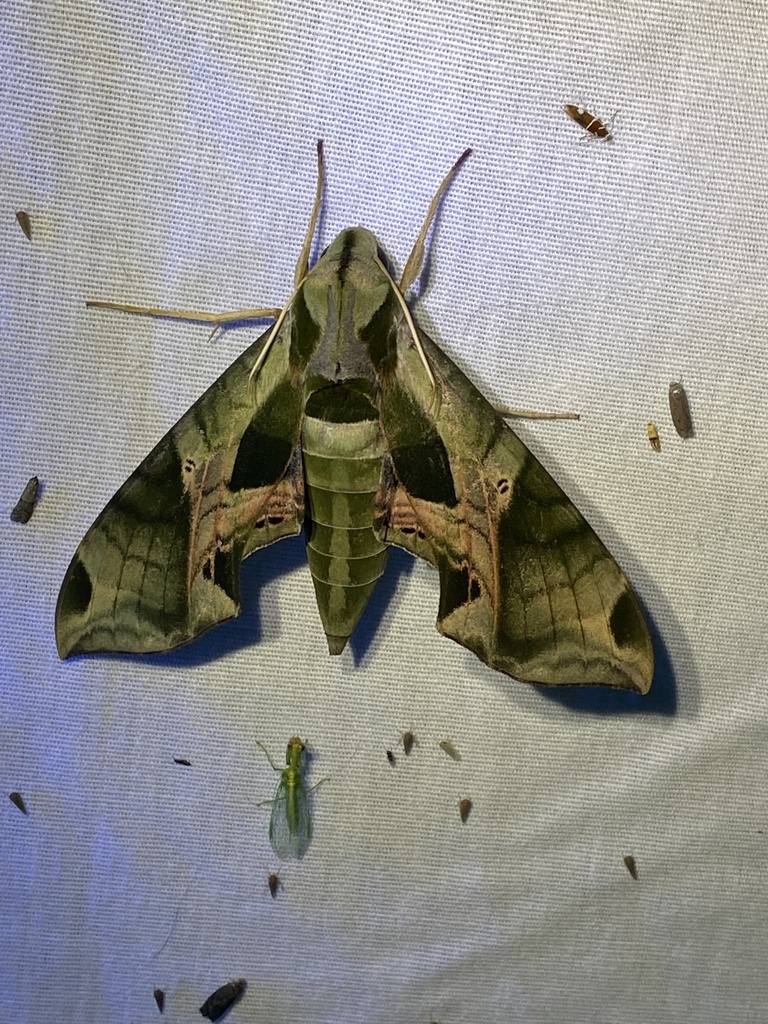
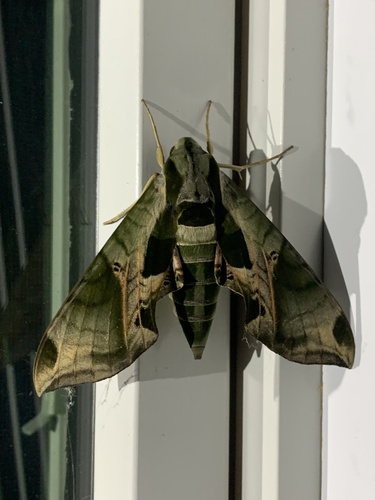
Adults have opaque, green-olive wings with distinctive green markings and a two-toned spot on the forewing’s inner margin. They are found across eastern, southeastern and central North America, from Canada down to Florida and eastern Texas, and also in the American Southwest.
Source: Wikipedia
How to recognize it
The moth’s dorsal wings are opaque with a green-olive background. Green markings appear on the forewing, including a double spot that runs along the inner margin.
Source: Wikipedia
Size
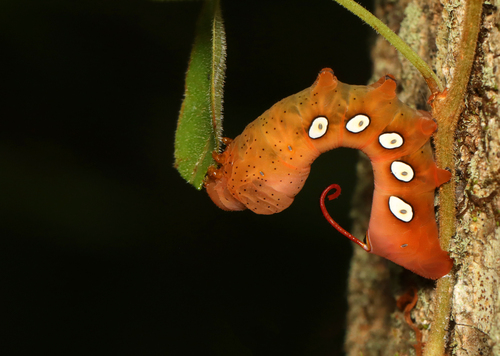
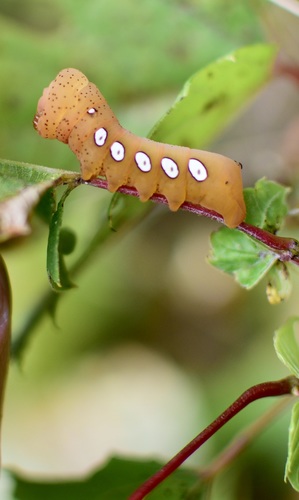
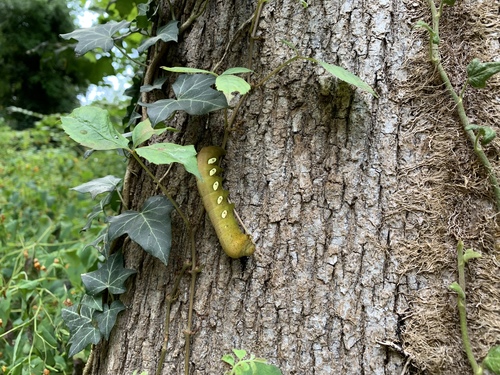
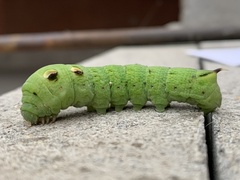
Caterpillars can reach up to 9 cm (3.5 in) in length.
Source: Wikipedia
Where it lives
It also occurs in the American Southwest.
Source: Wikipedia
What it eats
Adults feed on nectar using a long proboscis. Females lay eggs on leaves of grape vines, peppervine, and Virginia creeper.
Source: Wikipedia
Life cycle
In New York-area populations there are two generations per summer, while northern populations may have one. After the fifth larval stage, caterpillars drop to the ground and pupate underground.
Source: Wikipedia
When you see it
Adults are active at dusk. Newly emerged moths pump haemolymph into their wings to expand them.
Source: Wikipedia
Where it comes from
Eumorpha pandorus is a North American moth in the Sphingidae family. Its range includes the eastern US and parts of Canada, extending south to Florida and east Texas.
Source: Wikipedia
Lookalikes
In the southern part of its range it co-occurs with E. intermedia. It can be told apart by the shape of the darker part of the basal double spot near the outer wing margin.
Source: Wikipedia
Where it is found in the US
Recorded in 38 of 51 states and DC. Most records: North Carolina, Virginia, Texas, New York, Ohio, Pennsylvania, Maryland, Massachusetts.
Darker = more records. Counts are museum and citizen-science records, not population size.
Source: GBIF
Status: native in North America; native in Canada; native in United States. Source: iNaturalist
Months it is reported in the US
Source: GBIF
More photos
Questions people ask
What do the adult Pandora sphinx moths eat?
They sip nectar from flowers with their long proboscis.
Source: Wikipedia
Where does the Pandora sphinx lay its eggs?
Females deposit single translucent eggs on the leaves of grapes, peppervine, and Virginia creeper.
Source: Wikipedia
How many generations does the moth have in the New York area?
Two broods are produced each summer in that region.
Source: Wikipedia
Same family (Sphingidae)
 White-lined SphinxHyles lineataDamages trees, gardens or crops
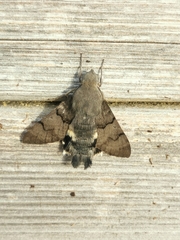 Eurasian Hummingbird HawkmothMacroglossum stellatarum
 Snowberry ClearwingHemaris diffinis
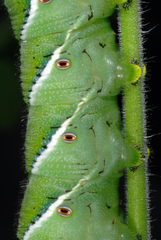 Carolina SphinxManduca sextaDamages trees, gardens or crops
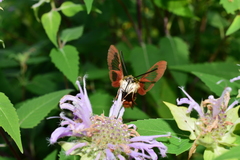 Hummingbird ClearwingHemaris thysbeDamages trees, gardens or crops
 Elephant HawkmothDeilephila elpenor
Sources
- Wikipedia: https://en.wikipedia.org/wiki/Eumorpha_pandorus
Look it up elsewhere: GBIF · iNaturalist · BugGuide · ITIS · Wikipedia
Text written 2026-10-23 from the sources above and checked sentence by sentence against them. Data fetched 2026-10-23.