 Bug FAQ
Palm Seed Weevil
Caryobruchus gleditsiae · Order: Coleoptera · Family: Chrysomelidae
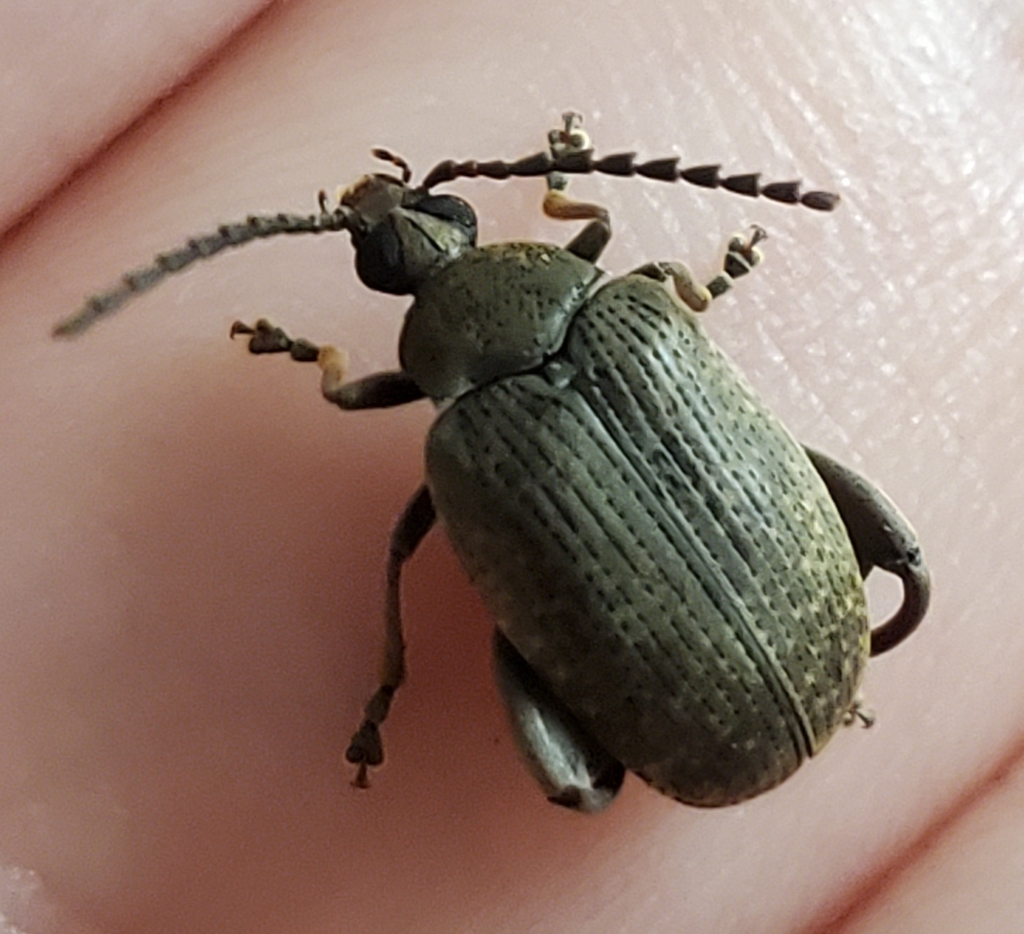
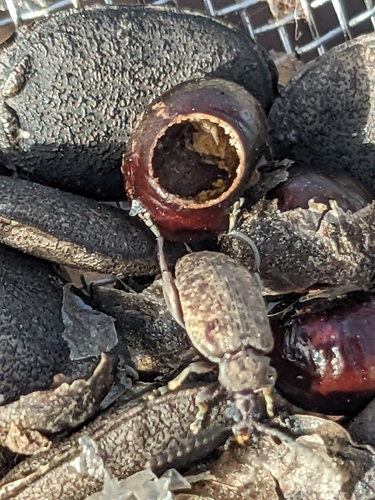
Adult palm seed weevils are black with short grey hairs and white spots on their wing covers, measuring 4 to 11 mm depending on the seed they grew in. The female lays one egg on a palm seed; the larva hatches and bores into the seed with strong mandibles, feeding on the palm tissue.
Source: Wikipedia
Size
Adults range from about 4 mm up to 11 mm long, their size reflecting the seed they grew inside.
Source: Wikipedia
Where it lives
They develop inside palm seeds and are found across North and Central America.
Source: Wikipedia
What it eats
They are palm-seed weevils that feed on the seeds of palm trees and have no known natural enemies.
Source: Wikipedia
Where it comes from
In the United States they occur in the southeast, and they also live in Mexico, the Caribbean islands and the Bahamas.
Source: Wikipedia
Lookalikes
Caryobruchus mariae from Cuba and Caryobruchus maya from southern Mexico, Belize and Guatemala are close relatives that can be confused with it.
Source: Wikipedia
Where it is found in the US
Recorded in 9 of 51 states and DC. Most records: Florida, Texas, Louisiana, Georgia, South Carolina, Alabama, Mississippi, Hawaii.
Darker = more records. Counts are museum and citizen-science records, not population size.
Source: GBIF
Months it is reported in the US
Source: GBIF
More photos
Questions people ask
How does it develop?
The female lays one egg on a palm seed; the larva hatches and bores into the seed with strong mandibles.
Source: Wikipedia
Same family (Chrysomelidae)
 Spotted Cucumber BeetleDiabrotica undecimpunctataDamages trees, gardens or crops
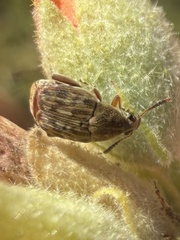 Bean WeevilAcanthoscelides obtectusDamages trees, gardens or crops
 Cowpea WeevilCallosobruchus maculatusDamages trees, gardens or crops
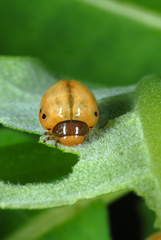 Swamp Milkweed Leaf BeetleLabidomera clivicollisDamages trees, gardens or crops
 Alder Leaf BeetleAgelastica alniDamages trees, gardens or crops
 Dogbane Leaf BeetleChrysochus auratus
Sources
- Wikipedia: https://en.wikipedia.org/wiki/Caryobruchus_gleditsiae
Look it up elsewhere: GBIF · iNaturalist · BugGuide · ITIS · Wikipedia
Text written 2026-10-25 from the sources above and checked sentence by sentence against them. Data fetched 2026-10-25.