 Bug FAQ
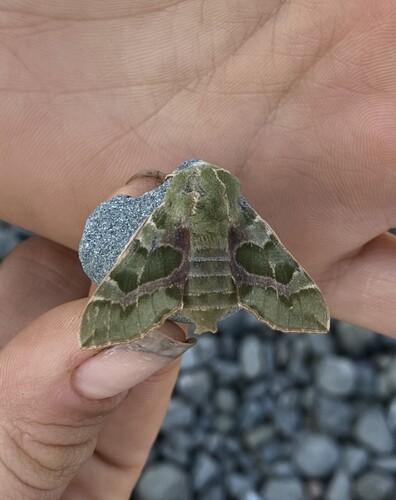
Pacific Green Sphinx
Proserpinus lucidus · Order: Lepidoptera · Family: Sphingidae
Also called: Bear Sphinx Moth, Pacific Green Sphinx Moth
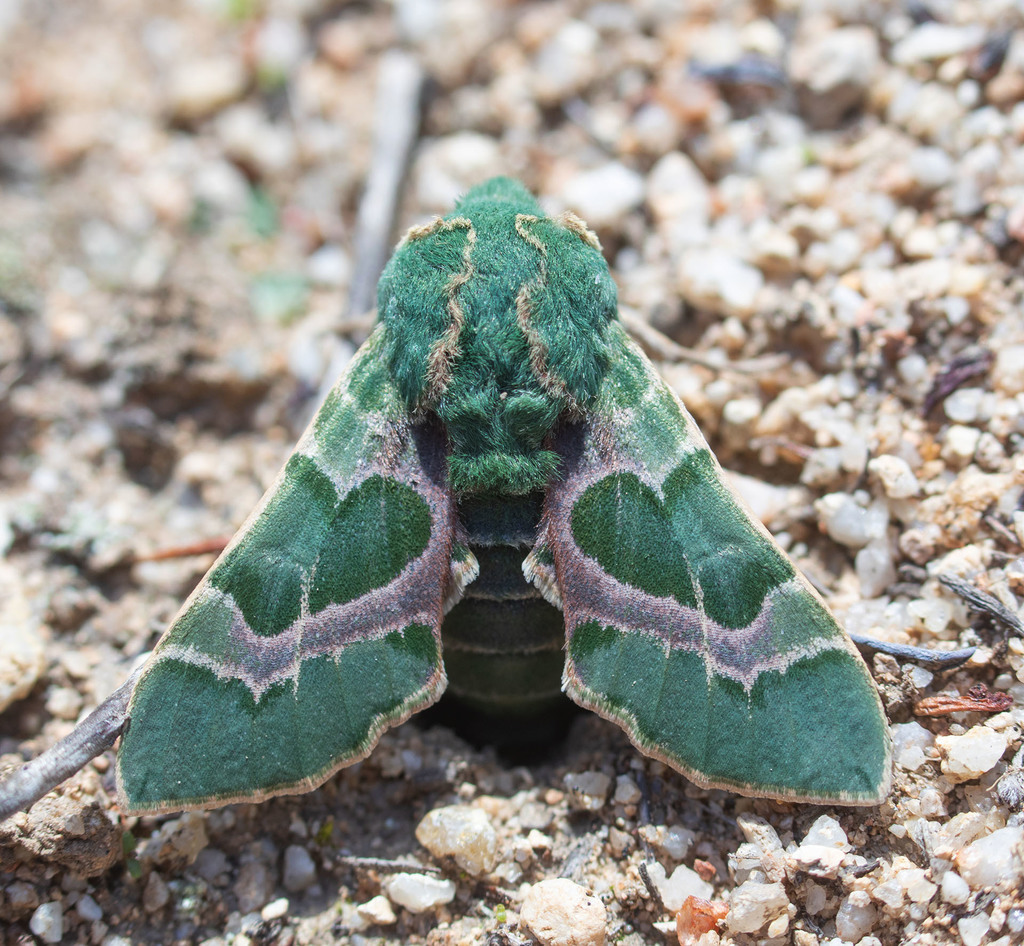
Adults fly in one winter generation from December to April and do not eat; larvae pupate a few weeks after hatching and remain in the soil until the next winter.
Source: Wikipedia
How to recognize it
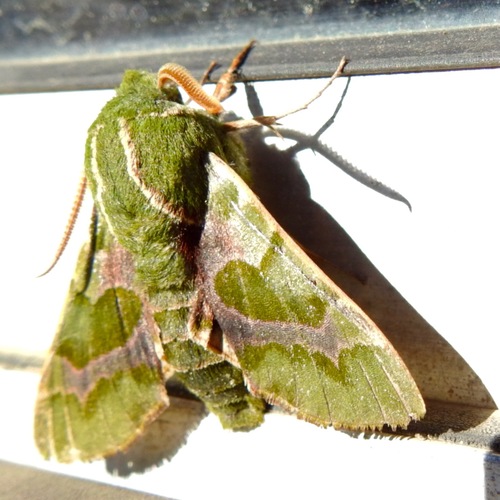
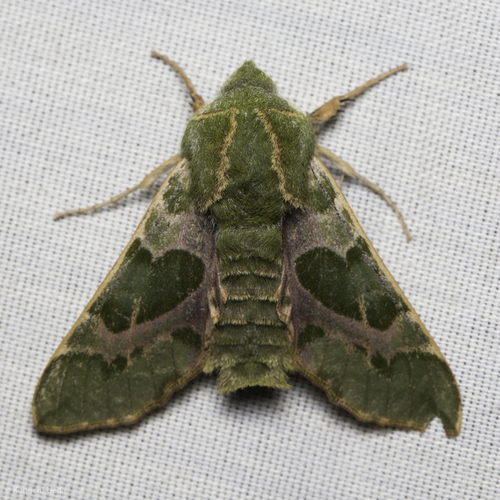
The forewings are green with pink-purple bands edged in yellow.
Source: Wikipedia
Size
Forewing length is about 22 to 23 mm.
Source: Wikipedia
Where it lives
It lives along the Pacific coast of the US in Washington, Idaho, Oregon and California.
Source: Wikipedia
What it eats
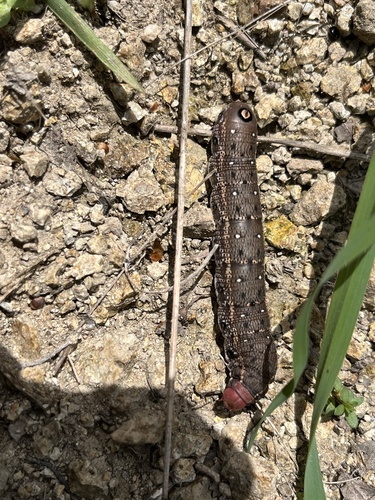
Caterpillars feed on Clarkia breweri, Clarkia modesta and probably Clarkia purpurea, as well as Camissonia bistorta and Camissonia strigulosa.
Source: Wikipedia
Life cycle
Adults are active in winter, from December through April, and they do not eat during this period. Four to five weeks after hatching, the caterpillars pupate either under leaf litter or by burrowing up to 16.5 cm into the roots of their host plants, remaining there until the next winter to emerge.
Source: Wikipedia
When you see it
Adults are on the wing from December to April.
Source: Wikipedia
Where it comes from
Its native range is the Pacific coast of the United States, specifically Washington, Idaho, Oregon and California.
Source: Wikipedia
Where it is found in the US
Recorded in 4 of 51 states and DC. Most records: California, Washington, Oregon, Idaho.
Darker = more records. Counts are museum and citizen-science records, not population size.
Source: GBIF
Months it is reported in the US
Source: GBIF
More photos
Questions people ask
When are Pacific Green Sphinx adults active?
Adults fly in winter, from December through April.
Source: Wikipedia
Same family (Sphingidae)
 White-lined SphinxHyles lineataDamages trees, gardens or crops
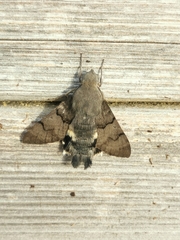 Eurasian Hummingbird HawkmothMacroglossum stellatarum
 Snowberry ClearwingHemaris diffinis
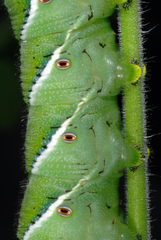 Carolina SphinxManduca sextaDamages trees, gardens or crops
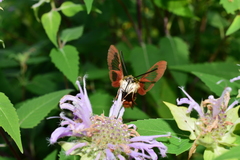 Hummingbird ClearwingHemaris thysbeDamages trees, gardens or crops
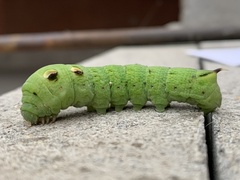 Elephant HawkmothDeilephila elpenor
Sources
- Wikipedia: https://en.wikipedia.org/wiki/Proserpinus_lucidus
Look it up elsewhere: GBIF · iNaturalist · BugGuide · ITIS · Wikipedia
Text written 2026-10-24 from the sources above and checked sentence by sentence against them. Data fetched 2026-10-24.