 Bug FAQ
Pacific Coast Tick
Dermacentor occidentalis · Order: Ixodida · Family: Ixodidae
Also called: Net tick
Source: Wikipedia
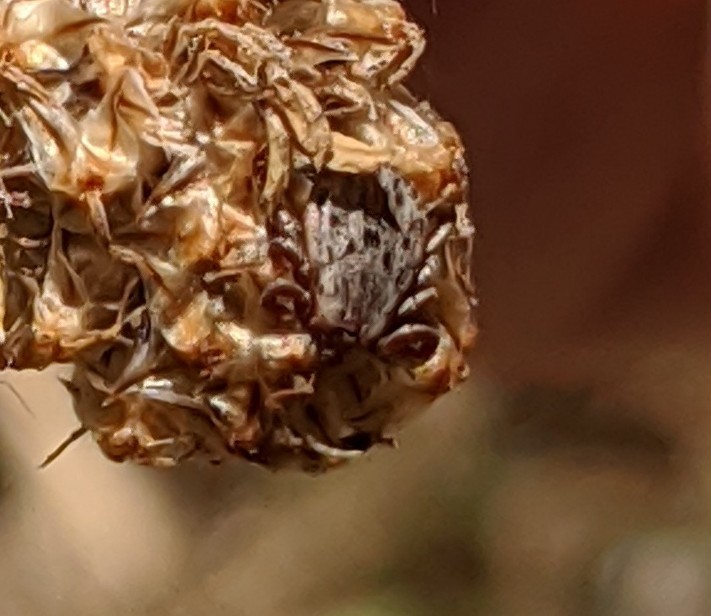
They are about 4.5 mm long when not engorged with blood. Their exoskeleton is a silvery-gray color. They live in the coastal California biome.
Source: Wikipedia
How to recognize it
The exoskeleton is silvery-gray.
Source: Wikipedia
Size
Unengorged adults measure about 4.5 mm in length.
Source: Wikipedia
Where it lives
They are found in the coastal California biome.
Source: Wikipedia
What it eats
Humans are among their host species.
Source: Wikipedia
Where it comes from
Their native range is the coastal California biome.
Source: Wikipedia
Where it is found in the US
Recorded in 5 of 51 states and DC. Most records: California, Oregon, Nevada, Utah, Washington.
Darker = more records. Counts are museum and citizen-science records, not population size.
Source: GBIF
Status: native in North America; native in United States. Source: iNaturalist
Months it is reported in the US
Source: GBIF
More photos

Questions people ask
Same family (Ixodidae)
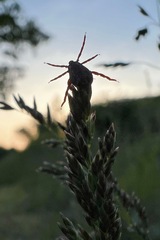 American Dog TickDermacentor variabilisCan spread germs or disease
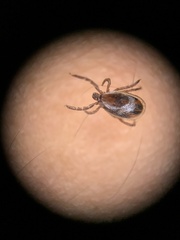 Eastern Black-legged TickIxodes scapularisCan spread germs or disease
 Lone Star TickAmblyomma americanumCan spread germs or disease
 Gulf Coast TickAmblyomma maculatumCan spread germs or disease
 Western Black-legged TickIxodes pacificusCan spread germs or disease
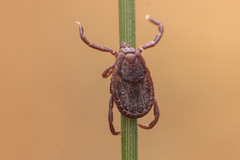 Brown Dog TickRhipicephalus sanguineusCan spread germs or disease
Sources
- Wikipedia: https://en.wikipedia.org/wiki/Dermacentor_occidentalis
Look it up elsewhere: GBIF · iNaturalist · BugGuide · ITIS · Wikipedia
Text written 2026-10-22 from the sources above and checked sentence by sentence against them. Data fetched 2026-10-22.