 Bug FAQ
Ornate Cow Tick
Dermacentor reticulatus · Order: Ixodida · Family: Ixodidae
Also called: Marsh Tick, Ornate dog tick
Source: Wikipedia
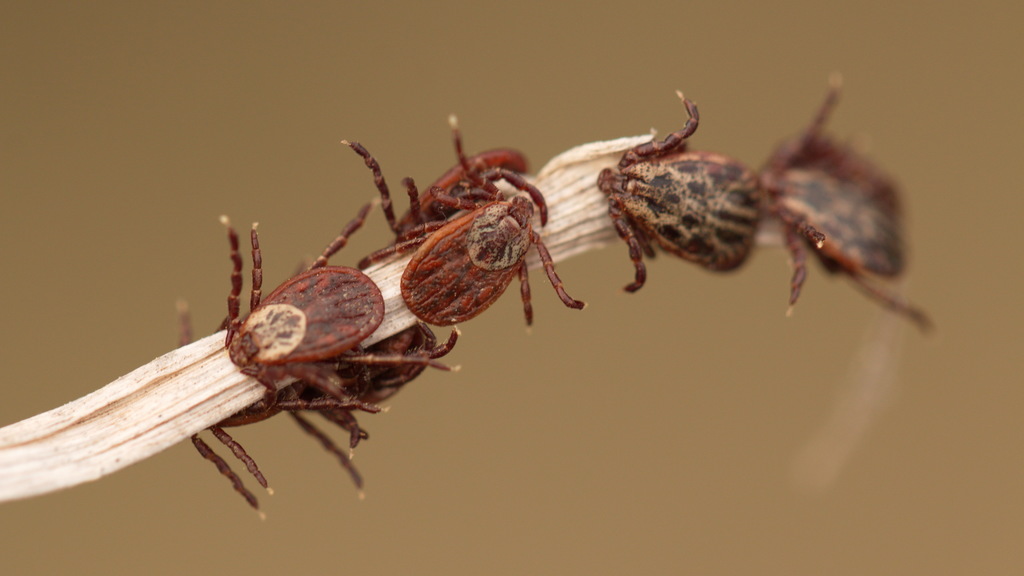
The ornate cow tick is an ornate, three-host tick found in Europe and Western Asia, usually in wooded areas. Females are 3.8 to 4.2 mm unfed and can swell to about 10 mm after feeding; males are 4.2 to 4.8 mm long. It is a known vector of various disease organisms.
Source: Wikipedia
How to recognize it
Dermacentor reticulatus is an ornate tick.
Source: Wikipedia
Size
Unfed females measure 3.8 to 4.2 mm and can expand to about 10 mm when engorged. Unfed males are 4.2 to 4.8 mm long.
Source: Wikipedia
Does it bite or sting?
It can transmit disease organisms to humans and animals.
Source: Wikipedia
Where it lives
It lives in wooded areas across Europe and Western Asia.
Source: Wikipedia
What it eats
It acts as a vector for various disease organisms.
Source: Wikipedia
Life cycle
It has a three-host development cycle.
Source: Wikipedia
Where it comes from
Its range includes Europe and Western Asia.
Source: Wikipedia
Lookalikes
Also called the ornate dog tick, meadow tick, or marsh tick, it belongs to the Ixodidae family.
Source: Wikipedia
Questions people ask
Does the ornate cow tick spread disease?
Yes, it is a known vector of various disease organisms.
Source: Wikipedia
Where is the ornate cow tick found?
It is found in Europe and Western Asia, especially in wooded habitats.
Source: Wikipedia
How big does the female become after feeding?
A fed female can swell to about 10 mm in length.
Source: Wikipedia
What is the life cycle of this tick?
It follows a three-host development cycle, with larvae hatching in 14 to 21 days.
Source: Wikipedia
Same family (Ixodidae)
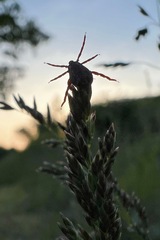 American Dog TickDermacentor variabilisCan spread germs or disease
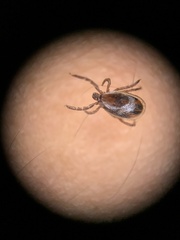 Eastern Black-legged TickIxodes scapularisCan spread germs or disease
 Lone Star TickAmblyomma americanumCan spread germs or disease
 Gulf Coast TickAmblyomma maculatumCan spread germs or disease
 Western Black-legged TickIxodes pacificusCan spread germs or disease
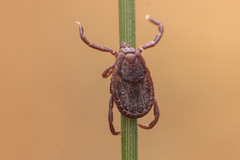 Brown Dog TickRhipicephalus sanguineusCan spread germs or disease
Sources
- Wikipedia: https://en.wikipedia.org/wiki/Dermacentor_reticulatus
Look it up elsewhere: GBIF · iNaturalist · BugGuide · ITIS · Wikipedia
Text written 2026-10-22 from the sources above and checked sentence by sentence against them. Data fetched 2026-10-22.