 Bug FAQ
Oriental Longheaded Locust
Acrida cinerea · Order: Orthoptera · Family: Acrididae
Also called: Oriental Slatface Grasshopper
Source: Wikipedia
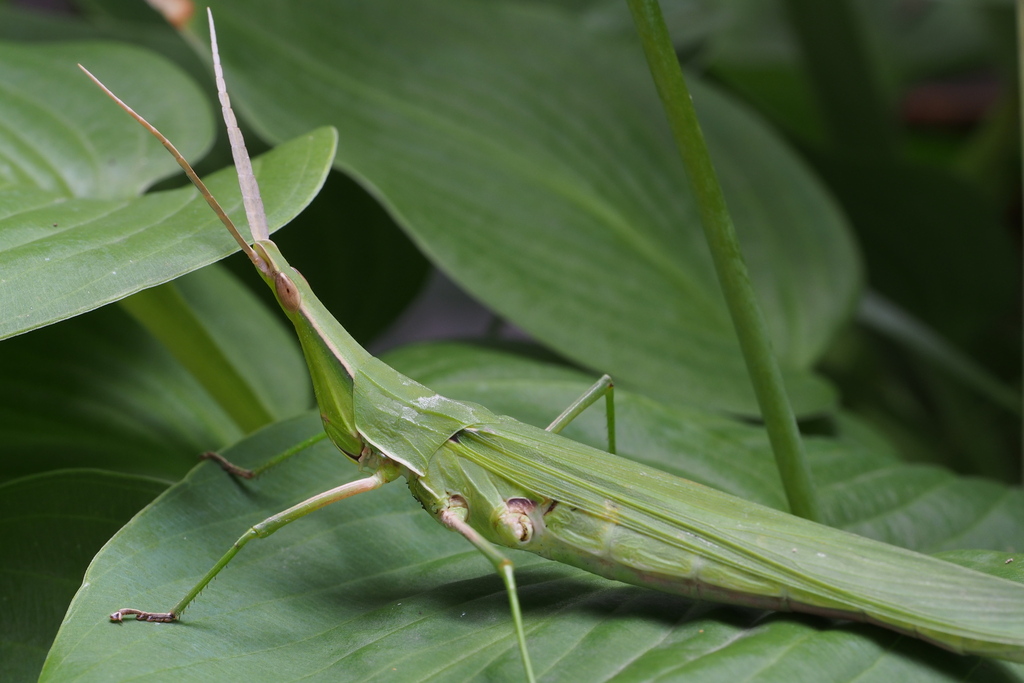
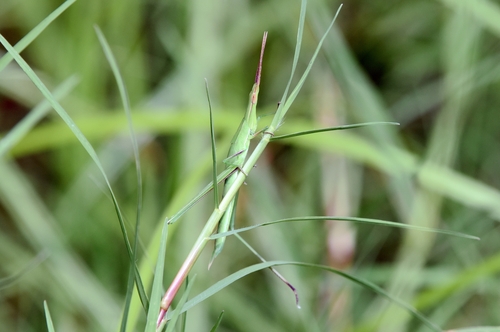
The Oriental long-headed locust is a green or brown insect with colorless wings and very long legs for jumping. Males are about 40 to 50 mm long, females 70 to 80 mm, and it lives throughout China, Korea, Japan, Southeast Asia and Indonesia. It is a pest of many crops, feeding on agricultural plants and can damage fields and gardens.
Source: Wikipedia
How to recognize it
It is green or brown with transparent wings and has very long legs for long jumps.
Source: Wikipedia
What it eats
Feeds on a wide range of agricultural crops.
Source: Wikipedia
Where it comes from
Found throughout China, Korea, Japan, Southeast Asia and Indonesia.
Source: Wikipedia
Lookalikes
Sometimes called the Oriental long-headed grasshopper or Chinese grasshopper, a name also used for Oxya chinensis.
Source: Wikipedia
More photos
Questions people ask
Does the Oriental long-headed locust damage crops?
Yes, it feeds on many agricultural crops and can cause damage to fields and gardens.
Source: Wikipedia
How big does this locust get?
Males are about 40 to 50 mm long and females 70 to 80 mm long.
Source: Wikipedia
Where is this locust found?
It occurs throughout China, Korea, Japan, Southeast Asia and Indonesia.
Source: Wikipedia
What does it look like?
It is green or brown with colorless wings and has very long legs for jumping.
Source: Wikipedia
Same family (Acrididae)
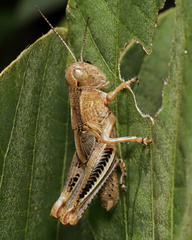 Differential GrasshopperMelanoplus differentialisDamages trees, gardens or crops
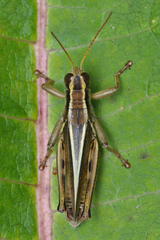 Two-striped GrasshopperMelanoplus bivittatusDamages trees, gardens or crops
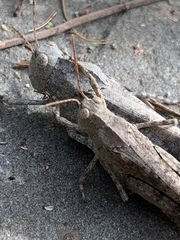 Carolina GrasshopperDissosteira carolinaDamages trees, gardens or crops
 Common Field GrasshopperChorthippus brunneus
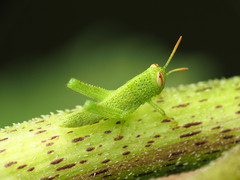 Egyptian Bird GrasshopperAnacridium aegyptium
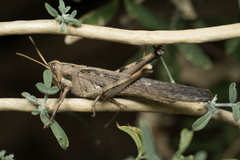 Gray Bird GrasshopperSchistocerca nitensDamages trees, gardens or crops
Sources
- Wikipedia: https://en.wikipedia.org/wiki/Acrida_cinerea
Look it up elsewhere: GBIF · iNaturalist · BugGuide · Wikipedia
Text written 2026-10-22 from the sources above and checked sentence by sentence against them. Data fetched 2026-10-22.