 Bug FAQ
Orange Palm Dart
Cephrenes augiades · Order: Lepidoptera · Family: Hesperiidae
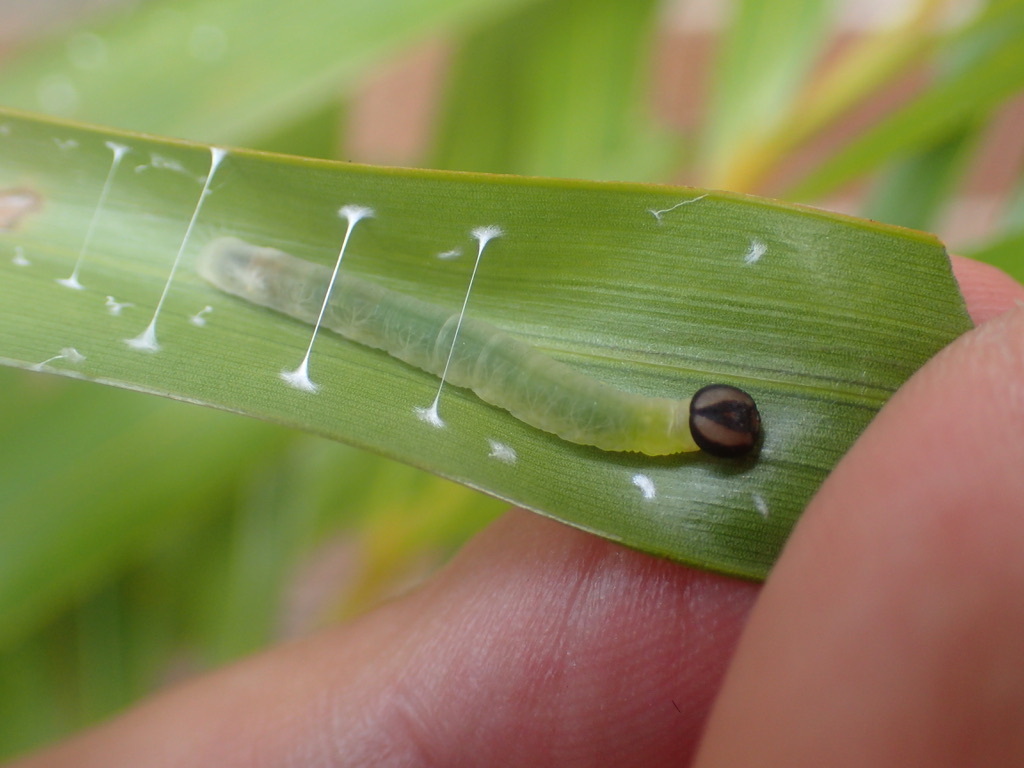
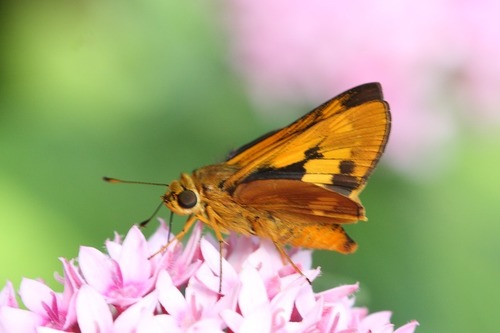
The orange palm dart is a butterfly in the skipper family Hesperiidae. Its wingspan is about 40 mm and it hides in silk-bound shelters made from folded palm fronds during the day. It occurs from Indonesia eastward to the Solomon Islands, and its larvae feed on several palm species such as Archontophoenix, Livistona and Phoenix.
Source: Wikipedia
How to recognize it
Cephrenes augiades, known as the orange palm dart, belongs to the butterfly family Hesperiidae.
Source: Wikipedia
Size
The adult’s wingspan measures roughly 40 mm.
Source: Wikipedia
Where it lives
During daylight it stays in a shelter it builds by stitching together palm frond leaves with silk.
Source: Wikipedia
What it eats
The caterpillars of the subspecies sperthias feed on palms in the genera Archontophoenix, Livistona and Phoenix.
Source: Wikipedia
Life cycle
Cephrenes augiades is a butterfly species in the family Hesperiidae.
Source: Wikipedia
Where it comes from
It is native to a region that stretches from Indonesia to the Solomon Islands.
Source: Wikipedia
More photos
Questions people ask
What plants do orange palm dart larvae eat?
The larvae feed on palm species such as Archontophoenix, Livistona and Phoenix.
Source: Wikipedia
Where is the orange palm dart found?
It occurs from Indonesia to the Solomon Islands.
Source: Wikipedia
What family does the orange palm dart belong to?
It is a butterfly in the family Hesperiidae.
Source: Wikipedia
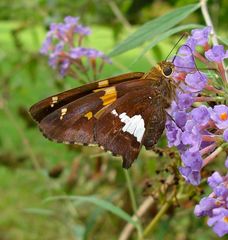
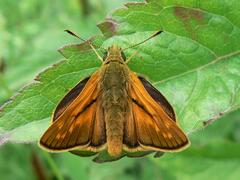
Same family (Hesperiidae)




Sources
- Wikipedia: https://en.wikipedia.org/wiki/Cephrenes_augiades
Look it up elsewhere: GBIF · iNaturalist · BugGuide · Wikipedia
Text written 2026-10-23 from the sources above and checked sentence by sentence against them. Data fetched 2026-10-22.