 Bug FAQ
Oak Leafshredder Moth
Acleris semipurpurana · Order: Lepidoptera · Family: Tortricidae
Also called: Oak Leaftier Moth
Source: Wikipedia
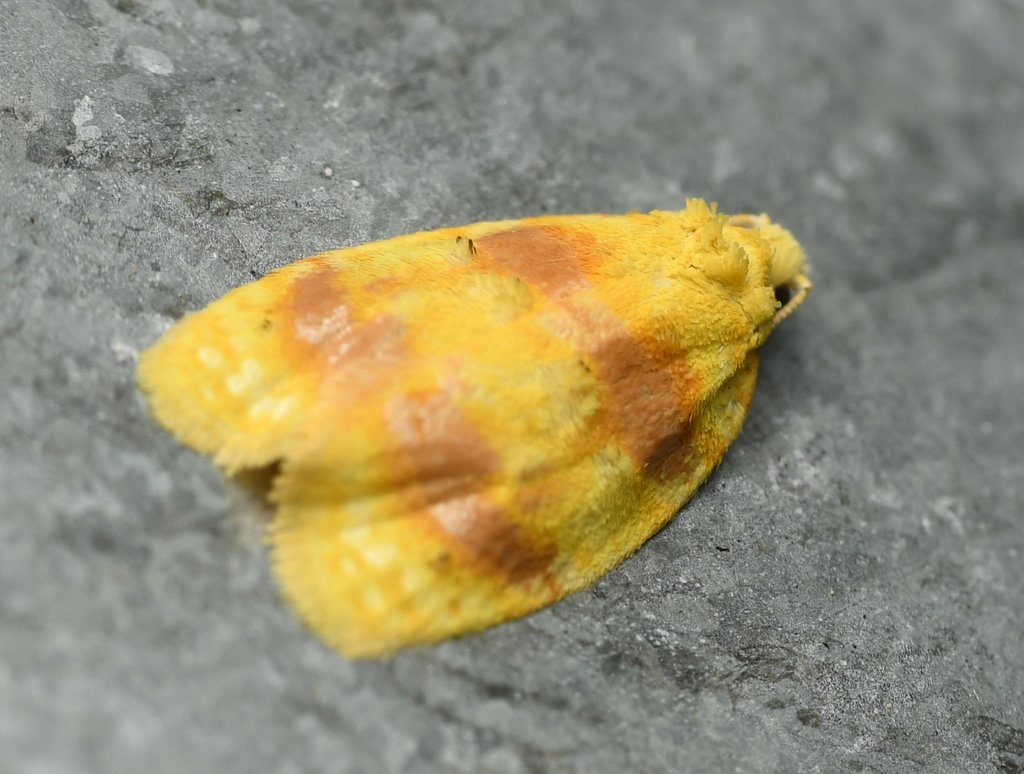
Adult oak leafshredder moths are tiny, about 12 mm wingspan, with bell-shaped wings that can be yellow, brown or purple. They live in the eastern United States and nearby parts of southeastern Canada, where they can cause serious oak defoliation.
Source: Wikipedia
How to recognize it
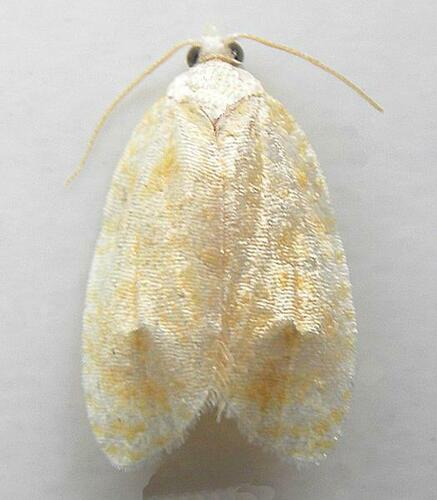
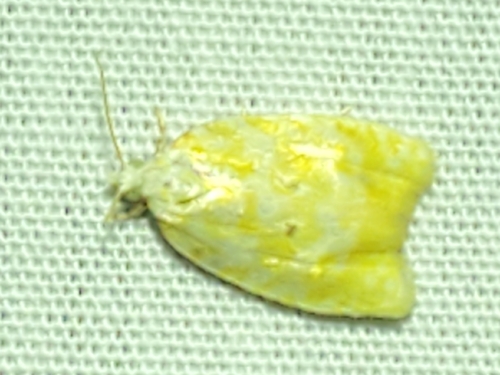
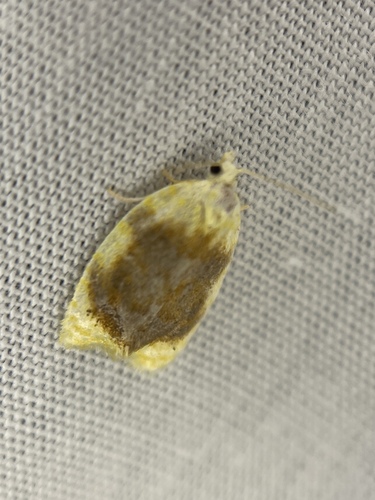
Adult wing colors vary widely, ranging from yellow to dark brown or even purple markings.
Source: Wikipedia
Size
Adults have a wingspan of about 12 mm (0.47 in). Larvae grow to about 12 mm (0.47 in) long.
Source: Wikipedia
Is it a pest in the house?
Larval feeding can cause major defoliation of oak trees, leading to considerable tree mortality especially in the Appalachians.
Source: Wikipedia
How to get rid of it
Natural predators usually keep populations in check, though chemical pesticides may be needed in severe cases.
Source: Wikipedia
What it eats
Larvae feed on oak leaves, buds and developing leaves, often creating many holes.
Source: Wikipedia
Life cycle
Adults lay single eggs on oak branches in June; eggs overwinter and hatch the following April. After emerging, adults mate within a week or two and lay the next generation of eggs.
Source: Wikipedia
When you see it
Eggs are laid in June and hatch the next April; adults emerge in late May or June after a short pupal stage.
Source: Wikipedia
Where it comes from
Their native range includes the eastern United States and nearby southeastern Canada.
Source: Wikipedia
Lookalikes
Several moth species share the common name oak leaftier, but Acleris semipurpurana is the most common and most damaging.
Source: Wikipedia
Where it is found in the US
Recorded in 31 of 51 states and DC. Most records: Texas, Michigan, New York, Connecticut, Massachusetts, Wisconsin, Florida, Ohio.
Darker = more records. Counts are museum and citizen-science records, not population size.
Source: GBIF
Status: native in North America; native in Canada; native in United States. Source: iNaturalist
Months it is reported in the US
Source: GBIF
More photos
Questions people ask
How can I control oak leafshredder moths?
Natural predators often control them, but you may need chemical pesticides if the infestation is heavy.
Source: Wikipedia
When are the moths active?
Adults lay eggs in June, eggs hatch the next April, and new adults emerge in late May or June.
Source: Wikipedia
What damage do they cause?
The larvae eat oak leaves and buds, creating many holes and can lead to serious defoliation and tree death.
Source: Wikipedia
Where are oak leafshredder moths found?
They occur in the eastern United States and adjoining southeastern Canada.
Source: Wikipedia
Same family (Tortricidae)
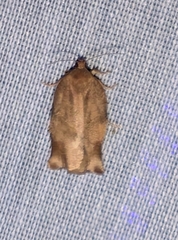 Oblique-banded Leafroller MothChoristoneura rosaceanaDamages trees, gardens or crops
 Garden TortrixClepsis peritanaDamages trees, gardens or crops
 Common MarbleSyricoris lacunanaDamages trees, gardens or crops
 Red-banded Leafroller MothArgyrotaenia velutinanaDamages trees, gardens or crops
 Light Brown Apple MothEpiphyas postvittanaDamages trees, gardens or crops
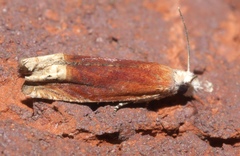 Aster and Reddish Eucosma Moths and AlliesEucosma parmatana
Sources
- Wikipedia: https://en.wikipedia.org/wiki/Acleris_semipurpurana
Look it up elsewhere: GBIF · iNaturalist · BugGuide · Wikipedia
Text written 2026-10-23 from the sources above and checked sentence by sentence against them. Data fetched 2026-10-23.