 Bug FAQ
Nuptial Scorpionfly
Panorpa nuptialis · Order: Mecoptera · Family: Panorpidae
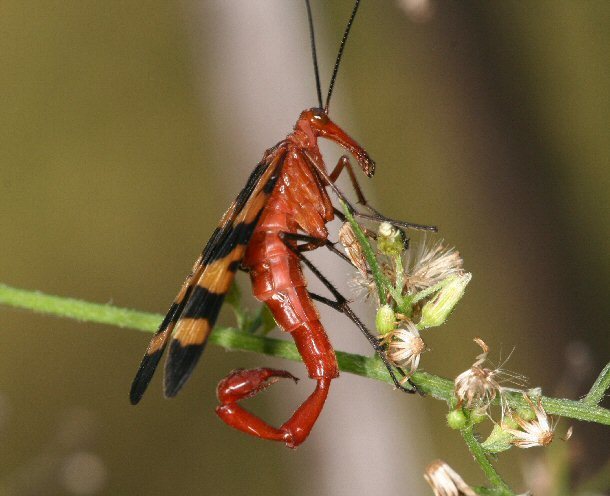
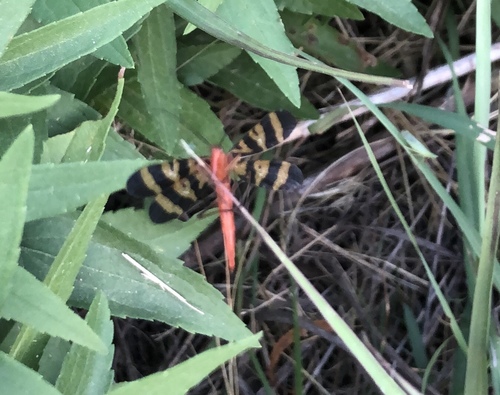
The nuptial scorpionfly grows to about an inch long. It has orange wings marked with sharp black bands. It is common in wooded and densely vegetated ravines in Texas.
Source: Wikipedia
How to recognize it
Look for orange wings with distinct angular black bands.
Source: Wikipedia
Size
Adults can reach up to one inch in length.
Source: Wikipedia
Does it bite or sting?
Despite its name, the tail is used only for mating, not for biting or stinging.
Source: Wikipedia
Where it lives
They are frequently found in Texas woodlands and thickly vegetated ravines.
Source: Wikipedia
Where it comes from
The species occurs in North America.
Source: Wikipedia
Where it is found in the US
Recorded in 10 of 51 states and DC. Most records: Texas, Oklahoma, Arkansas, Missouri, Louisiana, Mississippi, Tennessee, Kansas.
Darker = more records. Counts are museum and citizen-science records, not population size.
Source: GBIF
Months it is reported in the US
Source: GBIF
More photos
Questions people ask
What do the wings of a nuptial scorpionfly look like?
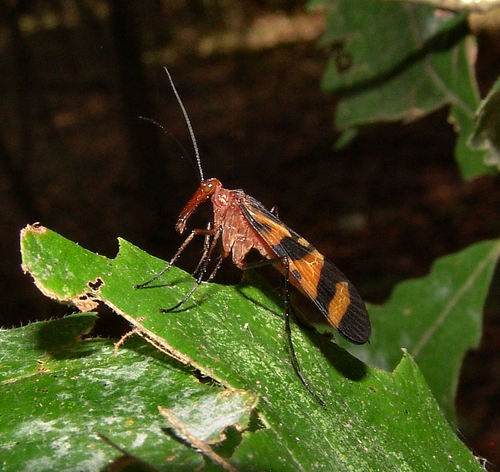
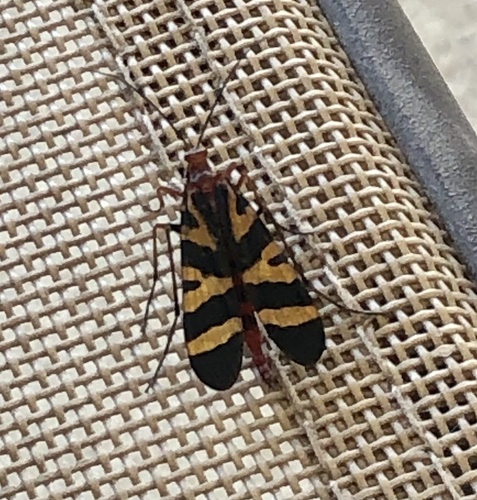
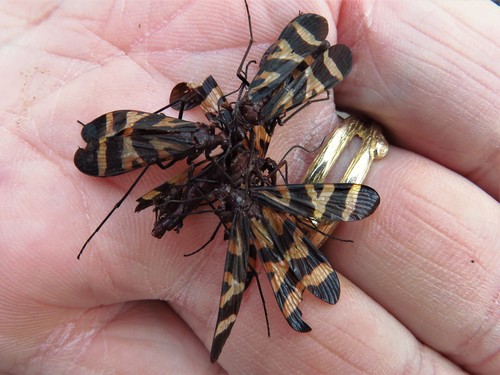
The wings are orange with sharp, angular black bands.
Source: Wikipedia
Where in Texas are nuptial scorpionflies most likely to be found?
They are common in wooded areas and densely vegetated ravines.
Source: Wikipedia
Can a nuptial scorpionfly bite or sting me?
No, its tail is used only for mating, not for biting or stinging.
Source: Wikipedia
Same family (Panorpidae)
Sources
- Wikipedia: https://en.wikipedia.org/wiki/Panorpa_nuptialis
Look it up elsewhere: GBIF · iNaturalist · BugGuide · ITIS · Wikipedia
Text written 2026-10-23 from the sources above and checked sentence by sentence against them. Data fetched 2026-10-22.