 Bug FAQ
Meadow Scorpionfly
Panorpa vulgaris · Order: Mecoptera · Family: Panorpidae
Also called: Common European Scorpionfly, common scorpionfly
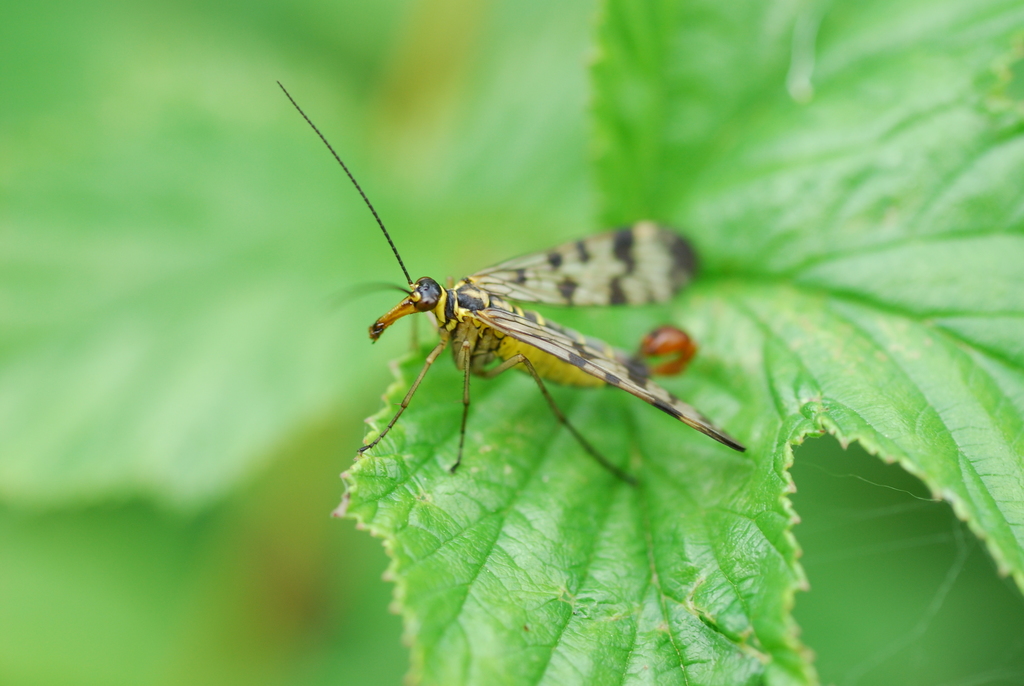
Meadow scorpionflies belong to the genus Panorpa and are found across central Europe. They live in dry, warm spots with shade, especially near low shrubs, but can also be found in cooler, moist forests. Both larvae and adults eat dead insects, and adults sometimes steal prey from spider webs while avoiding the webs themselves.
Source: Wikipedia
How to recognize it
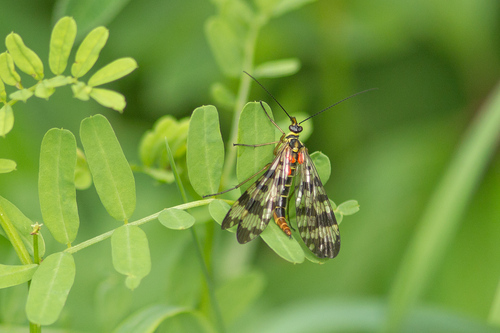
The meadow scorpionfly’s scientific name is Panorpa vulgaris.
Source: Wikipedia
Where it lives
They prefer dry, warm habitats with shade at high temperatures and are most common near the edges of low shrubs. Smaller groups live in forested areas that are moist and cool.
Source: Wikipedia
What it eats
Larvae and adults feed on dead arthropods. Adults often steal prey from spider webs and can avoid the webs while feeding.
Source: Wikipedia
Life cycle
Two generations develop each year: one overwinters in early spring and another develops in summer without diapause. Individuals can live up to about two months.
Source: Wikipedia
Where it comes from
They are commonly distributed throughout central Europe.
Source: Wikipedia
More photos
Questions people ask
What do meadow scorpionflies eat?
Both the larvae and adults feed on dead insects, and adults may also steal prey from spider webs while avoiding the webs.
Source: Wikipedia
Where are meadow scorpionflies found?
They are common in central Europe, especially in dry, warm areas with shade near low shrubs, and also in cooler, moist forest patches.
Source: Wikipedia
How many generations do they have each year?
They produce two generations annually: one that overwinters in early spring and another that develops in summer without a diapause period.
Source: Wikipedia
Same family (Panorpidae)
Sources
- Wikipedia: https://en.wikipedia.org/wiki/Panorpa_vulgaris
Look it up elsewhere: GBIF · iNaturalist · BugGuide · ITIS · Wikipedia
Text written 2026-10-22 from the sources above and checked sentence by sentence against them. Data fetched 2026-10-22.