 Bug FAQ
Common European Scorpionfly
Panorpa communis · Order: Mecoptera · Family: Panorpidae
Also called: common scorpionfly
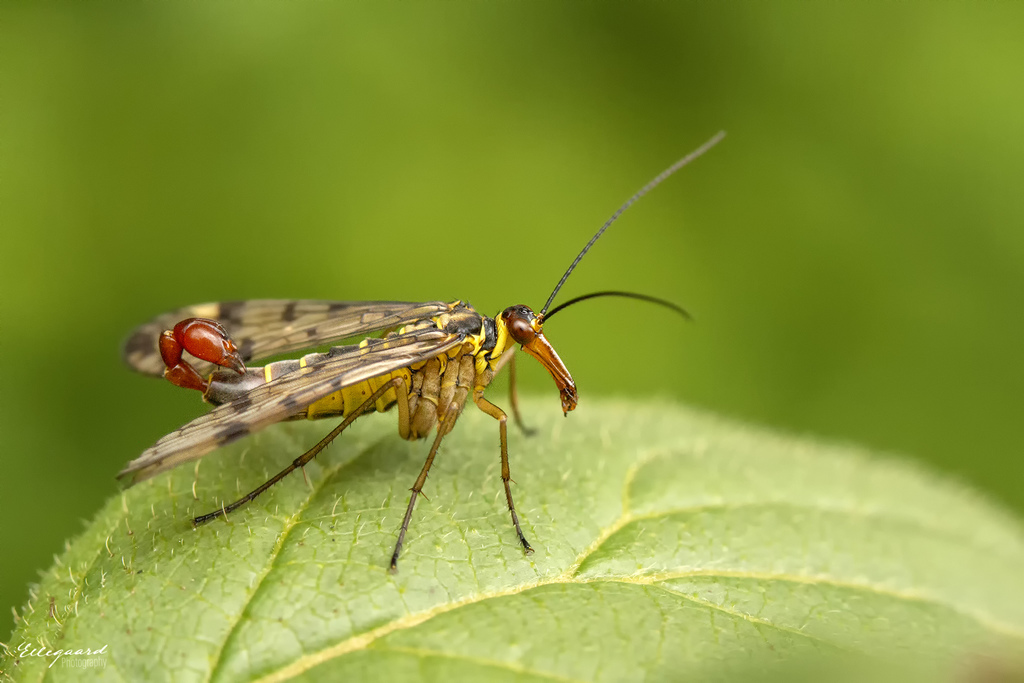
Adults are seen from May to September, live in damp, shaded hedgerows near water, and eat dead insects, occasional live aphids, and plant sap. It lays eggs in soil each year; the caterpillar-like larva grows to about 20 mm, has three pairs of true legs and eight prolegs, and both scavenges and pupates in the soil.
Source: Wikipedia
How to recognize it
Males have a pair of claspers at the tail tip that look like a scorpion’s stinger, but they are not a sting.
Source: Wikipedia
Size
Body length reaches roughly 30 mm and wingspan about 35 mm, with clear wings marked by dark spots.
Source: Wikipedia
Where it lives
Found mainly in hedgerows and nettle patches, crawling on damp, shaded vegetation near water.
Source: Wikipedia
What it eats
Adults feed on dead insects, sometimes live aphids, and plant sap; larvae are scavengers.
Source: Wikipedia
Life cycle
One generation per year; eggs are laid in soil, larvae develop there and later pupate.
Source: Wikipedia
When you see it
Adults are active from May through September.
Source: Wikipedia
Same family (Panorpidae)
Sources
- Wikipedia: https://en.wikipedia.org/wiki/Panorpa_communis
Look it up elsewhere: GBIF · iNaturalist · BugGuide · ITIS · Wikipedia
Text written 2026-10-22 from the sources above and checked sentence by sentence against them. Data fetched 2026-10-22.