 Bug FAQ
Norway Maple Seedminer Moth
Etainia sericopeza · Order: Lepidoptera · Family: Nepticulidae
Also called: Norway Maple Pigmy Moth, Norway Maple Pygmy Moth, Norway Maple Seed Miner Moth
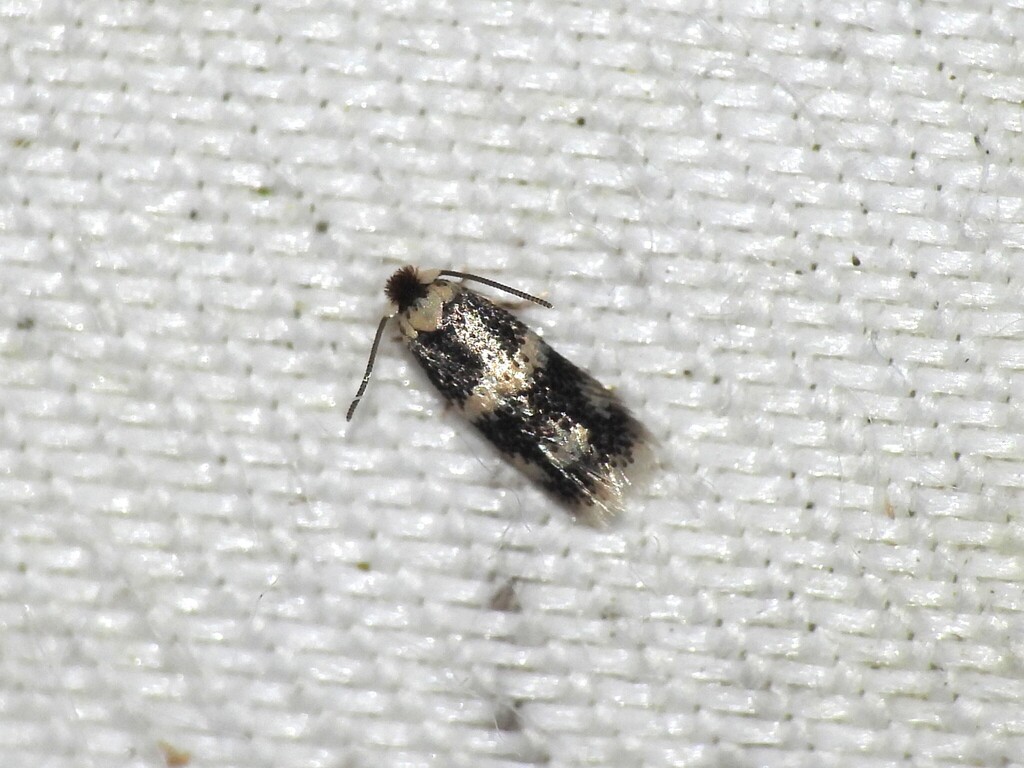
The Norway maple seedminer moth has a wingspan of about 6 to 9 mm and distinctive yellow-whitish spots on its dark forewings. Adults are on the wing in May and again in August, and the larvae mine the seeds of Norway maple (Acer platanoides).
Source: Wikipedia
How to recognize it
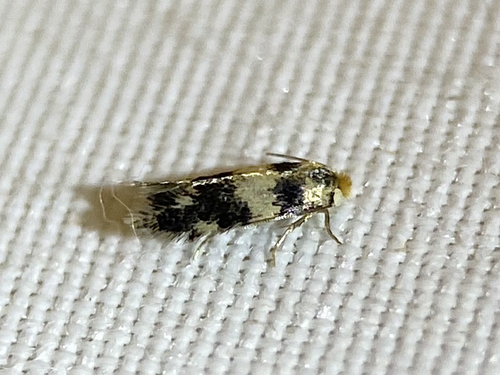
Forewings are dark with a basal spot, a bent fascia before the middle, a tornal spot and a matching costal spot that are yellow-whitish; hindwings are grey.
Source: Wikipedia
Size
The moth’s wingspan ranges from 6 to 9 mm.
Source: Wikipedia
What it eats
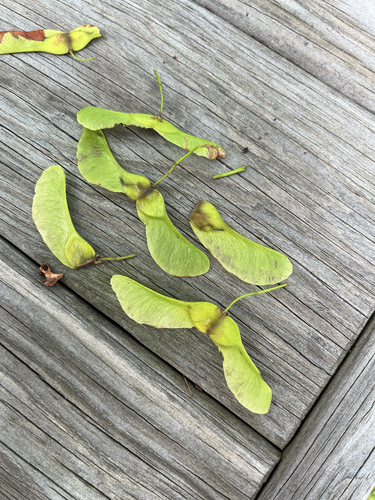
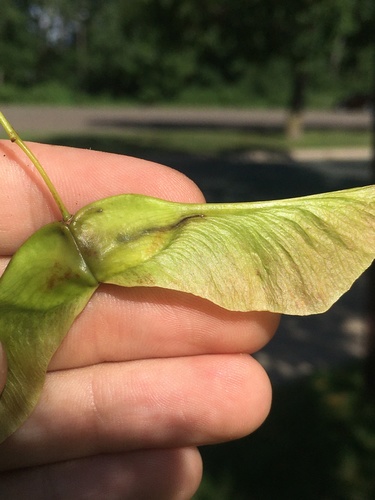
Larvae feed on the seeds of Norway maple (Acer platanoides).
Source: Wikipedia
Life cycle
Moths are active in May and again in August.
Source: Wikipedia
When you see it
Adults fly during May and August.
Source: Wikipedia
Where it comes from
Its native range covers Europe from Fennoscandinavia to the Pyrenees, Italy, Greece, Great Britain, Russia and Ukraine.
Source: Wikipedia
Where it is found in the US
Recorded in 21 of 51 states and DC. Most records: Connecticut, Massachusetts, New York, Pennsylvania, New Jersey, Michigan, Ohio, Maryland.
Darker = more records. Counts are museum and citizen-science records, not population size.
Source: GBIF
Status: introduced in Canada; introduced in United States. Source: iNaturalist
Months it is reported in the US
Source: GBIF
More photos

Questions people ask
When are Norway maple seedminer moths active?
Adults are on the wing in May and again in August.
Source: Wikipedia
What do the larvae of this moth eat?
The larvae mine the seeds of Norway maple (Acer platanoides).
Source: Wikipedia
Where can I find this moth?
It occurs across much of Europe and has also been recorded in several states and provinces of North America.
Source: Wikipedia
How can I tell this moth apart from similar species?
Look for the characteristic yellow-whitish basal spot, bent fascia, tornal spot and opposite costal spot on its dark forewings.
Source: Wikipedia
Same family (Nepticulidae)
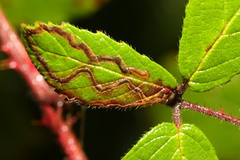 Golden PigmyStigmella aurellaDamages trees, gardens or crops
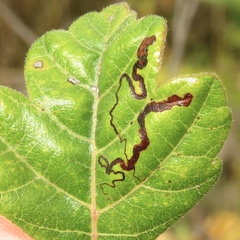 Stigmella prunifoliella groupStigmella prunifoliellaDamages trees, gardens or crops
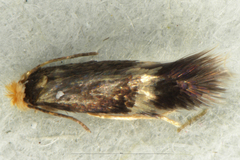 Hazel Leafminer MothStigmella microtheriellaDamages trees, gardens or crops
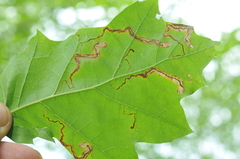 Stigmella quercipulchella groupStigmella quercipulchella
 Stigmella intermedia
 Stigmella rhoifoliella
Sources
- Wikipedia: https://en.wikipedia.org/wiki/Ectoedemia_sericopeza
Look it up elsewhere: GBIF · iNaturalist · BugGuide · Wikipedia
Text written 2026-10-28 from the sources above and checked sentence by sentence against them. Data fetched 2026-10-28.