 Bug FAQ
Golden Pigmy
Stigmella aurella · Order: Lepidoptera · Family: Nepticulidae
Source: Wikipedia
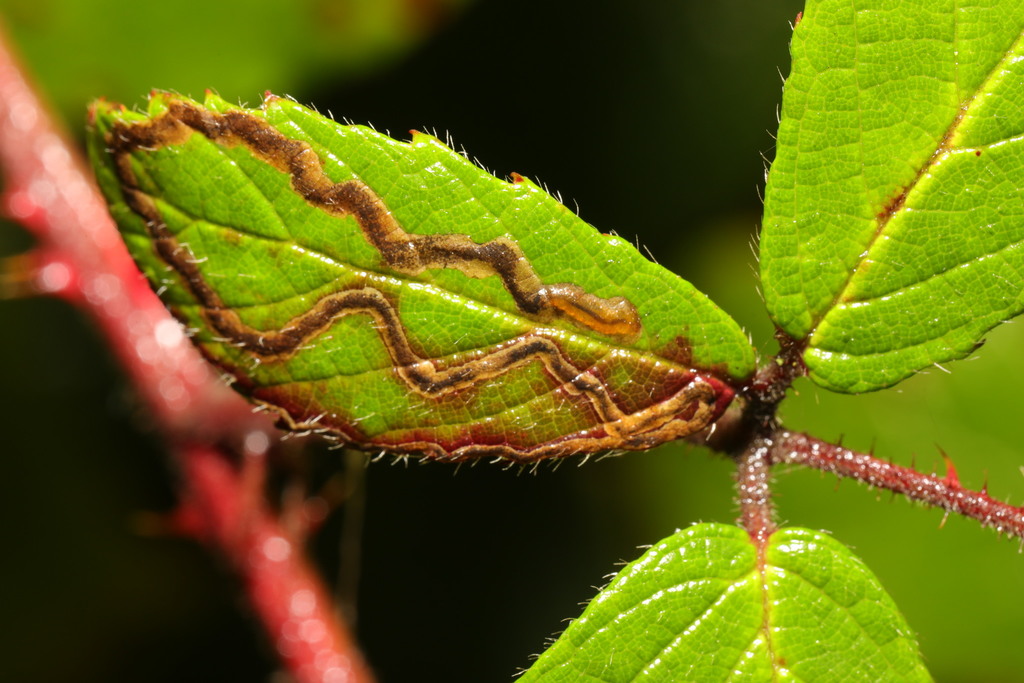
Adults are tiny moths with a 6 to 7 mm wingspan and a copper-gold forewing pattern. The larvae live inside leaves of a wide range of strawberries, raspberries, blackberries and related plants, feeding as leaf miners. They are found across Europe, the Near East and parts of the Palearctic, and fly in May and later summer.
Source: Wikipedia
How to recognize it
The head is reddish-orange, and the forewings shine copper-gold with a pale golden band beyond the middle, preceded by a dark purple band and a dark purple-fuscous tip.
Source: Wikipedia
Size
Wingspan measures about 6 to 7 mm (0.24 to 0.28 in).
Source: Wikipedia
Where it lives
It occurs throughout Europe from Ireland to Ukraine, as well as the Near East and eastern Palearctic regions.
Source: Wikipedia
What it eats
Larvae feed on many plants including common agrimony, several strawberry species, various Geum species, and many Rubus berries such as raspberry, blackberry and dewberry.
Source: Wikipedia
Life cycle
The young are leaf miners, and after feeding they pupate in a cocoon spun in detritus.
Source: Wikipedia
When you see it
Adults are on the wing in May and again later in the summer.
Source: Wikipedia
Where it comes from
The species is native to Africa, Asia and Europe.
Source: Wikipedia
More photos


Questions people ask
What plants does the golden pigmy moth damage?
Its larvae mine the leaves of strawberries, raspberries, blackberries, agrimony and related plants, which can reduce plant vigor and fruit yield.
Source: Wikipedia
When can I see adult golden pigmy moths?
Adults fly in May and again later in the summer.
Source: Wikipedia
Sources
- Wikipedia: https://en.wikipedia.org/wiki/Stigmella_aurella
Look it up elsewhere: GBIF · iNaturalist · BugGuide · Wikipedia
Text written 2026-10-22 from the sources above and checked sentence by sentence against them. Data fetched 2026-10-22.