 Bug FAQ
Northern White-Skipper
Heliopetes ericetorum · Order: Lepidoptera · Family: Hesperiidae
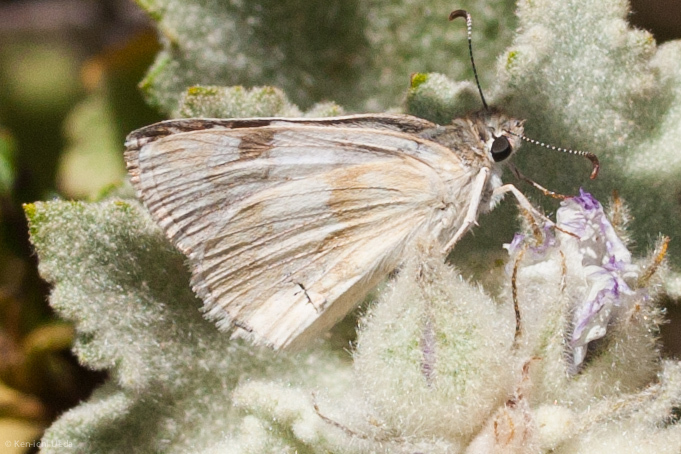
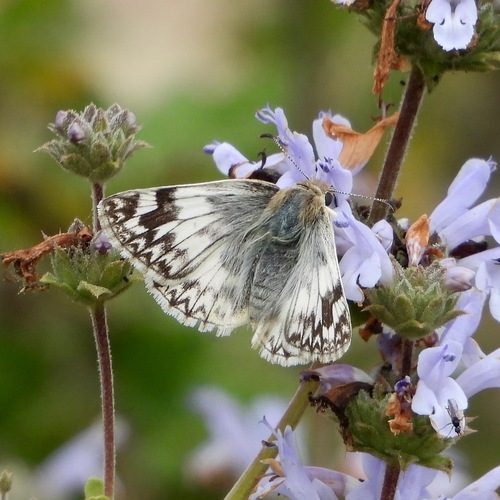
Male Northern White-Skippers are mostly white with black chevron markings along the wing edges, while females have larger, darker marginal marks and more gray or black at the wing bases. They live in open woodlands, chaparral, dry washes, desert mountains and other arid areas, ranging from eastern Washington south through western Colorado, California and Arizona, and into Baja California, Mexico. Caterpillars feed on leaves of mallow plants such as Sphaeralcea, Althaea and Malva, and the species produces two generations each year with adults flying from April to October.
Source: Wikipedia
How to recognize it
Males are mostly white with black chevron patterns along the wing margins. Females have larger, darker marginal markings and more gray or black near the wing bases.
Source: Wikipedia
Life cycle
There are two broods each year.
Source: Wikipedia
When you see it
Adults are on the wing from April through October.
Source: Wikipedia
Where it is found in the US
Recorded in 11 of 51 states and DC. Most records: California, Arizona, Washington, Nevada, Idaho, Utah, Oregon, New Mexico.
Darker = more records. Counts are museum and citizen-science records, not population size.
Source: GBIF
Status: native in North America; native in United States. Source: iNaturalist
Months it is reported in the US
Source: GBIF
More photos
Questions people ask
When are Northern White-Skippers active?
Adults can be seen flying from April to October.
Source: Wikipedia
What do the caterpillars eat?
They feed on the leaves of mallow plants such as Sphaeralcea, Althaea and Malva.
Source: Wikipedia
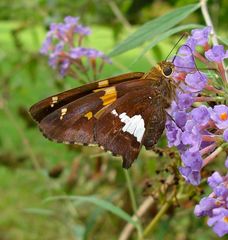
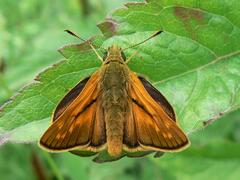
Same family (Hesperiidae)




Sources
- Wikipedia: https://en.wikipedia.org/wiki/Heliopetes_ericetorum
Look it up elsewhere: GBIF · iNaturalist · BugGuide · ITIS · Wikipedia
Text written 2026-10-23 from the sources above and checked sentence by sentence against them. Data fetched 2026-10-23.