 Bug FAQ
Northern Spur-throat Grasshopper
Melanoplus borealis · Order: Orthoptera · Family: Acrididae
Also called: Northern Grasshopper
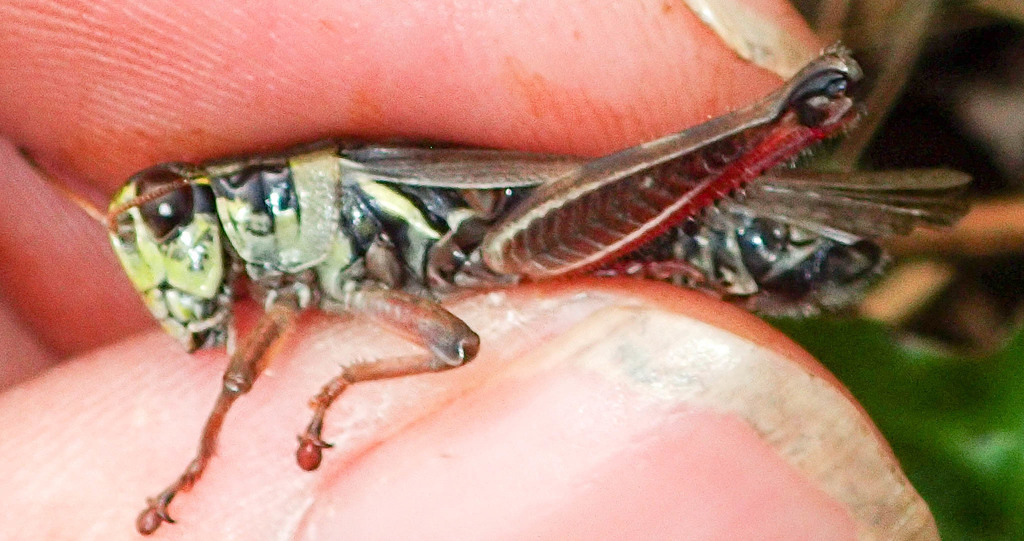
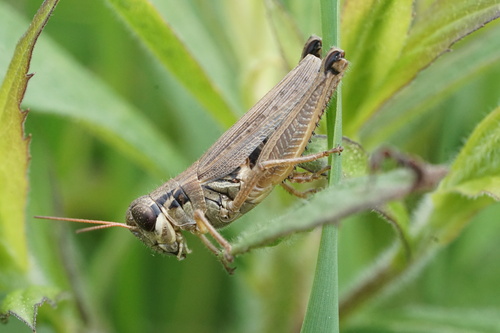
The northern spur-throat grasshopper (Melanoplus borealis) is a spur-throated grasshopper in the family Acrididae. It lives in low-lying and mountain wetlands such as swamps, moist meadows and bogs. It is found across North America and feeds mainly on herbaceous plants, especially forbs, and will sometimes eat grasses or cultivated crops.
Source: Wikipedia
Where it lives
It prefers wet habitats like swamps, moist mountain meadows and bogs.
Source: Wikipedia
What it eats
It mainly eats forbs and will occasionally feed on grasses or adult crops.
Source: Wikipedia
Where it comes from
It is native to North America.
Source: Wikipedia
Where it is found in the US
Recorded in 30 of 51 states and DC. Most records: Colorado, Michigan, Alaska, Wyoming, Massachusetts, Utah, Minnesota, New Mexico.
Darker = more records. Counts are museum and citizen-science records, not population size.
Source: GBIF
Status: native in North America; native in Canada. Source: iNaturalist
Months it is reported in the US
Source: GBIF
More photos
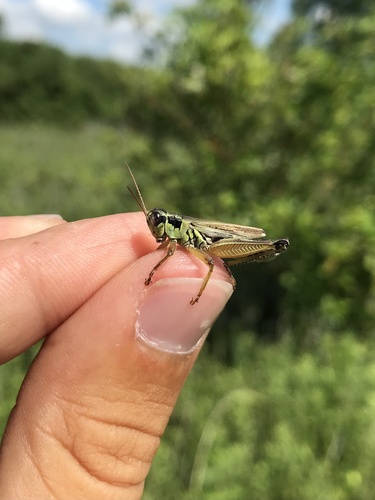
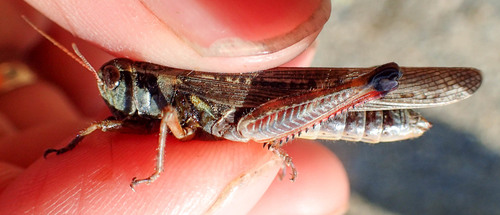
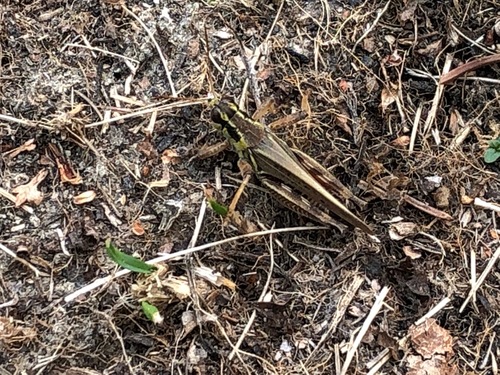
Questions people ask
What does the northern spur-throat grasshopper eat?
It primarily feeds on forbs and may also eat grasses or cultivated crops.
Source: Wikipedia
Where does the northern spur-throat grasshopper live?
It lives in lowland and mountain wetlands such as swamps, moist meadows and bogs.
Source: Wikipedia
Is the northern spur-throat grasshopper found in North America?
Yes, it is native to North America.
Source: Wikipedia
Same family (Acrididae)
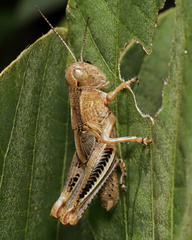 Differential GrasshopperMelanoplus differentialisDamages trees, gardens or crops
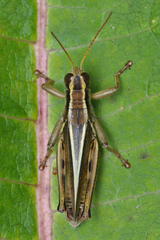 Two-striped GrasshopperMelanoplus bivittatusDamages trees, gardens or crops
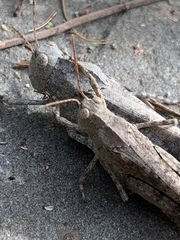 Carolina GrasshopperDissosteira carolinaDamages trees, gardens or crops
 Common Field GrasshopperChorthippus brunneus
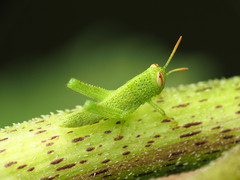 Egyptian Bird GrasshopperAnacridium aegyptium
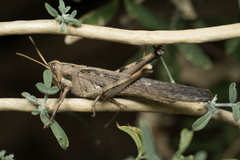 Gray Bird GrasshopperSchistocerca nitensDamages trees, gardens or crops
Sources
- Wikipedia: https://en.wikipedia.org/wiki/Melanoplus_borealis
Look it up elsewhere: GBIF · iNaturalist · BugGuide · ITIS · Wikipedia
Text written 2026-10-23 from the sources above and checked sentence by sentence against them. Data fetched 2026-10-23.