 Bug FAQ
Neotredecim Periodical Cicada
Magicicada neotredecim · Order: Hemiptera · Family: Cicadidae
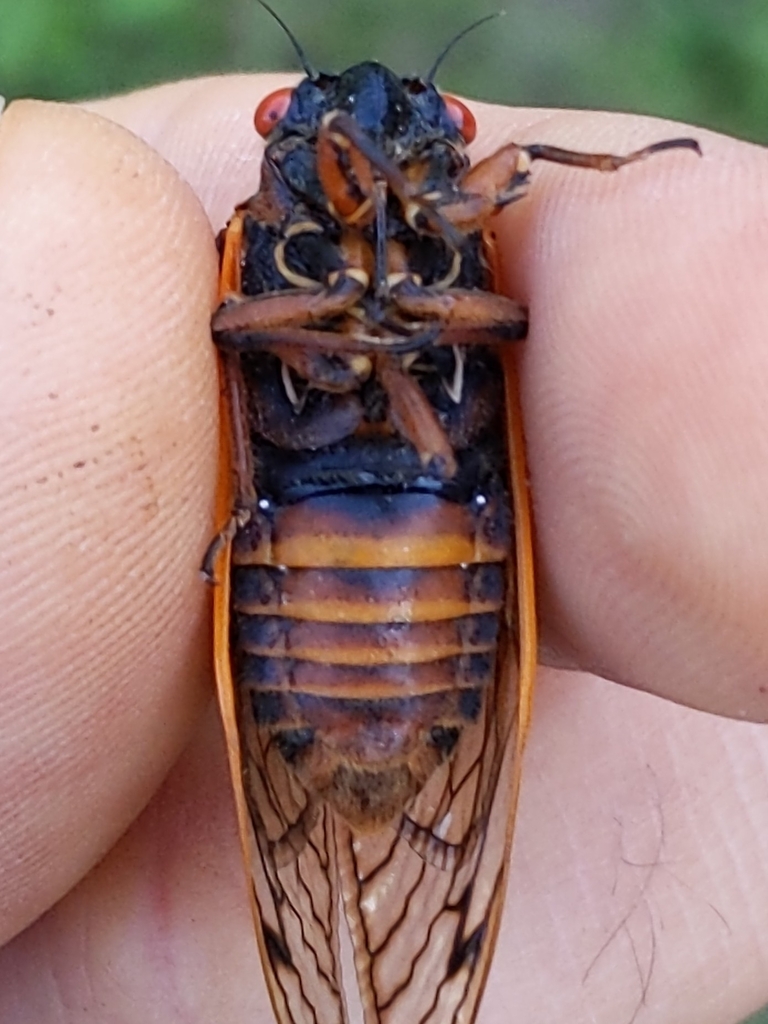
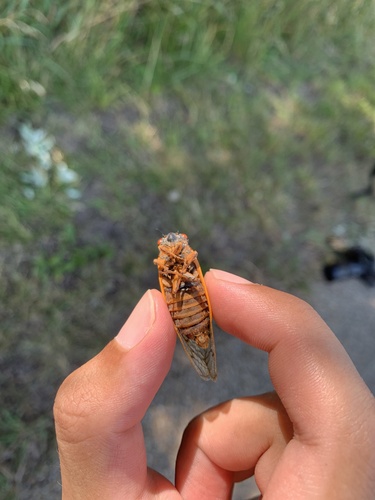
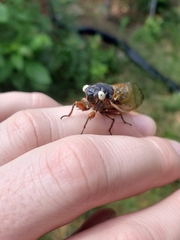
Magicicada neotredecim has reddish eyes, wing veins, a black dorsal thorax, and broad orange stripes on its abdomen. It emerges in a narrow band from southern Indiana to northwest Arkansas, where four 13-year periodical cicada species coexist. Its median life cycle is about thirteen years, but individuals may develop in as few as nine or as many as seventeen years.
Source: Wikipedia
How to recognize it
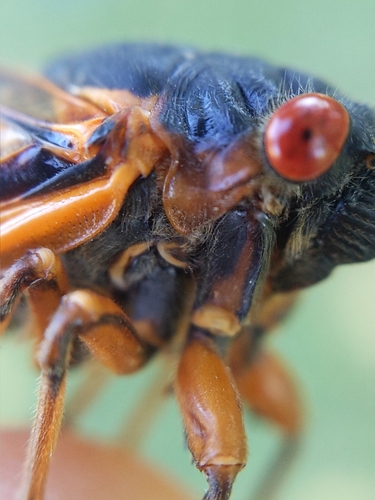
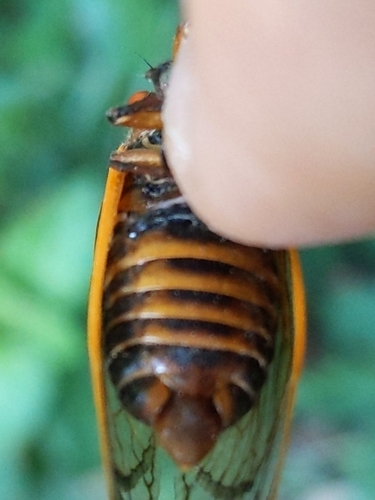
Like other Magicicada, it has reddish eyes, wing veins and a black dorsal thorax. Both sexes show broad orange stripes on the abdomen.
Source: Wikipedia
Life cycle
Some individuals may complete their cycle in as few as nine years or as many as seventeen years.
Source: Wikipedia
Lookalikes
It is very similar to Magicicada tredecim, differing only slightly. Together with M. tredecim and M. septendecim, it is grouped as a “decim periodical cicada.”
Source: Wikipedia
Where it is found in the US
Recorded in 4 of 51 states and DC. Most records: Illinois, Missouri, Arkansas, Indiana.
Darker = more records. Counts are museum and citizen-science records, not population size.
Source: GBIF
Months it is reported in the US
Source: GBIF
More photos
Same family (Cicadidae)

Sources
- Wikipedia: https://en.wikipedia.org/wiki/Magicicada_neotredecim
Look it up elsewhere: GBIF · iNaturalist · BugGuide · ITIS · Wikipedia
Text written 2026-10-25 from the sources above and checked sentence by sentence against them. Data fetched 2026-10-25.