 Bug FAQ
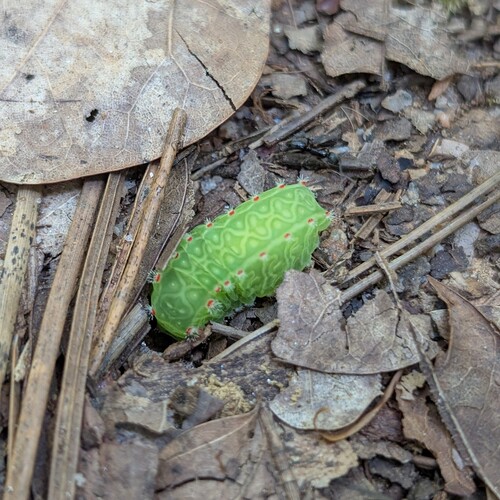
Nason's Slug Moth
Natada nasoni · Order: Lepidoptera · Family: Limacodidae
Also called: Nason's Slug
Source: Wikipedia
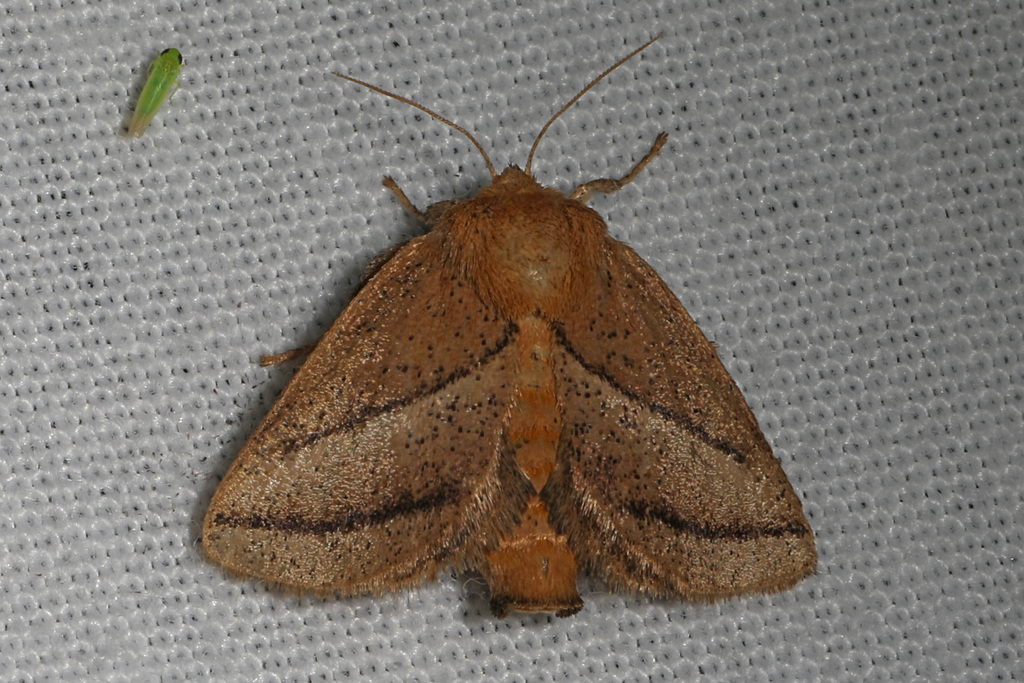
The caterpillars eat smooth-leafed woody plants such as beech, hickory and hornbeam.
Source: Wikipedia
How to recognize it
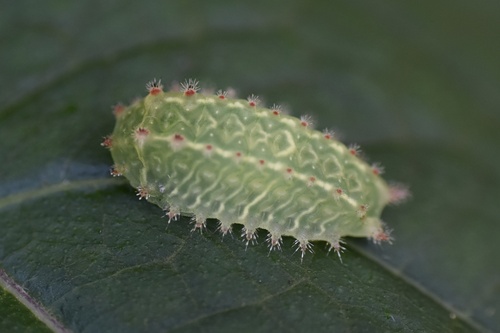
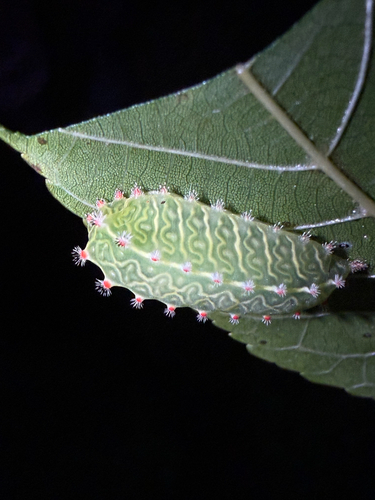
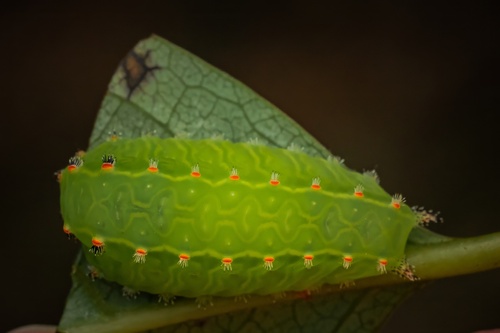
Adults and larvae are covered with stinging spines.
Source: Wikipedia
Does it bite or sting?
They have stinging spines that can cause a mild sting if touched.
Source: Wikipedia
What it eats
Larvae feed on smooth-leaved woody plants like beech, hickory and hornbeam.
Source: Wikipedia
Where it comes from
Its range includes the United States from Missouri eastward to the Atlantic and down to the Gulf of Mexico.
Source: Wikipedia
Where it is found in the US
Recorded in 26 of 51 states and DC. Most records: Alabama, North Carolina, Georgia, Maryland, Florida, Ohio, Virginia, Tennessee.
Darker = more records. Counts are museum and citizen-science records, not population size.
Source: GBIF
Status: native in United States. Source: iNaturalist
Months it is reported in the US
Source: GBIF
More photos
Questions people ask
What plants do the larvae eat?
They feed on smooth-leafed woody plants such as beech, hickory and hornbeam.
Source: Wikipedia
Same family (Limacodidae)
 Saddleback Caterpillar MothAcharia stimuleaCan sting
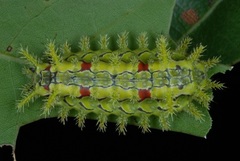 Spiny Oak-slug MothEuclea delphiniiVenomous
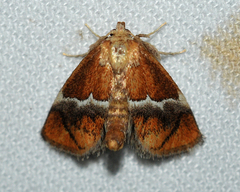 Yellow-shouldered Slug MothLithacodes fasciolaDamages trees, gardens or crops
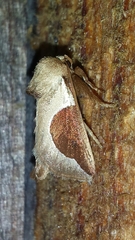 Skiff MothProlimacodes badiaDamages trees, gardens or crops
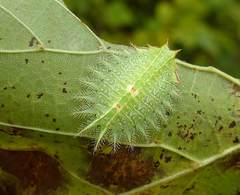 Crowned Slug MothIsa textulaDamages trees, gardens or crops
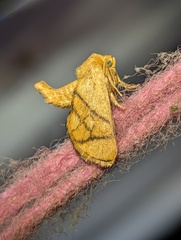 Yellow-collared Slug MothApoda y-inversaDamages trees, gardens or crops
Sources
- Wikipedia: https://en.wikipedia.org/wiki/Natada_nasoni
Look it up elsewhere: GBIF · iNaturalist · BugGuide · Wikipedia
Text written 2026-10-23 from the sources above and checked sentence by sentence against them. Data fetched 2026-10-23.