 Bug FAQ
Yellow-shouldered Slug Moth
Lithacodes fasciola · Order: Lepidoptera · Family: Limacodidae
Also called: Ochre-winged Hag Moth
Source: Wikipedia
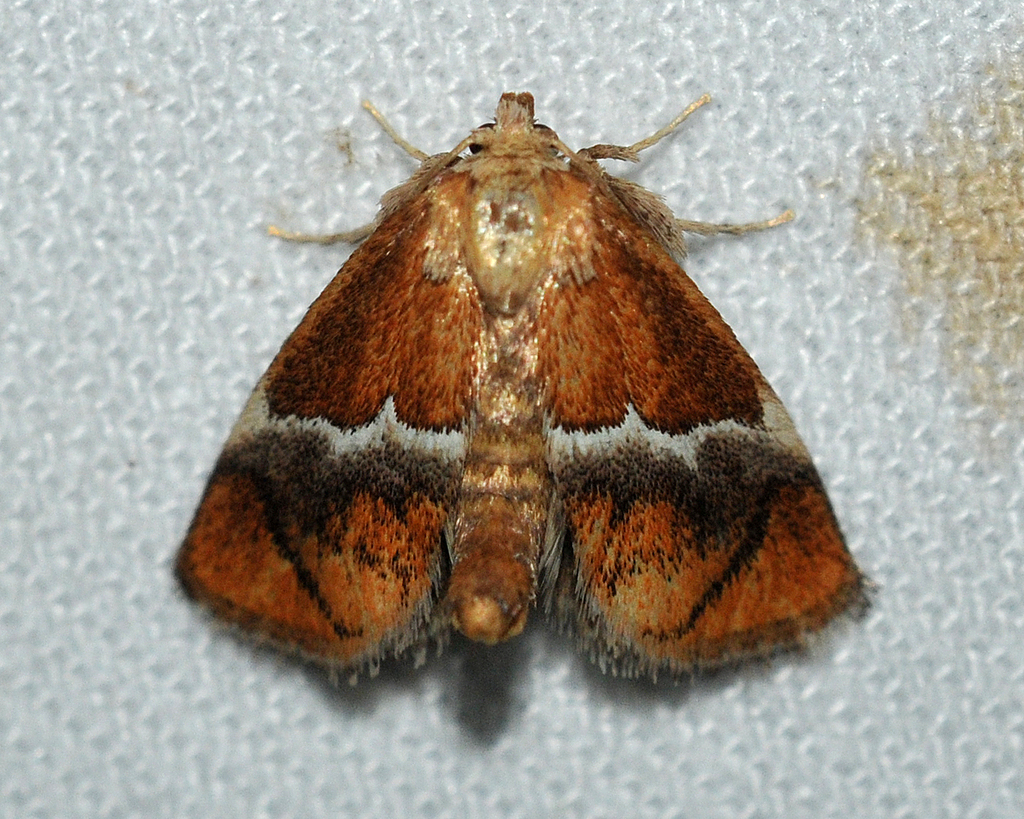
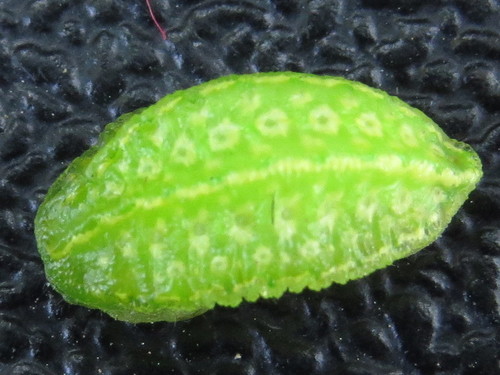
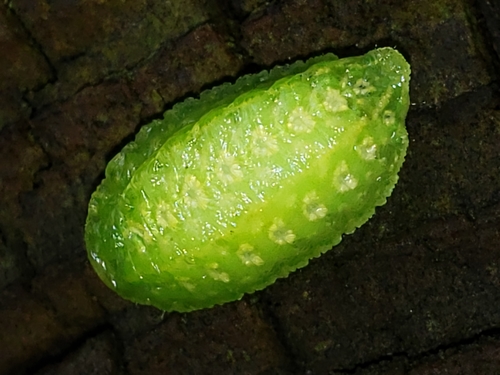
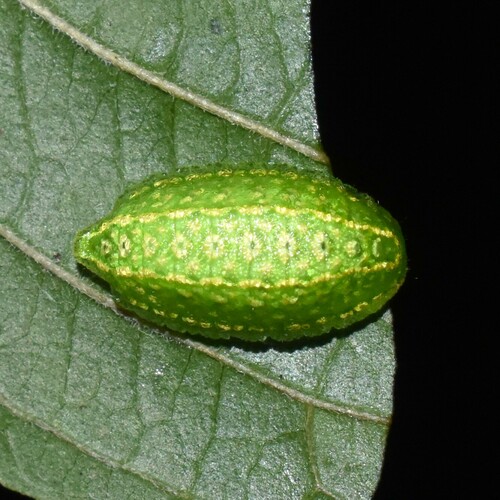
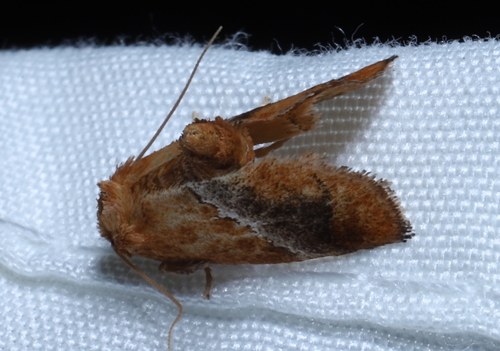
Adults are about a centimetre long, covered in fine hairs and brown in colour, with a distinctive white stripe edged in black across the forewings, plus black spots and a black crescent. The underside of the wings is a lighter grey-brown. Caterpillars are flattened, oval-shaped and have a short, squared-off tail.
Source: Wikipedia
How to recognize it
The forewings show a white stripe bordered in black, along with black spots and a black crescent; the wing underside is a paler grey-brown.
Source: Wikipedia
Size
The moth is roughly one centimetre in length and appears hairy.
Source: Wikipedia
Life cycle
In northern areas there is one generation per year, while in the southern United States there can be two or more, with mature caterpillars appearing from May through November. Caterpillars are flattened, ovoid and have a short, squared-off tail.
Source: Wikipedia
When you see it
Mature caterpillars can be found from May to November, depending on the region.
Source: Wikipedia
Where it is found in the US
Recorded in 39 of 51 states and DC. Most records: Alabama, North Carolina, Pennsylvania, Texas, Ohio, Massachusetts, Maryland, Virginia.
Darker = more records. Counts are museum and citizen-science records, not population size.
Source: GBIF
Status: native in North America; native in Canada; native in United States. Source: iNaturalist
Months it is reported in the US
Source: GBIF
More photos
Questions people ask
Does this moth damage trees or garden plants?
Yes, its caterpillars feed on many deciduous trees and shrubs, which can harm garden plants and orchard trees.
Source: Wikipedia
Same family (Limacodidae)
 Saddleback Caterpillar MothAcharia stimuleaCan sting
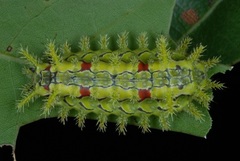 Spiny Oak-slug MothEuclea delphiniiVenomous
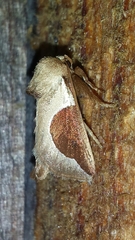 Skiff MothProlimacodes badiaDamages trees, gardens or crops
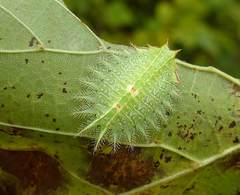 Crowned Slug MothIsa textulaDamages trees, gardens or crops
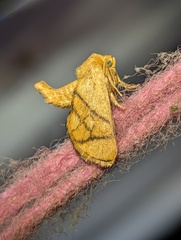 Yellow-collared Slug MothApoda y-inversaDamages trees, gardens or crops
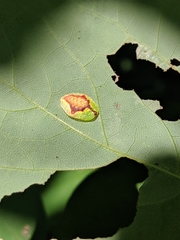 Early Button Slug MothTortricidia testacea
Sources
- Wikipedia: https://en.wikipedia.org/wiki/Lithacodes_fasciola
Look it up elsewhere: GBIF · iNaturalist · BugGuide · Wikipedia
Text written 2026-10-22 from the sources above and checked sentence by sentence against them. Data fetched 2026-10-22.