 Bug FAQ
Narrow-winged Saltbush Grasshopper
Aeoloplides tenuipennis · Order: Orthoptera · Family: Acrididae
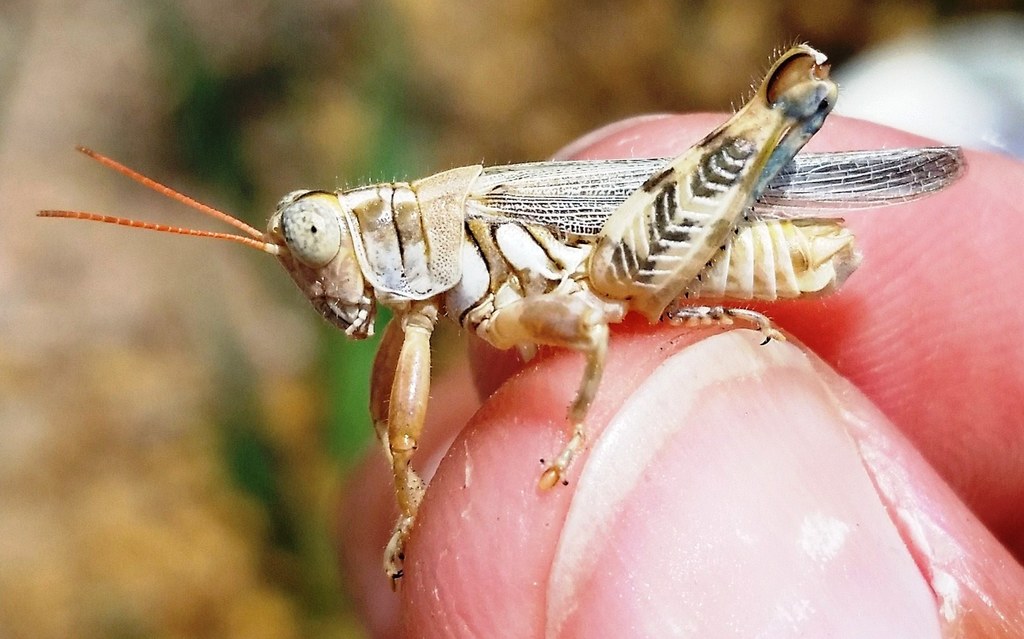
The narrow-winged saltbush grasshopper (Aeoloplides tenuipennis) is a spur-throated grasshopper in the Acrididae family. It lives in the western United States and northern Mexico, favoring desert scrub, alkali flats and grasslands where it feeds on various saltbush and other halophytic plants.
Source: Wikipedia
How to recognize it
Aeoloplides tenuipennis, called the narrow-winged saltbush grasshopper, belongs to the spur-throated grasshopper group in the family Acrididae.
Source: Wikipedia
How to get rid of it
Studies of the nymph stages are being used to devise control methods that are less harmful to the environment.
Source: Wikipedia
What it eats
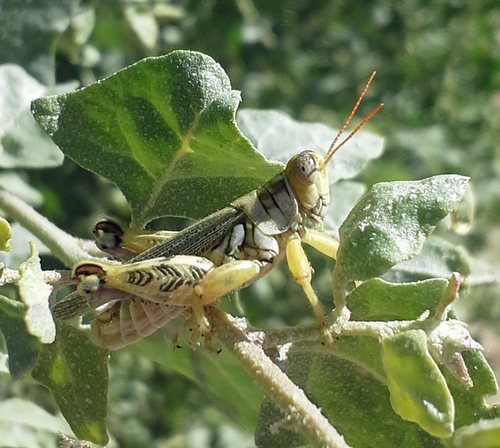
In southeastern Arizona it feeds heavily on fourwing saltbush (Atriplex canescens) and also uses cattle saltbush, seepweed, greasewood and the introduced prickly Russian thistle.
Source: Wikipedia
Life cycle
Research has focused on its early nymph stages to develop environmentally friendly ways to reduce its numbers.
Source: Wikipedia
Where it comes from
The species occurs throughout many parts of the southern United States and northern Mexico.
Source: Wikipedia
Where it is found in the US
Recorded in 9 of 51 states and DC. Most records: California, Arizona, Nevada, Utah, Colorado, Idaho, Oregon, New Mexico.
Darker = more records. Counts are museum and citizen-science records, not population size.
Source: GBIF
Status: native in North America. Source: iNaturalist
Months it is reported in the US
Source: GBIF
More photos
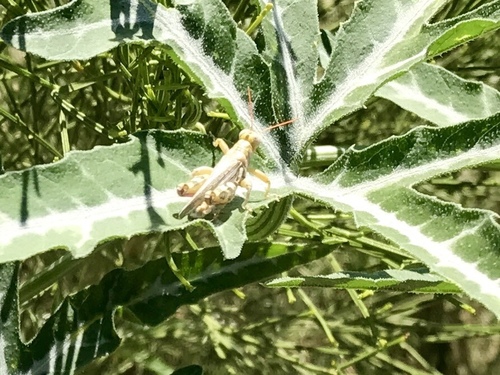
Questions people ask
What plants does the narrow-winged saltbush grasshopper eat?
It eats fourwing saltbush, cattle saltbush, seepweed, greasewood and prickly Russian thistle.
Source: Wikipedia
Where is this grasshopper found?
It occurs in eastern California, Arizona, southwestern New Mexico, Utah, southern Nevada, southern Idaho, and across the southern United States into northern Mexico.
Source: Wikipedia
How is it being controlled?
Researchers are studying its nymph stages to create environmentally friendly control strategies.
Source: Wikipedia
Same family (Acrididae)
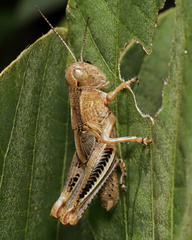 Differential GrasshopperMelanoplus differentialisDamages trees, gardens or crops
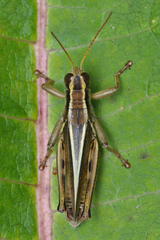 Two-striped GrasshopperMelanoplus bivittatusDamages trees, gardens or crops
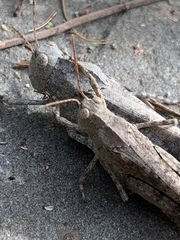 Carolina GrasshopperDissosteira carolinaDamages trees, gardens or crops
 Common Field GrasshopperChorthippus brunneus
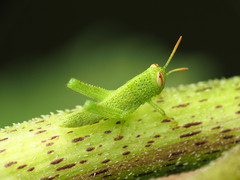 Egyptian Bird GrasshopperAnacridium aegyptium
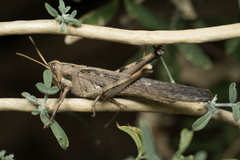 Gray Bird GrasshopperSchistocerca nitensDamages trees, gardens or crops
Sources
- Wikipedia: https://en.wikipedia.org/wiki/Aeoloplides_tenuipennis
Look it up elsewhere: GBIF · iNaturalist · BugGuide · ITIS · Wikipedia
Text written 2026-10-24 from the sources above and checked sentence by sentence against them. Data fetched 2026-10-24.