 Bug FAQ
Nagusta goedelii
Nagusta goedelii · Order: Hemiptera · Family: Reduviidae


Nagusta goedelii is a small assassin bug about half an inch long, with a slender, slightly hairy body that is yellow to cinnamon-brown and often shows two horn-like thorns behind the antennae. It lives on deciduous trees, especially oaks, in warm sunny areas of Central and Southern Europe, the Middle East and as far east as Iran, and it feeds on other insects such as planthoppers, sawfly larvae, crickets and flies.
Source: Wikipedia
How to recognize it
The bug has a slender, slightly hairy body that ranges from yellow to cinnamon-brown, sometimes darker, and bears two distinctive horn-like thorns just behind the antennae.
Source: Wikipedia
Where it lives
In warm, sunny regions it is found on deciduous trees, especially oaks, and less often on shrubs.
Source: Wikipedia
What it eats
Nagusta goedelii preys exclusively on other insects and possibly arachnids, feeding on planthoppers, sawfly larvae, crickets and various flies.
Source: Wikipedia
Life cycle
The species has one generation per year; mating and egg-laying happen in spring, larvae develop through summer, and adults appear in August-September and overwinter.
Source: Wikipedia
When you see it
Mating and egg laying occur in spring, and the insects reach adulthood in August and September.
Source: Wikipedia
Where it comes from
It occurs in Central and Southern Europe, including Austria, France, Italy, Greece, and many others, as well as the Middle East and reaches Iran in the east.
Source: Wikipedia
More photos


Questions people ask
How can I recognize Nagusta goedelii?
Look for a small (about 0.5 in) slender, slightly hairy bug that is yellow to cinnamon-brown and has two horn-like thorns just behind the antennae.
Source: Wikipedia
What does Nagusta goedelii eat?
It feeds on other insects such as flatid planthoppers, sawfly larvae, crickets and various flies.
Source: Wikipedia
When are adult Nagusta goedelii active?
Adults appear in late summer, around August and September, after developing from larvae that hatch in spring.
Source: Wikipedia
Same family (Reduviidae)
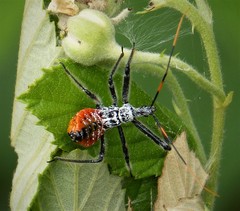 North American Wheel BugArilus cristatusCan bite
 Leafhopper Assassin BugZelus renardiiCan bite
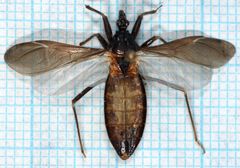 Masked HunterReduvius personatusCan bite
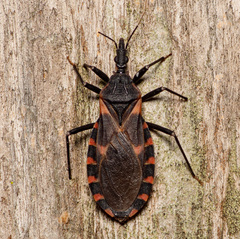 Eastern Bloodsucking ConenoseTriatoma sanguisugaCan spread germs or disease
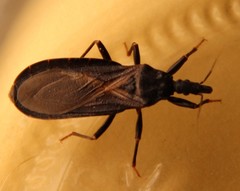 Western Bloodsucking ConenoseTriatoma protractaCan spread germs or disease
 Pale Green Assassin BugZelus luridusCan bite
Sources
- Wikipedia: https://en.wikipedia.org/wiki/Nagusta_goedelii
Look it up elsewhere: GBIF · iNaturalist · BugGuide · ITIS · Wikipedia
Text written 2026-10-23 from the sources above and checked sentence by sentence against them. Data fetched 2026-10-22.