 Bug FAQ
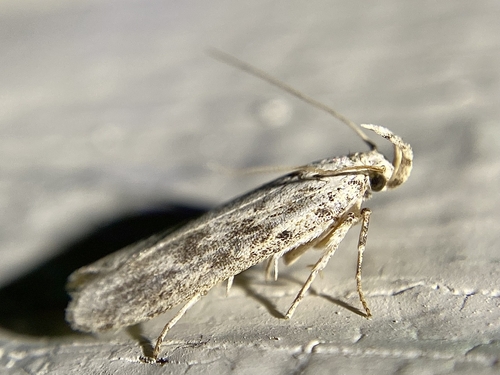
Mottled Twirler
Frumenta nundinella · Order: Lepidoptera · Family: Gelechiidae
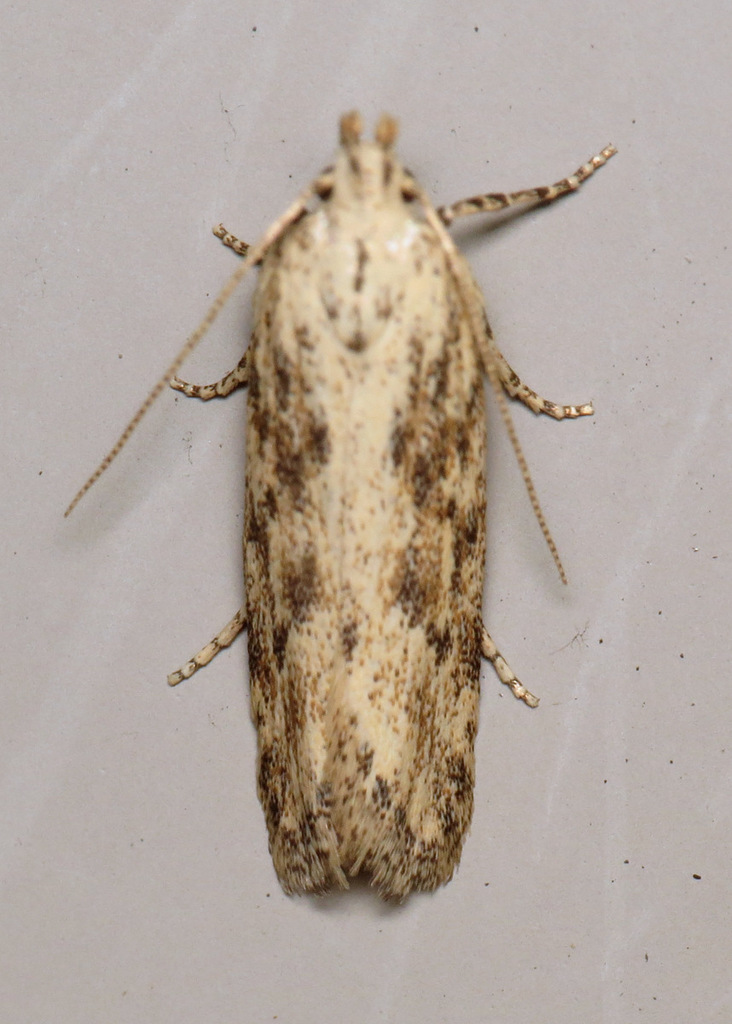
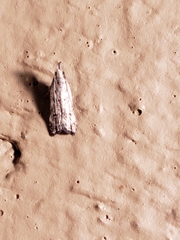
The mottled twirler is a small moth with a wingspan of about 24 mm. Its forewings are pale buff or cream with ochre shading and scattered dark scales, while the hindwings are silky gray with a faint iridescence. It is found in the eastern half of the United States, where its larvae feed on Solanum carolinense.
Source: Wikipedia
Size
The adult’s wingspan is about 24 mm.
Source: Wikipedia
Where it lives
It lives in the eastern half of the United States.
Source: Wikipedia
What it eats
The larvae feed on the plant Solanum carolinense.
Source: Wikipedia
Life cycle
The species was first described by Zeller in 1873.
Source: Wikipedia
Where it comes from
It is native to North America, recorded from the eastern United States.
Source: Wikipedia
Where it is found in the US
Recorded in 25 of 51 states and DC. Most records: Michigan, Maryland, Mississippi, North Carolina, Illinois, Alabama, Indiana, Texas.
Darker = more records. Counts are museum and citizen-science records, not population size.
Source: GBIF
Status: native in North America; native in United States; native in Canada. Source: iNaturalist
Months it is reported in the US
Source: GBIF
More photos
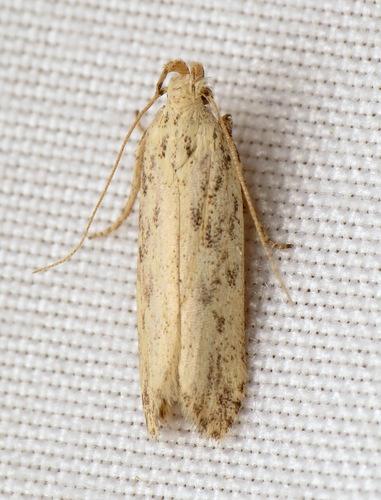
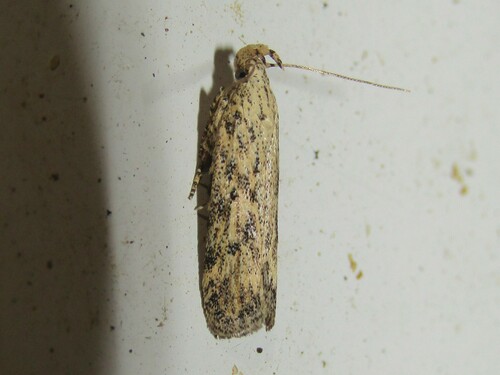
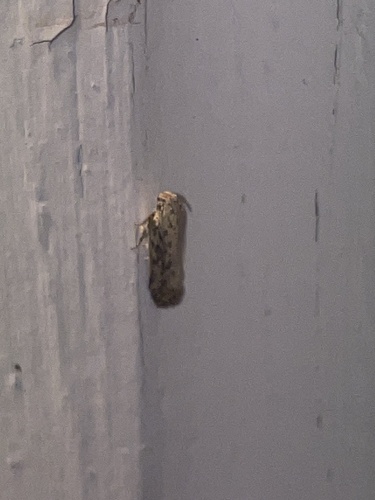
Same family (Gelechiidae)
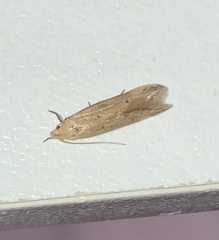 Angoumois Grain MothSitotroga cerealellaDamages trees, gardens or crops
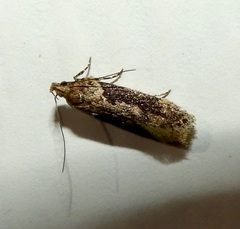 Boxelder Leafworm MothChionodes obscurusella
 Hairy, Toothed, and Shining Dichomeris Moths and AlliesDichomeris setosella
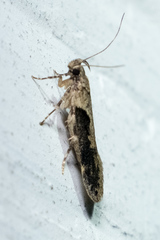 Black-smudged Chionodes Moth and AlliesChionodes occidentellaBlack-smudged Chionodes MothChionodes mediofuscella
 Inverse and Kimball's Dichomeris MothsDichomeris inversella
Sources
- Wikipedia: https://en.wikipedia.org/wiki/Frumenta_nundinella
Look it up elsewhere: GBIF · iNaturalist · BugGuide · Wikipedia
Text written 2026-10-27 from the sources above and checked sentence by sentence against them. Data fetched 2026-10-27.