 Bug FAQ
Meadow Spittlebug
Philaenus spumarius · Order: Hemiptera · Family: Aphrophoridae
Also called: Common Froghopper, Cuckoo-Spit Insect, Meadow Froghopper, Scuipatul cucului
Source: Wikipedia

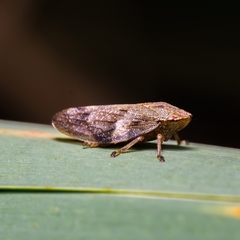
Meadow spittlebugs are small insects about 5 to 7 mm long and show many colour forms, often yellowish, brownish or black with bright patches. They live in a wide range of open habitats such as parks, meadows and gardens, and feed on many plant species, especially grasses, reeds and some trees. Females lay eggs in late summer; the nymphs hatch after about 20 days and pass through five instars, producing foam in spring.
Source: Wikipedia
How to recognize it
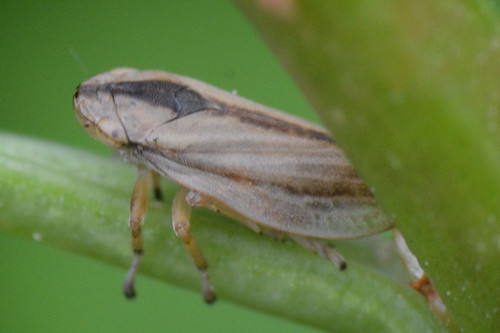
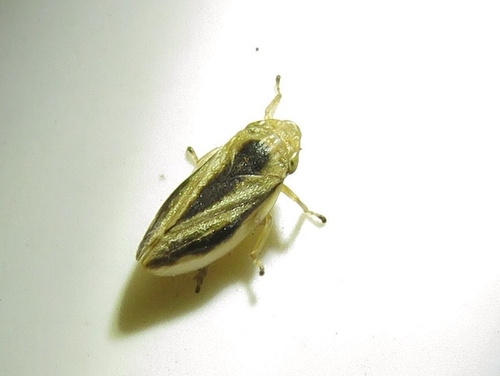
Their body colour is highly variable, with about 20 known colour types ranging from yellowish to dark with bright patches.
Source: Wikipedia
Size
Adults measure roughly 5 to 7 mm in length.
Source: Wikipedia
Where it lives
They thrive in many open environments like parks, meadows, gardens and open forests, avoiding only very wet or very dry places.
Source: Wikipedia
What it eats
These insects eat a very wide range of plants, over 1,300 species, including grasses, reeds, herbs and some trees such as olives.
Source: Wikipedia
Life cycle
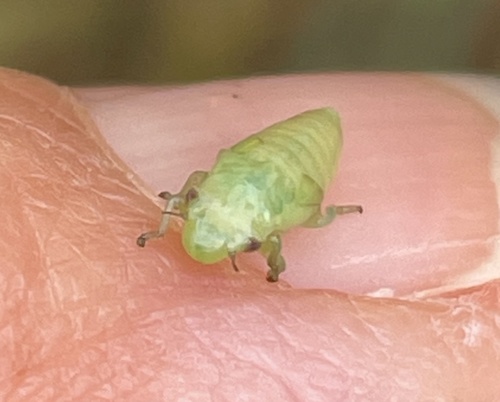
In temperate zones, females lay eggs at summer’s end; the eggs hatch after about 20 days and the nymphs develop through five instar stages.
Source: Wikipedia
When you see it
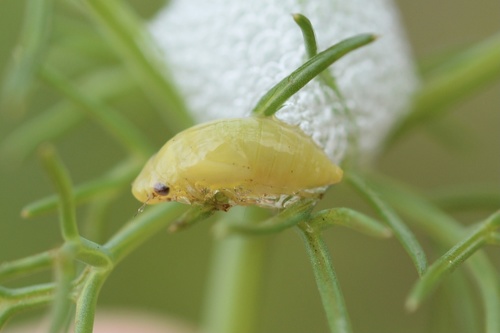
In spring, the nymphs create characteristic foam masses on meadow vegetation.
Source: Wikipedia
Where it comes from
Originally from the Palearctic region, they are now found across most of Europe, parts of North Africa, Russia, Afghanistan and Japan.
Source: Wikipedia
Where it is found in the US
Recorded in 41 of 51 states and DC. Most records: New York, Massachusetts, Pennsylvania, California, Illinois, Washington, Oregon, Wisconsin.
Darker = more records. Counts are museum and citizen-science records, not population size.
Source: GBIF
Status: introduced in North America; introduced in Canada; introduced in United States. Source: iNaturalist
Months it is reported in the US
Source: GBIF
More photos
Questions people ask
Can they damage my garden?
They feed on many garden plants, especially grasses and herbs, but the main concern is their role in spreading the plant pathogen Xylella fastidiosa to olives.
Source: Wikipedia
How can I identify a meadow spittlebug?
Look for a small (5 to 7 mm) insect with highly variable colouration, often yellowish, brownish or black with bright patches, and foam masses on plants in spring.
Source: Wikipedia
Where are meadow spittlebugs found?
They occur in many open habitats across Europe, North Africa, parts of Russia, Afghanistan and Japan.
Source: Wikipedia
Same family (Aphrophoridae)

Sources
- Wikipedia: https://en.wikipedia.org/wiki/Philaenus_spumarius
Look it up elsewhere: GBIF · iNaturalist · BugGuide · ITIS · Wikipedia
Text written 2026-10-22 from the sources above and checked sentence by sentence against them. Data fetched 2026-10-22.