 Bug FAQ
Alder Spittlebug
Aphrophora alni · Order: Hemiptera · Family: Aphrophoridae
Also called: European Alder Spittlebug
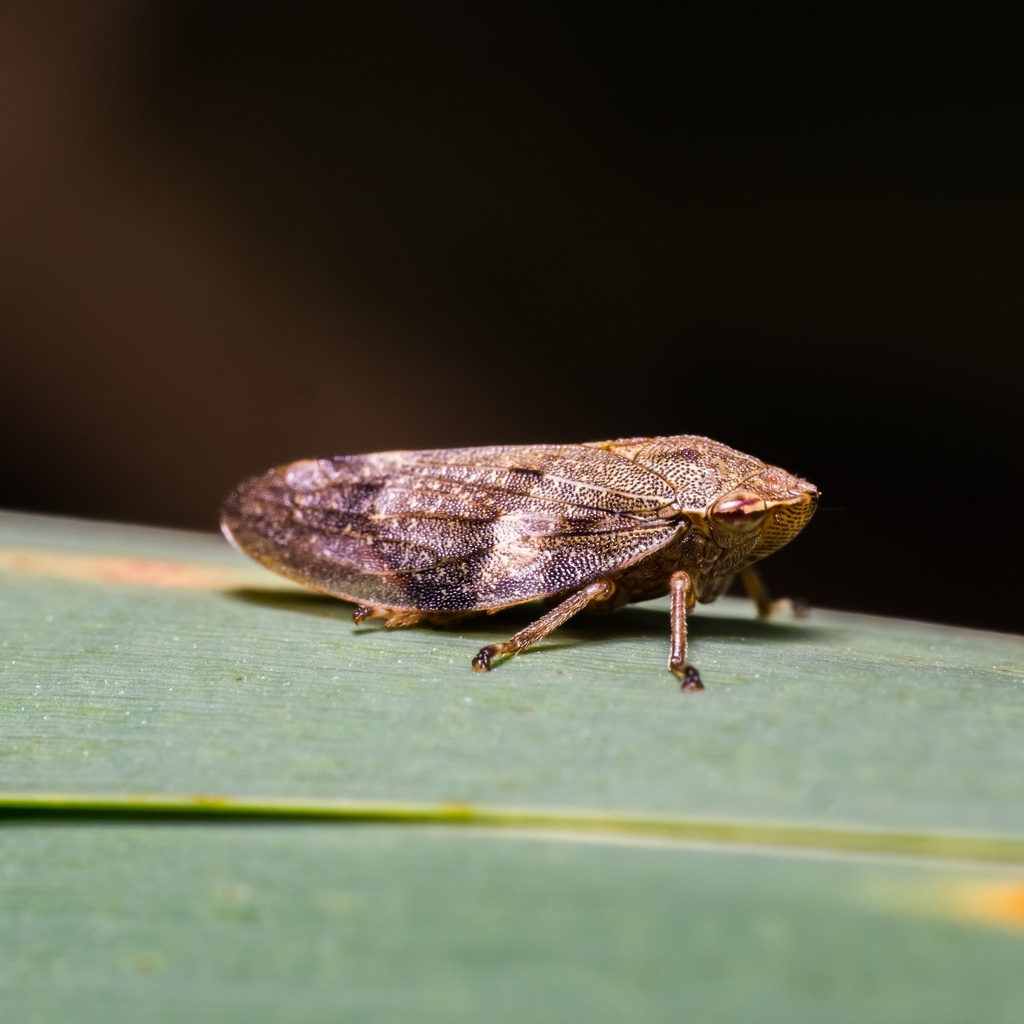
Adult alder spittlebugs are about 9 to 10 mm long and are usually brown with two clear patches on the edges of their front wings. They live in a wide range of dry and moist habitats from lowlands up to 1,500 m, and are found across most of Europe, the Near East, North Africa and the eastern Palearctic. Adults feed on many deciduous trees while the larvae eat herbaceous plants, and they appear from May through October.
Source: Wikipedia
How to recognize it
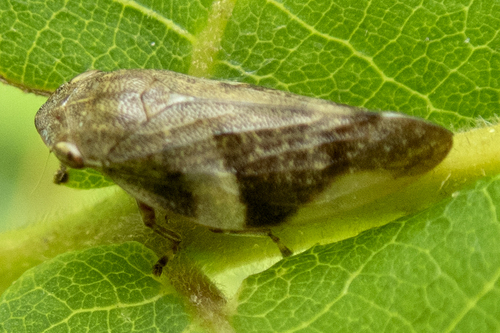
The body is generally brown and the front wings have two clear marginal patches.
Source: Wikipedia
Size
Adults measure about 9 to 10 mm in length, with females a bit larger than males.
Source: Wikipedia
Where it lives
They occupy dry and moist lowland and mountainous areas, including forest edges, hedgerows, meadows, gardens and parks up to 1,500 m altitude.
Source: Wikipedia
What it eats
Adults mainly eat leaves of deciduous trees; larvae feed on herbaceous dicot plants, and the species is polyphagous, using many plant types.
Source: Wikipedia
Life cycle
Eggs survive the winter and hatch in spring, with only one generation produced each year.
Source: Wikipedia
When you see it
You can see them from May to October on bushes and trees such as willow, birch, alder and poplar.
Source: Wikipedia
Where it comes from
The species is common throughout most of Europe, the eastern Palearctic, the Near East and North Africa.
Source: Wikipedia
Where it is found in the US
Recorded in 10 of 51 states and DC. Most records: New York, Vermont, Pennsylvania, Michigan, Massachusetts, Maine, New Hampshire, Ohio.
Darker = more records. Counts are museum and citizen-science records, not population size.
Source: GBIF
Status: introduced in North America; introduced in United States. Source: iNaturalist
Months it is reported in the US
Source: GBIF
More photos


Questions people ask
When are they most likely to be seen?
They are active from May through October on various trees and shrubs.
Source: Wikipedia
Where do they live?
They inhabit a range of dry and moist habitats from lowlands up to 1,500 m, including gardens, parks and forest edges.
Source: Wikipedia
Same family (Aphrophoridae)


Sources
- Wikipedia: https://en.wikipedia.org/wiki/Aphrophora_alni
Look it up elsewhere: GBIF · iNaturalist · BugGuide · ITIS · Wikipedia
Text written 2026-10-22 from the sources above and checked sentence by sentence against them. Data fetched 2026-10-22.