 Bug FAQ
McCook's Split Wolf Spider
Schizocosa mccooki · Order: Araneae · Family: Lycosidae
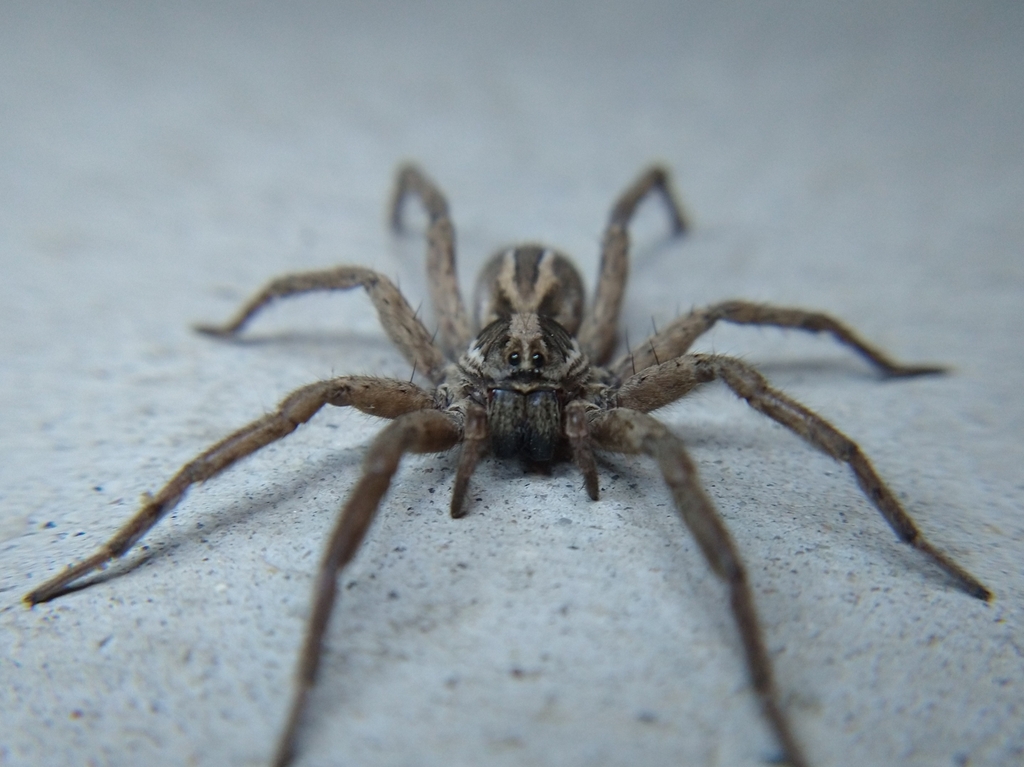
Males are about 9 to 15 mm long and females 10 to 23 mm in body length. They live in open places such as grasslands, chaparral, deserts and pine forests, and some make burrows. Their range stretches from the west coast across western North America to western Lake Erie, covering Canada, the United States and Mexico.
Source: Wikipedia
How to recognize it
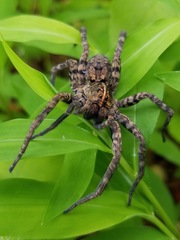
The carapace is gray to light brown with a pale middle band, black side bands and pale sub-marginal bands that may reach the edges. The abdomen shows a distinct heart-shaped mark, dark crossbars with paired white spots, and sides mottled yellow, brown and black with slanted black lines.
Source: Wikipedia
Size
Males measure 9.1 to 15.5 mm and females 9.6 to 22.7 mm in body length.
Source: Wikipedia
Where it lives
They are common in open habitats like grasslands, chaparral, deserts and pinyon pine forests. Some populations dig burrows.
Source: Wikipedia
Lookalikes
They are virtually indistinguishable from S. maxima except for size differences.
Source: Wikipedia
Where it is found in the US
Recorded in 23 of 51 states and DC. Most records: California, Colorado, Montana, North Dakota, Nevada, Utah, Idaho, Washington.
Darker = more records. Counts are museum and citizen-science records, not population size.
Source: GBIF
Status: native in North America; native in United States; native in Canada. Source: iNaturalist
Months it is reported in the US
Source: GBIF
More photos
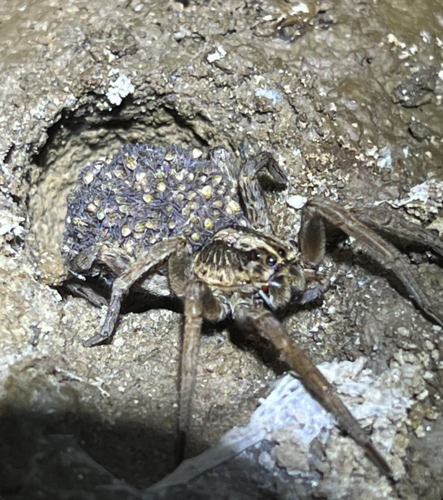
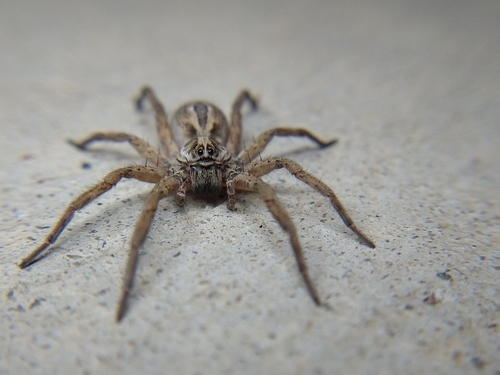
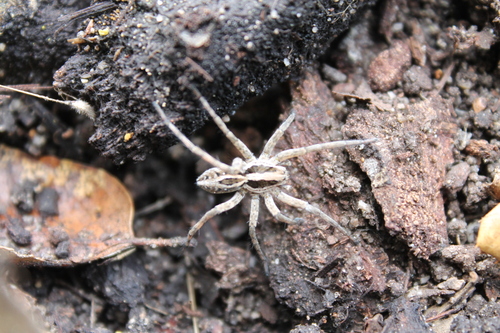
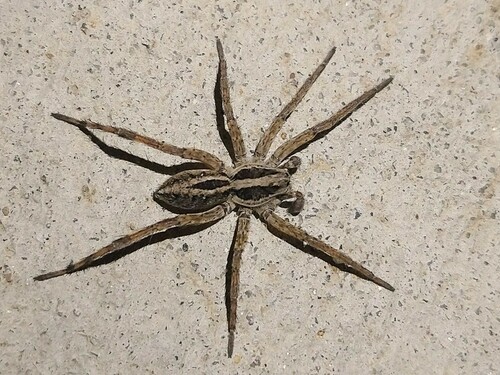
Same family (Lycosidae)


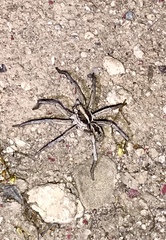
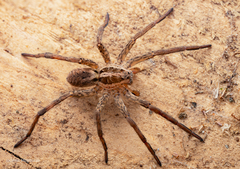
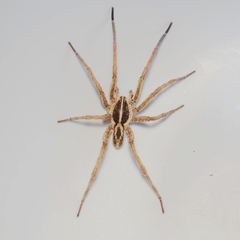
Sources
- Wikipedia: https://en.wikipedia.org/wiki/Schizocosa_mccooki
Look it up elsewhere: GBIF · iNaturalist · BugGuide · ITIS · Wikipedia
Text written 2026-10-23 from the sources above and checked sentence by sentence against them. Data fetched 2026-10-23.