 Bug FAQ
Marsh Snipe Fly
Rhagio tringarius · Order: Diptera · Family: Rhagionidae
Also called: Snipe fly, Marsh Snipefly
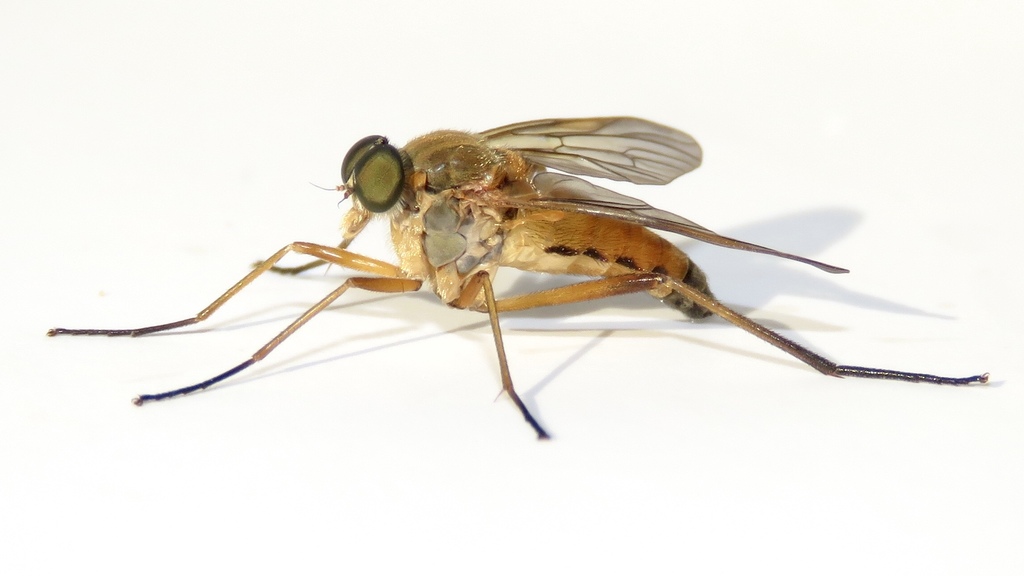
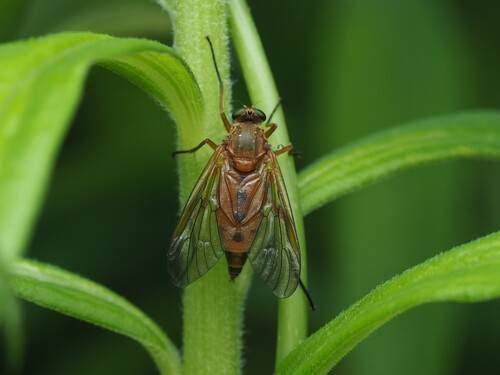
The marsh snipe fly is a small insect about 8 to 14 mm long with yellow-orange legs and abdomen, often showing black dorsal triangles. It lives in wet meadows, hedgerows, woods and other vegetated areas across most of Europe and parts of the United States, and adults are seen from May to September resting on leaves.
Source: Wikipedia
How to recognize it
The legs and abdomen are yellow-orange, and the abdomen often has spaced black triangles.
Source: Wikipedia
Size
Adults measure between 8 and 14 mm in length.
Source: Wikipedia
Where it lives
Found in wet meadows, hedgerows, woods and other areas with rich vegetation.
Source: Wikipedia
What it eats
Larvae live in soil and litter, hunting small beetles and earthworms.
Source: Wikipedia
Life cycle
Adults appear from May through September and are commonly found resting on leaves.
Source: Wikipedia
When you see it
Adults are active from May to September.
Source: Wikipedia
Where it comes from
Present in most European countries and parts of the American Northeast and the upper west coast.
Source: Wikipedia
Where it is found in the US
Recorded in 16 of 51 states and DC. Most records: New York, Massachusetts, Vermont, Ohio, Connecticut, Wisconsin, Maine, New Hampshire.
Darker = more records. Counts are museum and citizen-science records, not population size.
Source: GBIF
Status: introduced in United States. Source: iNaturalist
Months it is reported in the US
Source: GBIF
More photos
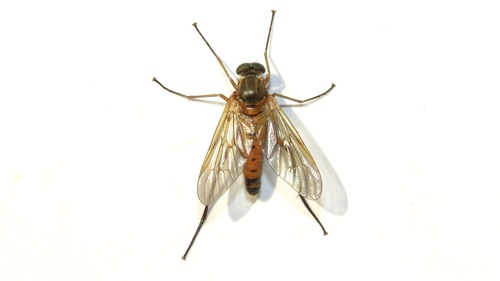
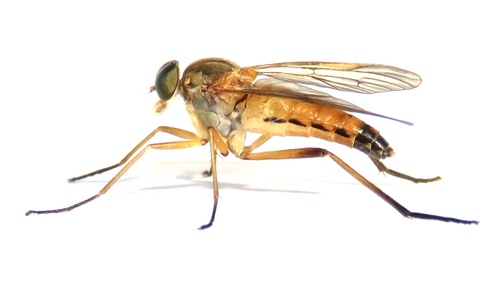
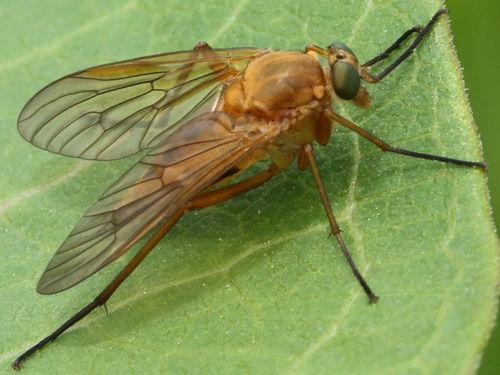
Same family (Rhagionidae)


Sources
- Wikipedia: https://en.wikipedia.org/wiki/Rhagio_tringarius
Look it up elsewhere: GBIF · iNaturalist · BugGuide · ITIS · Wikipedia
Text written 2026-10-22 from the sources above and checked sentence by sentence against them. Data fetched 2026-10-22.