 Bug FAQ
Black Snipefly
Chrysopilus cristatus · Order: Diptera · Family: Rhagionidae
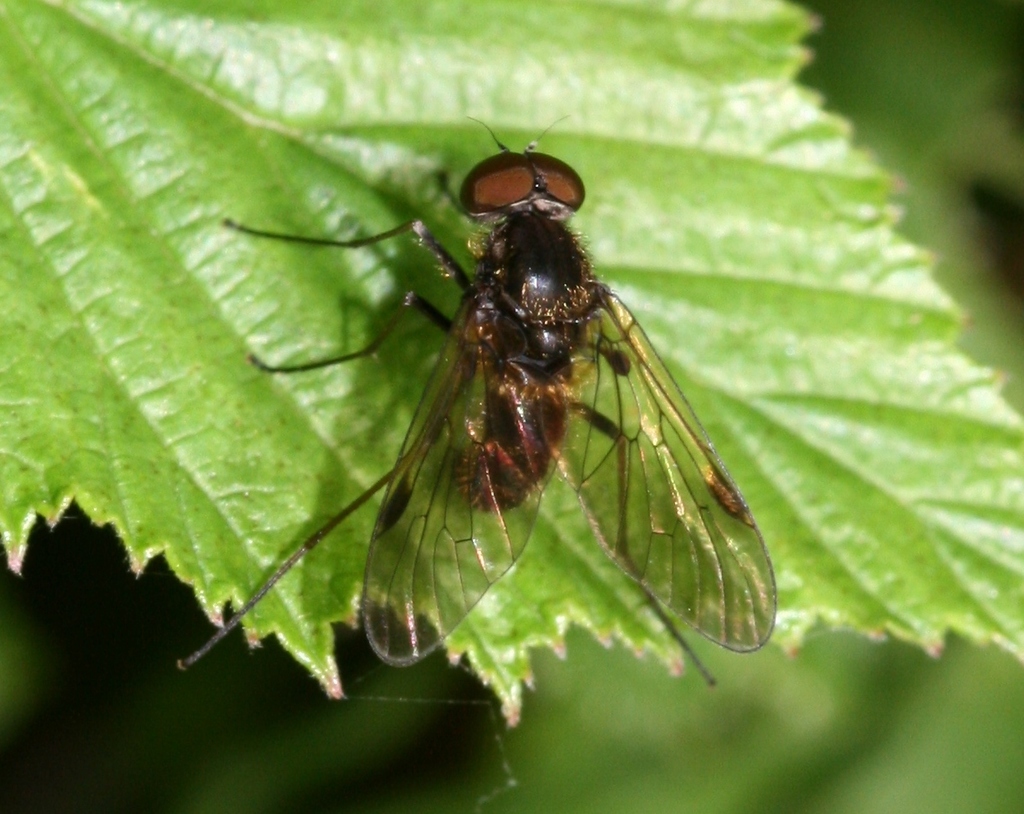
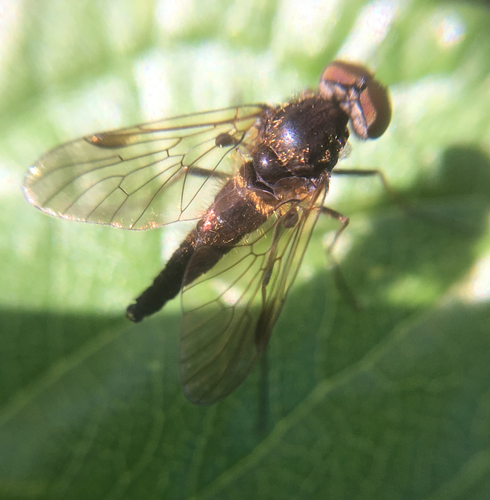
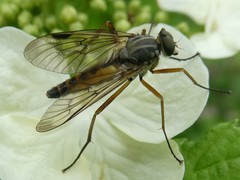
The black snipefly is a small fly measuring about 6 to 8 mm in length. Males are dark blackish-brown while females show a noticeable yellow-grey dusting, with dark grey femora and yellow tibia and metatarsus. It occurs across most of Europe and looks similar to Chrysopilus erythrophthalmus but is a bit smaller.
Source: Wikipedia
How to recognize it
Males are blackish-brown; females have a yellow-grey dusting, dark grey femora, and yellow tibia and metatarsus.
Source: Wikipedia
Size
Adults are 6 to 8 mm long.
Source: Wikipedia
Where it comes from
The species is found throughout most of Europe.
Source: Wikipedia
Lookalikes
It resembles Chrysopilus erythrophthalmus but is slightly smaller.
Source: Wikipedia
More photos

Questions people ask
How can I identify a black snipefly?
Look for a 6 to 8 mm fly; males are blackish-brown, females have yellow-grey dusting, dark grey femora, and yellow tibia and metatarsus.
Source: Wikipedia
What other fly looks like the black snipefly?
It is similar to Chrysopilus erythrophthalmus but a bit smaller.
Source: Wikipedia
Same family (Rhagionidae)


Sources
- Wikipedia: https://en.wikipedia.org/wiki/Chrysopilus_cristatus
Look it up elsewhere: GBIF · iNaturalist · BugGuide · Wikipedia
Text written 2026-10-23 from the sources above and checked sentence by sentence against them. Data fetched 2026-10-22.