 Bug FAQ
Mammoth Cave Cricket
Hadenoecus subterraneus · Order: Orthoptera · Family: Rhaphidophoridae
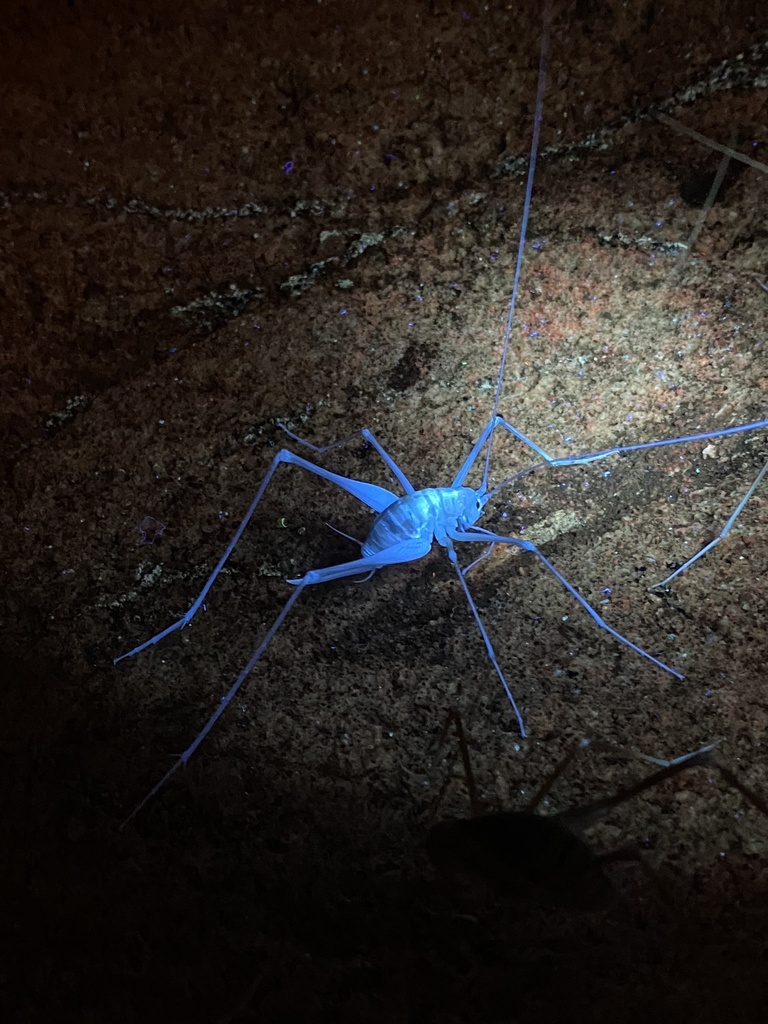
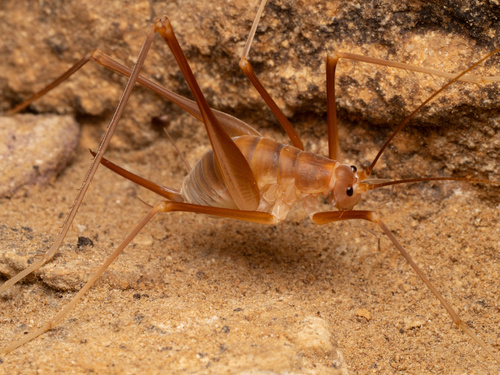
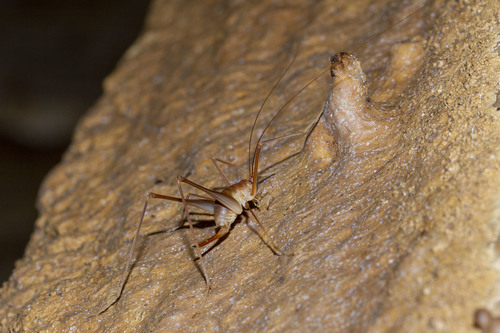
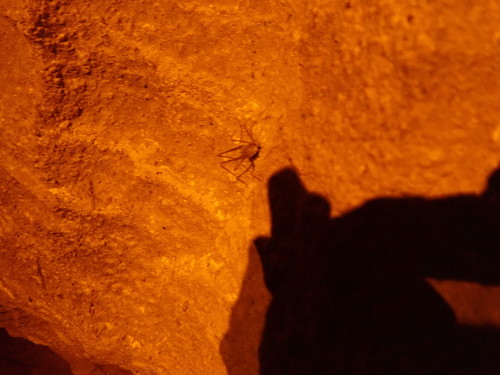
The mammoth cave cricket prefers cavernous habitats but can also survive on the surface. It is commonly seen roosting at cave entrances in the southeastern United States and is native to North America. In caves it will eat any available material, and its waste, eggs and carcasses provide guano that many other cave organisms depend on.
Source: Wikipedia
How to recognize it
They are troglophilic; they prefer caves but can survive on the surface.
Source: Wikipedia
Where it lives
They are often found roosting at cave entrances in the southeastern United States.
Source: Wikipedia
What it eats
They eat whatever they can find in caves because food is scarce. Their waste, eggs and carcasses become guano that many cave communities rely on.
Source: Wikipedia
Where it comes from
They are found in North America.
Source: Wikipedia
Where it is found in the US
Recorded in 2 of 51 states and DC. Most records: Kentucky, Kansas.
Darker = more records. Counts are museum and citizen-science records, not population size.
Source: GBIF
Status: endemic in United States. Source: iNaturalist
Months it is reported in the US
Source: GBIF
More photos
Questions people ask
Where are mammoth cave crickets found?
They are often seen at cave entrances in the southeastern United States and are native to North America.
Source: Wikipedia
Can they live outside of caves?
Yes, they are troglophilic and can survive on the surface as well as in caves.
Source: Wikipedia
What do they eat?
In caves they will eat any available material, and their waste, eggs and carcasses provide guano for other organisms.
Source: Wikipedia
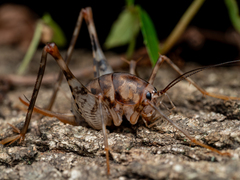
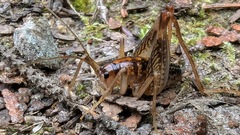
Same family (Rhaphidophoridae)



Sources
- Wikipedia: https://en.wikipedia.org/wiki/Hadenoecus_subterraneus
Look it up elsewhere: GBIF · iNaturalist · BugGuide · ITIS · Wikipedia
Text written 2026-10-26 from the sources above and checked sentence by sentence against them. Data fetched 2026-10-26.