 Bug FAQ
Lord Leaf Beetle
Coleothorpa dominicana · Order: Coleoptera · Family: Chrysomelidae
Also called: Our Lord Leaf Beetle
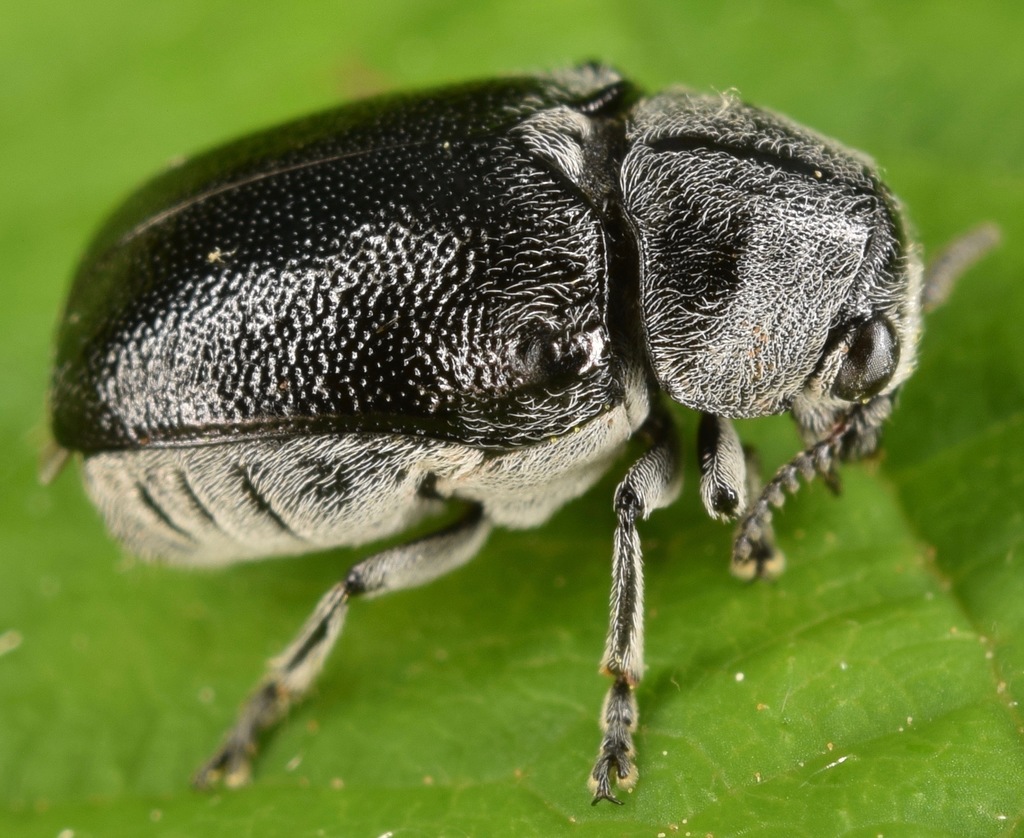
It lives in North America. Females build a protective funnel for their eggs, and the larvae develop for five to eight months, taking about a year to reach adulthood.
Source: Wikipedia
How to recognize it
Coleothorpa dominicana belongs to the case-bearing leaf beetles of the family Chrysomelidae.
Source: Wikipedia
Where it lives
This beetle is found in North America.
Source: Wikipedia
Life cycle
The female constructs a funnel structure to protect the eggs she lays. The larval stage lasts five to eight months, and it takes roughly a year for the beetle to become an adult.
Source: Wikipedia
Where it comes from
Its native range includes North America.
Source: Wikipedia
Where it is found in the US
Recorded in 36 of 51 states and DC. Most records: Massachusetts, Kentucky, North Carolina, Kansas, Missouri, Illinois, Nebraska, Michigan.
Darker = more records. Counts are museum and citizen-science records, not population size.
Source: GBIF
Status: native in North America; native in Canada. Source: iNaturalist
Months it is reported in the US
Source: GBIF
More photos
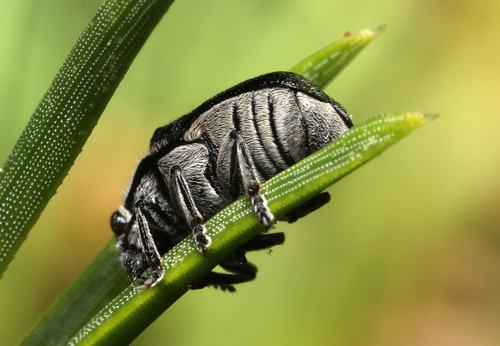
Questions people ask
How long does it take for a Lord Leaf Beetle to develop into an adult?
Development from egg to adult takes about one year, with the larval stage lasting five to eight months.
Source: Wikipedia
What does the female Lord Leaf Beetle do to protect her eggs?
She builds a funnel-shaped structure that shields the eggs.
Source: Wikipedia
Same family (Chrysomelidae)
 Spotted Cucumber BeetleDiabrotica undecimpunctataDamages trees, gardens or crops
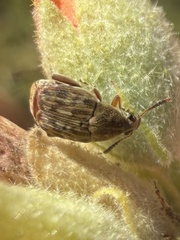 Bean WeevilAcanthoscelides obtectusDamages trees, gardens or crops
 Cowpea WeevilCallosobruchus maculatusDamages trees, gardens or crops
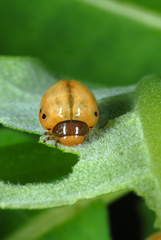 Swamp Milkweed Leaf BeetleLabidomera clivicollisDamages trees, gardens or crops
 Alder Leaf BeetleAgelastica alniDamages trees, gardens or crops
 Dogbane Leaf BeetleChrysochus auratus
Sources
- Wikipedia: https://en.wikipedia.org/wiki/Coleothorpa_dominicana
Look it up elsewhere: GBIF · iNaturalist · BugGuide · ITIS · Wikipedia
Text written 2026-10-25 from the sources above and checked sentence by sentence against them. Data fetched 2026-10-25.