 Bug FAQ
Long-tailed Skipper
Urbanus proteus · Order: Lepidoptera · Family: Hesperiidae
Also called: Bean Leafroller
Source: Wikipedia
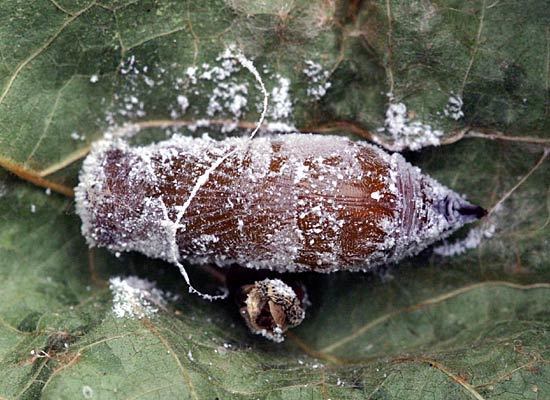
It is a medium-sized skipper with a wingspan of about 4.5 to 6 cm and a large head with prominent eyes. Adults have light-brown wings with an iridescent blue tint and two long tails on the hindwings; the body is light blue on top. The species lives in tropical and subtropical regions from South America up to the eastern United States and southern Ontario, but cannot survive prolonged frost.
Source: Wikipedia
How to recognize it
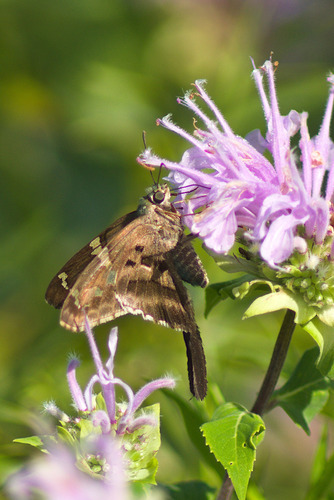
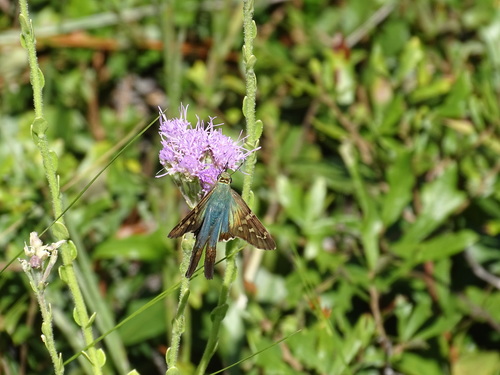
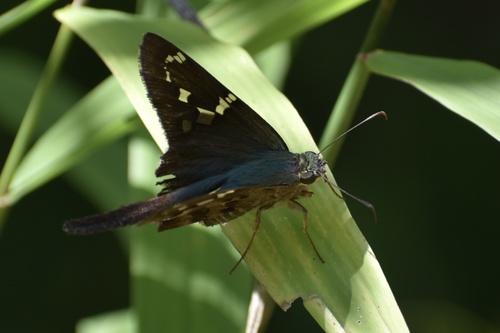
Wings are light brown with an iridescent blue sheen and have two long tails on the hindwings; the dorsal side of the body is light blue.
Source: Wikipedia
Size
Wingspan ranges from 4.5 to 6 cm and it has a large head with prominent eyes.
Source: Wikipedia
Is it a pest in the house?
The caterpillar is a common pest of bean crops in the southern United States, sometimes called the bean leafroller.
Source: Wikipedia
Where it lives
Found throughout tropical and subtropical South America, down to Argentina, and north into the eastern U.S. and southern Ontario; avoids areas with prolonged frost.
Source: Wikipedia
What it eats
Caterpillars eat leaves of legumes such as wisteria and butterfly peas, rolling the leaf to pupate; adults sip nectar from flowers.
Source: Wikipedia
Where it comes from
Its natural range covers tropical and subtropical South America up to the eastern United States and southern Ontario.
Source: Wikipedia
Lookalikes
U. p. domingo, found in the Bahamas and West Indies, looks similar but has reduced white markings.
Source: Wikipedia
Where it is found in the US
Recorded in 34 of 51 states and DC. Most records: Florida, Texas, South Carolina, Georgia, Alabama, Louisiana, North Carolina, Mississippi.
Darker = more records. Counts are museum and citizen-science records, not population size.
Source: GBIF
Status: native in North America; native in United States. Source: iNaturalist
Months it is reported in the US
Source: GBIF
More photos

Questions people ask
Does the long-tailed skipper damage my garden plants?
Its caterpillars feed on legume leaves such as beans and can cause noticeable damage to those crops.
Source: Wikipedia
Same family (Hesperiidae)




Sources
- Wikipedia: https://en.wikipedia.org/wiki/Long-tailed_skipper
Look it up elsewhere: GBIF · iNaturalist · BugGuide · ITIS · Wikipedia
Text written 2026-10-22 from the sources above and checked sentence by sentence against them. Data fetched 2026-10-22.