 Bug FAQ
Little Buzzer Grasshopper
Microtes occidentalis · Order: Orthoptera · Family: Acrididae
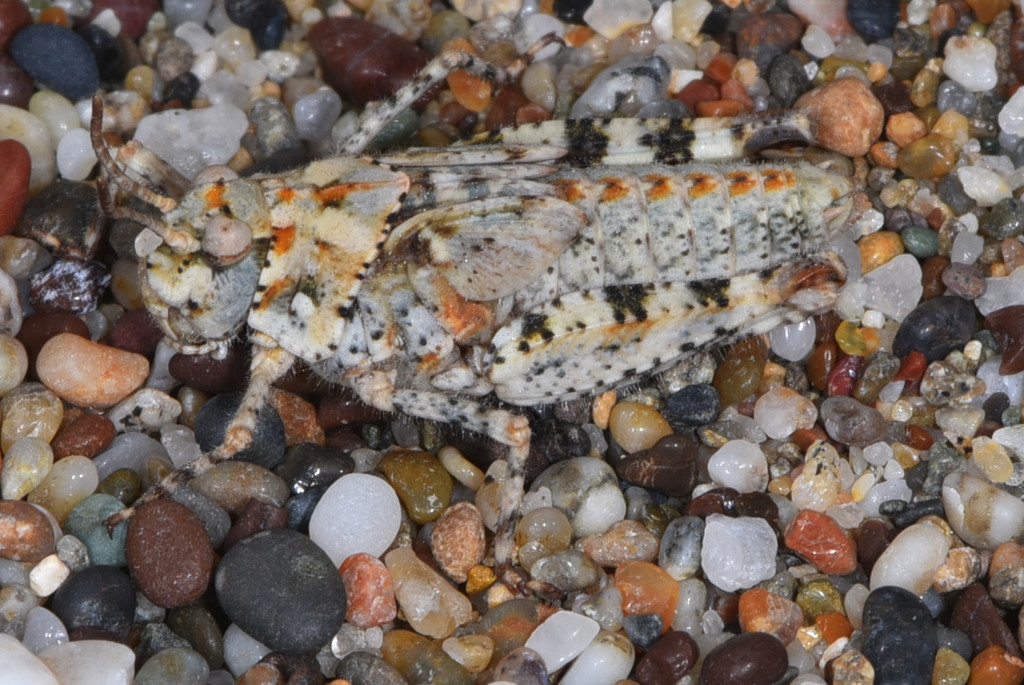
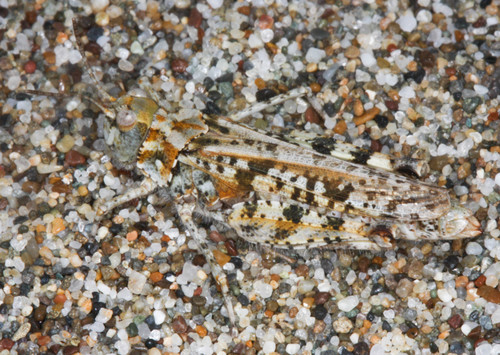
Adults are stocky, 17 to 26 mm long, with females larger than males. They have a speckled mix of brown, gray, white, black and beige that blends with sand and gravel. They live on coastal dunes in California, especially Point Reyes, Bodega Bay and Monterey Bay, and feed on plants adapted to those habitats. Adults are active from May through October, while the eggs survive the winter.
Source: Wikipedia
How to recognize it
Their coloration is a speckled blend of browns, grays, whites, blacks and beiges for camouflage.
Source: Wikipedia
Size
Adults grow to 17 to 26 mm, with females larger than males.
Source: Wikipedia
Where it lives
They inhabit coastal dunes at Point Reyes National Seashore, Bodega Bay and Monterey Bay.
Source: Wikipedia
What it eats
They likely feed on plants that are adapted to coastal dune environments.
Source: Wikipedia
Life cycle
Adults are present from May to October and the eggs overwinter.
Source: Wikipedia
When you see it
Adult activity peaks between May and October, with eggs surviving the winter months.
Source: Wikipedia
Where it comes from
The species is endemic to California.
Source: Wikipedia
Where it is found in the US
Recorded in 1 of 51 states and DC. Most records: California.
Darker = more records. Counts are museum and citizen-science records, not population size.
Source: GBIF
Status: endemic in North America; endemic in United States. Source: iNaturalist
Months it is reported in the US
Source: GBIF
More photos
Questions people ask
When are adult Little Buzzer Grasshoppers active?
Adults are mainly active from May through October, and their eggs overwinter.
Source: Wikipedia
Where can I find Little Buzzer Grasshoppers?
They are found on coastal dunes in California, especially around Point Reyes, Bodega Bay and Monterey Bay.
Source: Wikipedia
Same family (Acrididae)
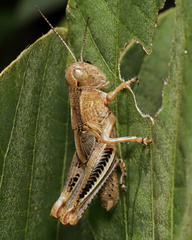 Differential GrasshopperMelanoplus differentialisDamages trees, gardens or crops
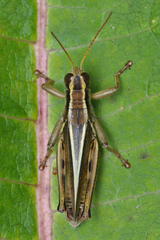 Two-striped GrasshopperMelanoplus bivittatusDamages trees, gardens or crops
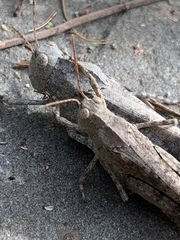 Carolina GrasshopperDissosteira carolinaDamages trees, gardens or crops
 Common Field GrasshopperChorthippus brunneus
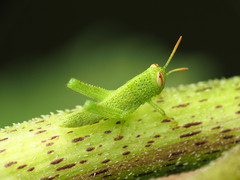 Egyptian Bird GrasshopperAnacridium aegyptium
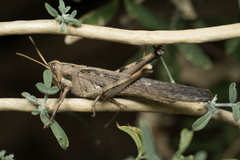 Gray Bird GrasshopperSchistocerca nitensDamages trees, gardens or crops
Sources
- Wikipedia: https://en.wikipedia.org/wiki/Microtes_occidentalis
Look it up elsewhere: GBIF · iNaturalist · BugGuide · ITIS · Wikipedia
Text written 2026-10-29 from the sources above and checked sentence by sentence against them. Data fetched 2026-10-29.