 Bug FAQ
Little 13-Year Cicada
Magicicada tredecula · Order: Hemiptera · Family: Cicadidae
Also called: Decula 13-Year Cicada, Southern Barred Periodical Cicada
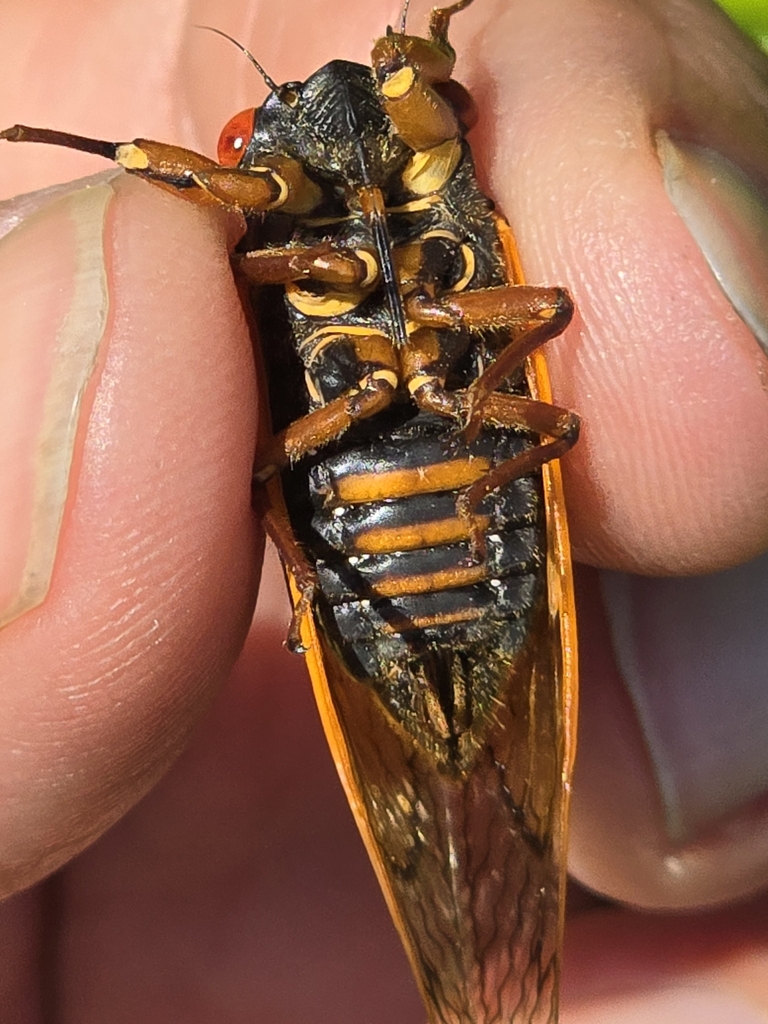
Magicicada tredecula belongs to the periodical cicada family Cicadidae. It lives only in the United States. Its life from egg to adult death usually takes about thirteen years, but can vary from nine to seventeen years. Adults appear once every thirteen years.
Source: Wikipedia
Where it lives
This cicada is found only in the United States.
Source: Wikipedia
Life cycle
The overall life cycle can range from nine to seventeen years.
Source: Wikipedia
When you see it
Adults emerge once every thirteen years, as the name suggests.
Source: Wikipedia
Where it comes from
It is endemic to the United States.
Source: Wikipedia
Where it is found in the US
Recorded in 14 of 51 states and DC. Most records: Illinois, North Carolina, Missouri, Arkansas, Tennessee, Alabama, Georgia, Kansas.
Darker = more records. Counts are museum and citizen-science records, not population size.
Source: GBIF
Status: endemic in United States; native in North America. Source: iNaturalist
Months it is reported in the US
Source: GBIF
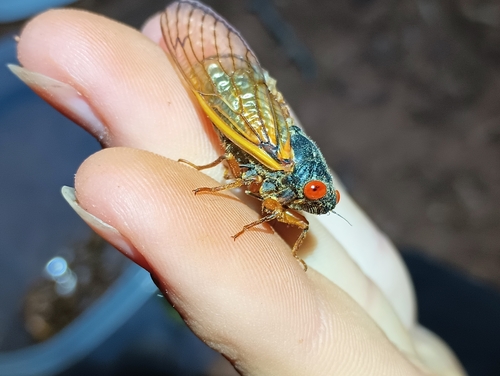
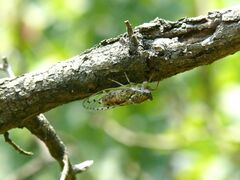
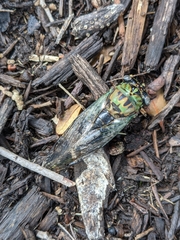
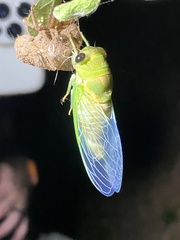
More photos
Questions people ask
How often do Little 13-Year Cicadas appear?
Adults emerge only once every thirteen years.
Source: Wikipedia
Same family (Cicadidae)
Sources
- Wikipedia: https://en.wikipedia.org/wiki/Magicicada_tredecula
Look it up elsewhere: GBIF · iNaturalist · BugGuide · ITIS · Wikipedia
Text written 2026-10-27 from the sources above and checked sentence by sentence against them. Data fetched 2026-10-27.