 Bug FAQ
Lesser Marsh Grasshopper
Chorthippus albomarginatus · Order: Orthoptera · Family: Acrididae
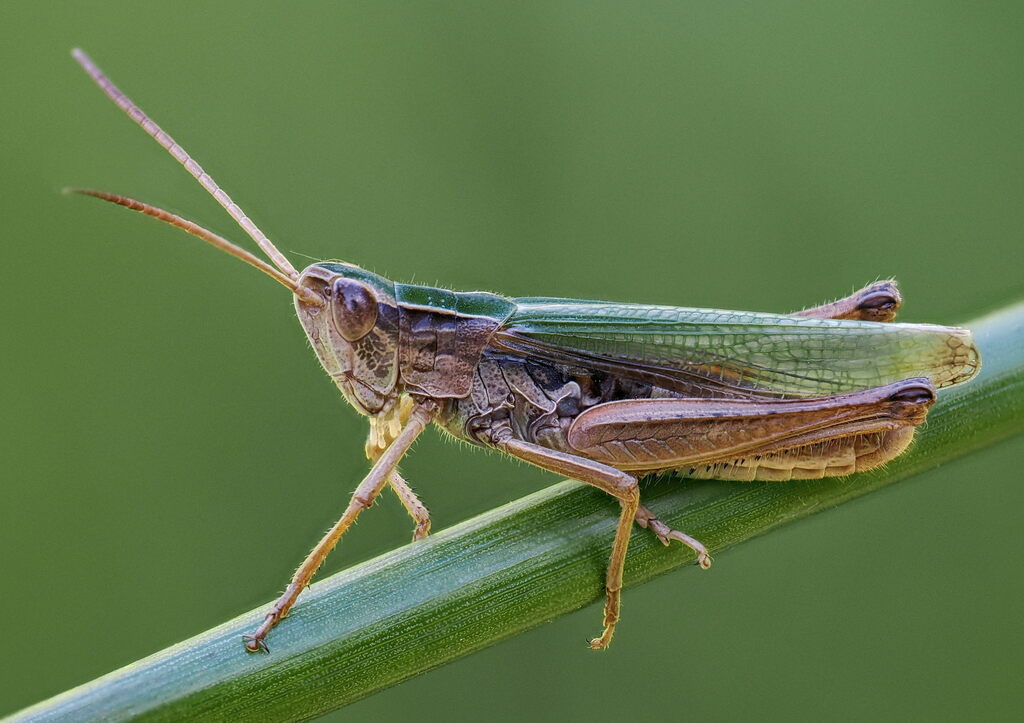
The lesser marsh grasshopper lives in a variety of European grasslands, from damp marshes to dry and salty coastal sites. Females are about 20 mm long and usually show a white stripe on the wing, while males are smaller at about 15 mm and rarely have the stripe. Its range stretches from Finland and southern Scandinavia down to Spain and Italy.
Source: Wikipedia
How to recognize it
Both sexes can vary widely in colour, ranging from green to brown.
Source: Wikipedia
Where it lives
It is common in European grasslands, including damp-marshy, dry, salt-marsh and coastal habitats.
Source: Wikipedia
Life cycle
Females lay their eggs at the base of grass blades.
Source: Wikipedia
Lookalikes
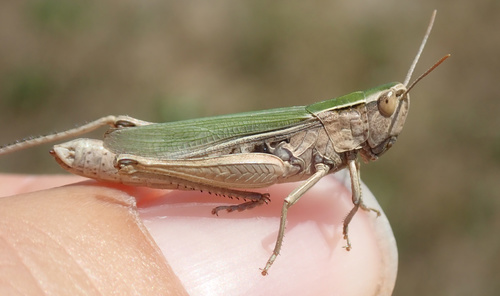
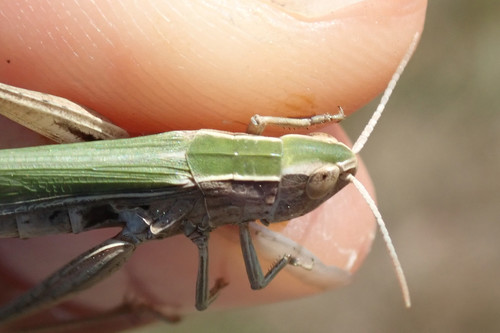
It can be told apart from the meadow grasshopper by its ability to fly, the female’s white wing stripe, and a more pointed snout.
Source: Wikipedia
More photos
Questions people ask
How can I tell a male from a female?
Females usually have a white stripe on the wing and are larger (about 20 mm), while males are smaller (about 15 mm) and rarely show the stripe.
Source: Wikipedia
Where does the lesser marsh grasshopper live?
It inhabits a range of European grasslands, from damp marshes to dry and salty coastal areas.
Source: Wikipedia
What is the geographic range of this species?
Its range runs from Finland and southern Scandinavia down to Spain and Italy.
Source: Wikipedia
Same family (Acrididae)
 Differential GrasshopperMelanoplus differentialisDamages trees, gardens or crops
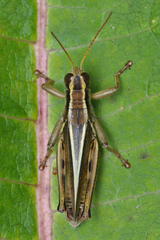 Two-striped GrasshopperMelanoplus bivittatusDamages trees, gardens or crops
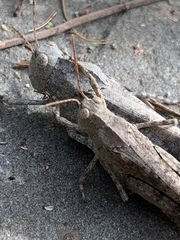 Carolina GrasshopperDissosteira carolinaDamages trees, gardens or crops
 Common Field GrasshopperChorthippus brunneus
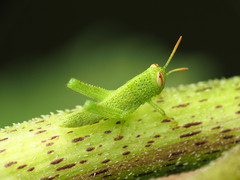 Egyptian Bird GrasshopperAnacridium aegyptium
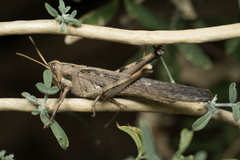 Gray Bird GrasshopperSchistocerca nitensDamages trees, gardens or crops
Sources
- Wikipedia: https://en.wikipedia.org/wiki/Chorthippus_albomarginatus
Look it up elsewhere: GBIF · iNaturalist · BugGuide · Wikipedia
Text written 2026-10-22 from the sources above and checked sentence by sentence against them. Data fetched 2026-10-22.