 Bug FAQ
Large Conehead
Ruspolia nitidula · Order: Orthoptera · Family: Tettigoniidae
Source: Wikipedia
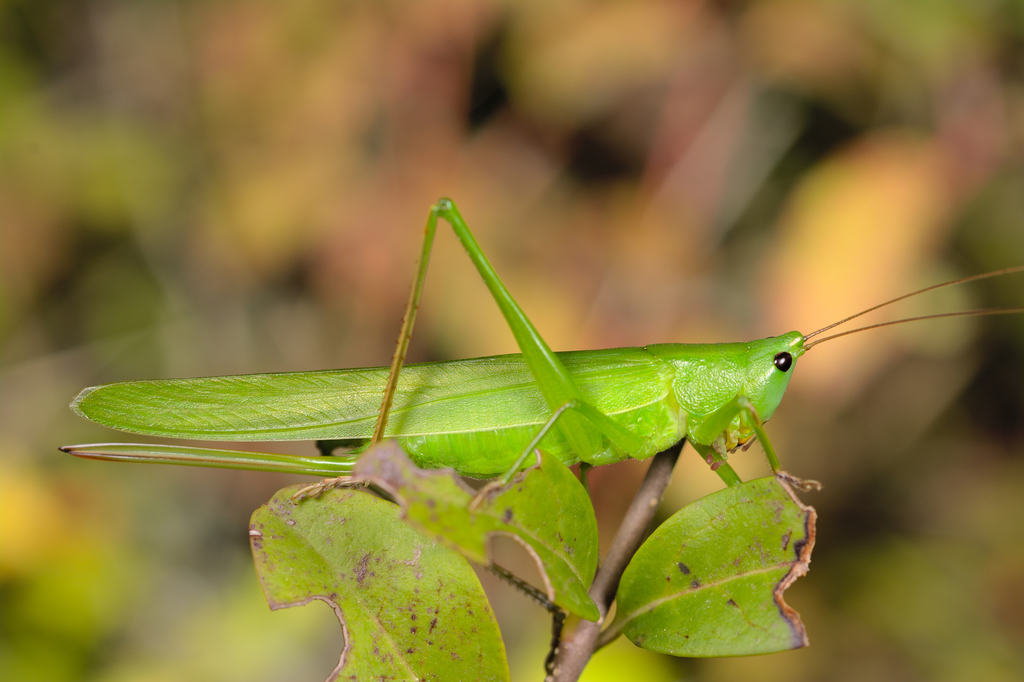
The large conehead is a green, slender bush cricket with a cone-shaped head and a cream band across the apex and eyes. It lives on wet, grassy riverbanks in central and southern Europe and has been spreading north into southern Britain. In Uganda the insects are harvested for food and are sautéed, deep-fried or boiled and dried.
Source: Wikipedia
How to recognize it
It is green, long, and thin with a cone-shaped head that has a cream-colored band crossing the top and the eyes. It is sometimes called a “cone-headed grasshopper,” though it is actually a bush cricket.
Source: Wikipedia
Size
Adults measure between 32 and 60 mm (about 1.3 to 2.4 inches) in length.
Source: Wikipedia
Does it bite or sting?
Stored crickets have a short shelf life and may bite when taken out of storage.
Source: Wikipedia
Where it lives
It prefers wet areas with long grass, such as riverbanks, across central and southern Europe. In recent decades it has moved northward, establishing populations in southern Britain.
Source: Wikipedia
What it eats
Large coneheads are harvested and eaten in Uganda, providing a notable source of income. In Uganda they are prepared by sautéing, deep-frying, boiling, and then drying.
Source: Wikipedia
Life cycle
Adults are present from July through October.
Source: Wikipedia
When you see it
They can be found during the months of July to October.
Source: Wikipedia
Where it comes from
The species occurs throughout Europe, Africa, and the Palearctic region of Asia.
Source: Wikipedia
Lookalikes
The name “cone-headed grasshopper” is sometimes used, but the insect is a bush cricket, not a grasshopper.
Source: Wikipedia
Questions people ask
Where can I find large conehead crickets?
They live on wet, grassy riverbanks in central and southern Europe and have spread into southern Britain.
Source: Wikipedia
Same family (Tettigoniidae)
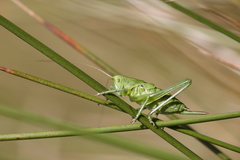 Great Green Bush-cricketTettigonia viridissimaCan bite
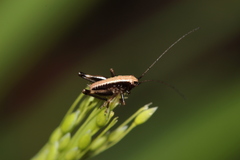 Dark Bush-cricketPholidoptera griseoaptera
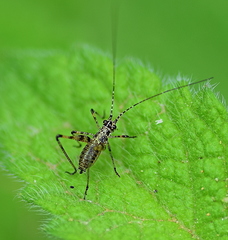 Mediterranean KatydidPhaneroptera nanaDamages trees, gardens or crops
 Fork-tailed Bush KatydidScudderia furcataDamages trees, gardens or crops
 Speckled Bush-cricketLeptophyes punctatissima
 Roesel's Bush-cricketRoeseliana roeselii
Sources
- Wikipedia: https://en.wikipedia.org/wiki/Ruspolia_nitidula
Look it up elsewhere: GBIF · iNaturalist · BugGuide · Wikipedia
Text written 2026-10-22 from the sources above and checked sentence by sentence against them. Data fetched 2026-10-22.