 Bug FAQ
Lantana Hispid
Uroplata girardi · Order: Coleoptera · Family: Chrysomelidae
Also called: Lantana Beetle, Lantana leafminer
Source: Wikipedia
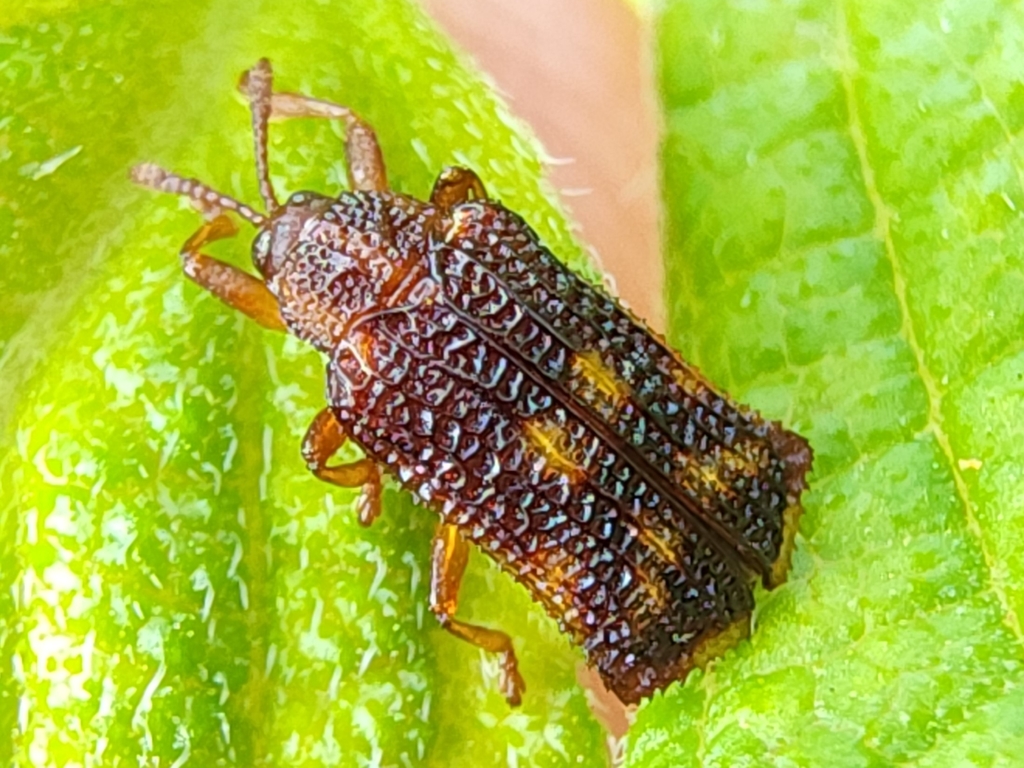
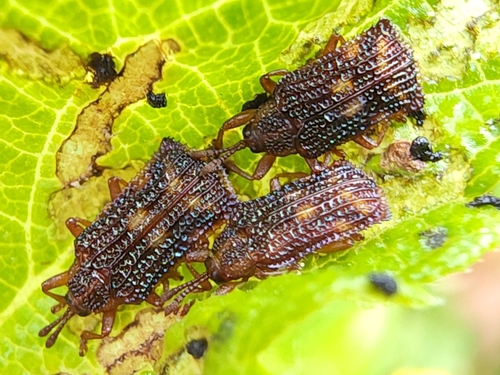
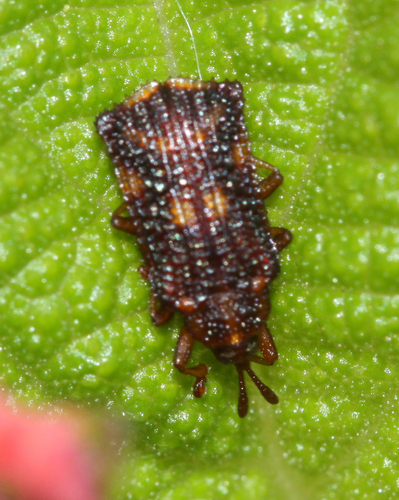
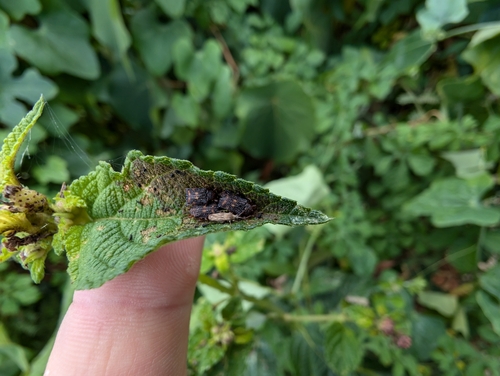
Uroplata girardi is a leaf-feeding beetle in the Chrysomelidae family. It is native to parts of Argentina, Brazil and Paraguay and has been introduced to many tropical regions worldwide. The larvae eat Lantana camara, while adults feed on several shrubs and trees such as Lippia alba and Lantana species.
Source: Wikipedia
How to recognize it
Uroplata girardi belongs to the leaf beetle family Chrysomelidae.
Source: Wikipedia
Where it lives
It occurs in Argentina, Brazil, Paraguay and many introduced locations across Africa, Asia, Oceania and the Americas.
Source: Wikipedia
What it eats
Larvae feed on the plant Lantana camara.
Source: Wikipedia
Where it comes from
Its native range includes Argentina, Brazil and Paraguay.
Source: Wikipedia
Lookalikes
It is a beetle of the family Chrysomelidae.
Source: Wikipedia
Where it is found in the US
Recorded in 1 of 51 states and DC. Most records: Hawaii.
Darker = more records. Counts are museum and citizen-science records, not population size.
Source: GBIF
Months it is reported in the US
Source: GBIF
More photos
Questions people ask
What plants does Uroplata girardi eat?
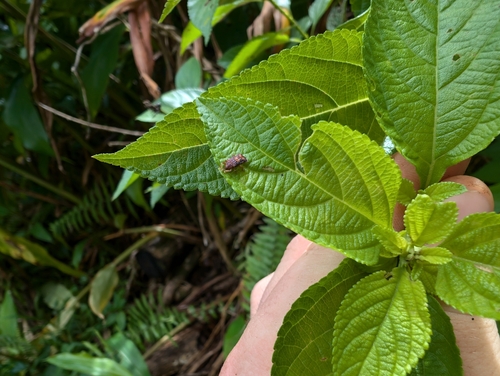
The larvae feed on Lantana camara, and adults feed on Lippia alba, several Lantana species, teak (Tectona grandis) and Verbena triphylla.
Source: Wikipedia
Where is Uroplata girardi found?
It is native to Argentina, Brazil and Paraguay and has been introduced to many tropical regions worldwide.
Source: Wikipedia
Same family (Chrysomelidae)
 Spotted Cucumber BeetleDiabrotica undecimpunctataDamages trees, gardens or crops
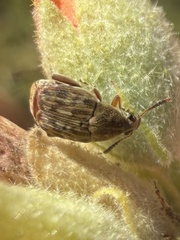 Bean WeevilAcanthoscelides obtectusDamages trees, gardens or crops
 Cowpea WeevilCallosobruchus maculatusDamages trees, gardens or crops
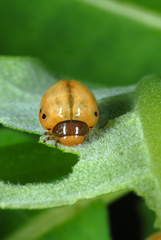 Swamp Milkweed Leaf BeetleLabidomera clivicollisDamages trees, gardens or crops
 Alder Leaf BeetleAgelastica alniDamages trees, gardens or crops
 Dogbane Leaf BeetleChrysochus auratus
Sources
- Wikipedia: https://en.wikipedia.org/wiki/Uroplata_girardi
Look it up elsewhere: GBIF · iNaturalist · BugGuide · ITIS · Wikipedia
Text written 2026-10-23 from the sources above and checked sentence by sentence against them. Data fetched 2026-10-23.