 Bug FAQ
Lance wolf spider
Schizocosa avida · Order: Araneae · Family: Lycosidae
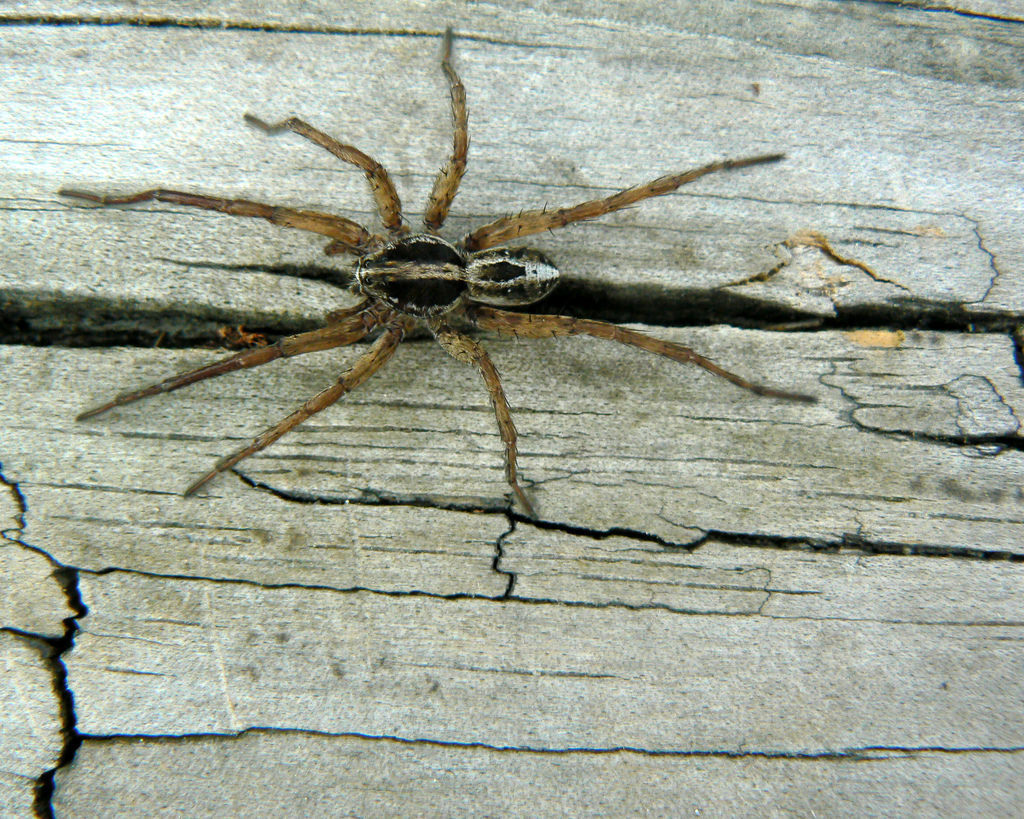
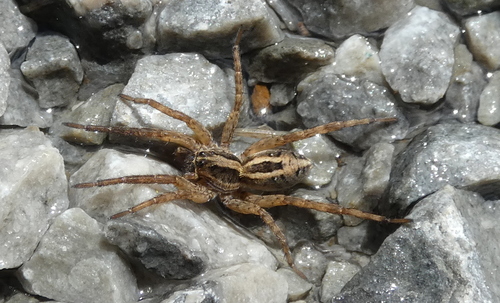
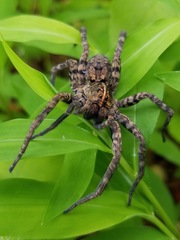
Female lance wolf spiders are 10 to 15 mm long and males are 8 to 11 mm (0.31 to 0.59 in). They have a dark central patch on the abdomen surrounded by a lighter margin. These spiders are active in spring and summer, living in open fields and prairies across the United States and Canada.
Source: Wikipedia
How to recognize it
The abdomen shows a dark central area with a light-colored edge.
Source: Wikipedia
Size
Females measure 10 to 15 mm and males 8 to 11 mm in length.
Source: Wikipedia
Where it lives
They are commonly found in open fields and prairies.
Source: Wikipedia
Life cycle
They can intentionally shed a leg to escape predators.
Source: Wikipedia
When you see it
They are most active during spring and summer.
Source: Wikipedia
Where it comes from
They occur throughout the United States and Canada in North America.
Source: Wikipedia
Where it is found in the US
Recorded in 40 of 51 states and DC. Most records: Texas, Ohio, Illinois, Kansas, Oklahoma, Virginia, Massachusetts, Pennsylvania.
Darker = more records. Counts are museum and citizen-science records, not population size.
Source: GBIF
Status: native in North America; native in Canada; native in United States. Source: iNaturalist
Months it is reported in the US
Source: GBIF
More photos
Questions people ask
How can I recognize a lance wolf spider?
Look for a spider about 8 to 15 mm long with a dark spot in the middle of the abdomen surrounded by a lighter border.
Source: Wikipedia
When are lance wolf spiders most active?
They are most active in the spring and summer months.
Source: Wikipedia
Where are lance wolf spiders found?
They live across the United States and Canada, especially in open fields and prairies.
Source: Wikipedia
Same family (Lycosidae)


Sources
- Wikipedia: https://en.wikipedia.org/wiki/Schizocosa_avida
Look it up elsewhere: GBIF · iNaturalist · BugGuide · ITIS · Wikipedia
Text written 2026-10-23 from the sources above and checked sentence by sentence against them. Data fetched 2026-10-23.