 Bug FAQ
Lake Huron Locust
Trimerotropis huroniana · Order: Orthoptera · Family: Acrididae
Also called: Lake Huron Grasshopper
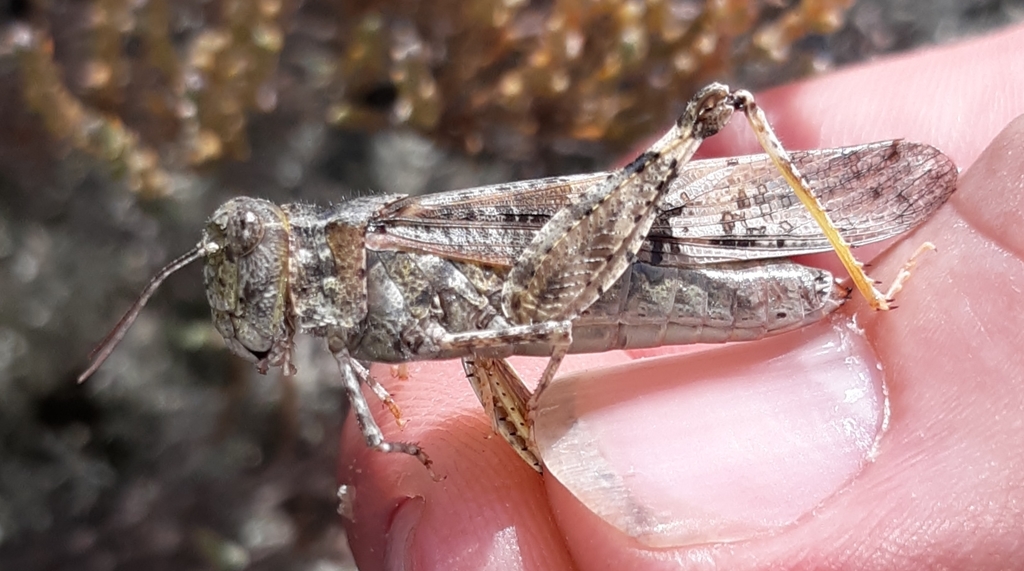
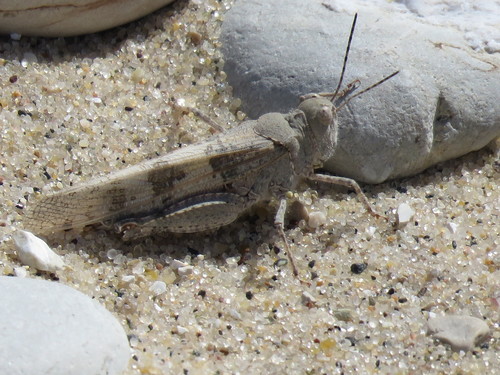
The Lake Huron locust is a grey-to-brown grasshopper that measures about 24 to 40 mm, with females larger than males. It lives on open dunes along the shores of Lakes Huron, Michigan and Superior in Wisconsin, Michigan and Ontario. Eggs are laid in sand, overwinter, and hatch in spring; the insects become adults in late July-August after five molts.
Source: Wikipedia
Where it lives
It is endemic to the Great Lakes area, preferring open dune habitats along lake shores.
Source: Wikipedia
What it eats
It feeds on plants such as Ammophila brevigulata, Calamovilfa longifolia and Artemisia campestris.
Source: Wikipedia
Life cycle
Eggs are deposited in sand where they overwinter and hatch as nymphs in spring. Nymphs molt five times and reach adulthood in late July to August.
Source: Wikipedia
When you see it
Adults appear in late July to August.
Source: Wikipedia
Where it is found in the US
Recorded in 2 of 51 states and DC. Most records: Michigan, Wisconsin.
Darker = more records. Counts are museum and citizen-science records, not population size.
Source: GBIF
Status: native in North America; native in Canada. Source: iNaturalist
Months it is reported in the US
Source: GBIF
More photos
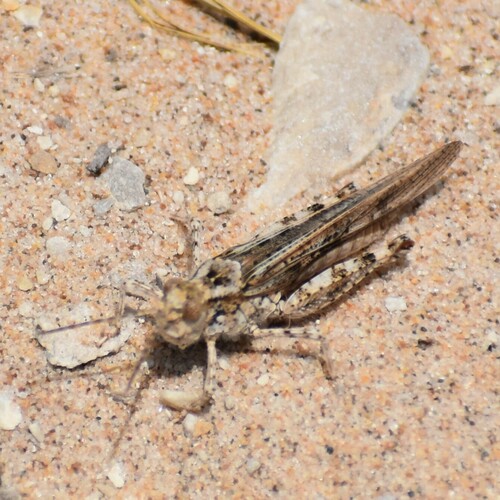
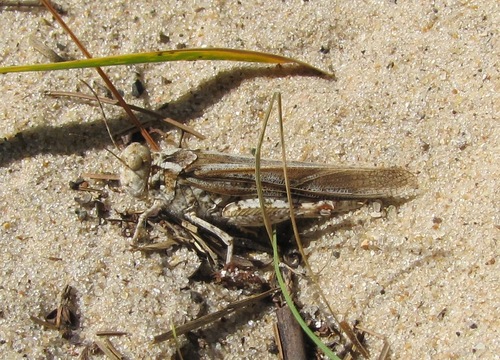
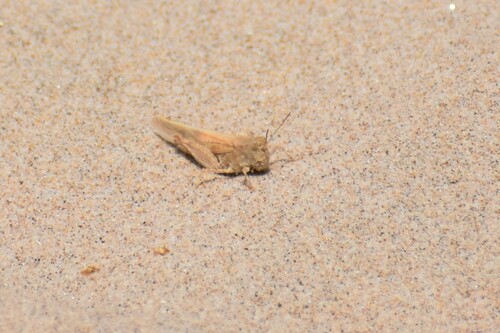
Questions people ask
Where does the Lake Huron locust live?
It lives on open dune habitats along the shores of Lakes Huron, Michigan and Superior in Wisconsin, Michigan and Ontario.
Source: Wikipedia
What do Lake Huron locusts eat?
They feed on plants such as Ammophila brevigulata, Calamovilfa longifolia and Artemisia campestris.
Source: Wikipedia
When are adult Lake Huron locusts active?
Adults are present from late July through August.
Source: Wikipedia
How can I tell a Lake Huron locust apart from similar species?
It is replaced by Trimerotropis maritima on the southern Lake Michigan shore, and the two species have very little overlap.
Source: Wikipedia
Same family (Acrididae)
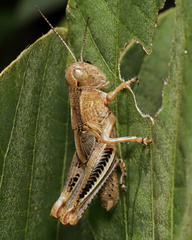 Differential GrasshopperMelanoplus differentialisDamages trees, gardens or crops
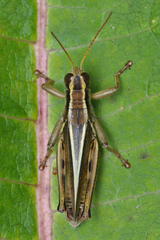 Two-striped GrasshopperMelanoplus bivittatusDamages trees, gardens or crops
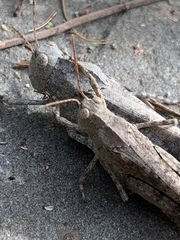 Carolina GrasshopperDissosteira carolinaDamages trees, gardens or crops
 Common Field GrasshopperChorthippus brunneus
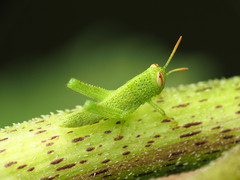 Egyptian Bird GrasshopperAnacridium aegyptium
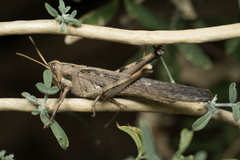 Gray Bird GrasshopperSchistocerca nitensDamages trees, gardens or crops
Sources
- Wikipedia: https://en.wikipedia.org/wiki/Trimerotropis_huroniana
Look it up elsewhere: GBIF · iNaturalist · BugGuide · ITIS · Wikipedia
Text written 2026-10-25 from the sources above and checked sentence by sentence against them. Data fetched 2026-10-25.