 Bug FAQ
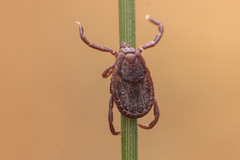
Kangaroo Tick
Amblyomma triguttatum · Order: Ixodida · Family: Ixodidae
Also called: Kangaroo hard tick, Ornate kangaroo tick
Source: Wikipedia

The ornate kangaroo tick lives in Western Australia, parts of Queensland and New South Wales. It feeds only on blood, taking meals from the animals it attaches to. Each stage of its life needs a host for a blood meal, but adult males usually skip feeding and look for mates.
Source: Wikipedia
Does it bite or sting?
As a blood-feeding parasite, it can attach to and bite people or pets.
Source: Wikipedia
What it eats
It is a hard tick that must drink blood to survive.
Source: Wikipedia
Life cycle
It uses three different hosts, one for each developmental stage. Adult males normally do not take blood meals and instead seek females for reproduction.
Source: Wikipedia
Where it comes from
Found in Western Australia, parts of Queensland and New South Wales.
Source: Wikipedia
More photos
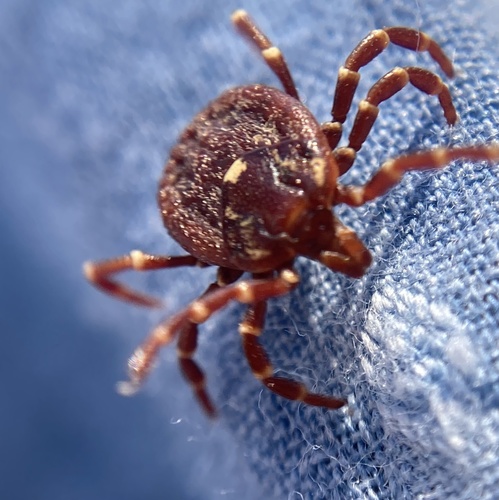
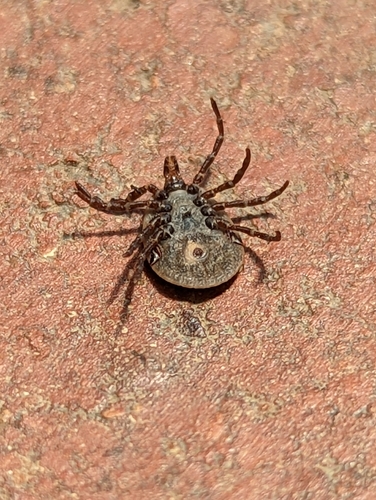
Questions people ask
Do kangaroo ticks bite people or pets?
Yes, they feed on blood and can attach to humans or animals.
Source: Wikipedia
Where are kangaroo ticks found?
They are native to Western Australia, parts of Queensland and New South Wales.
Source: Wikipedia
What do kangaroo ticks eat?
They are obligate hematophages, meaning they only consume blood.
Source: Wikipedia
How many hosts does a kangaroo tick need in its life cycle?
Each developmental stage requires a separate host for a blood meal.
Source: Wikipedia
Same family (Ixodidae)
 American Dog TickDermacentor variabilisCan spread germs or disease
 Eastern Black-legged TickIxodes scapularisCan spread germs or disease
 Lone Star TickAmblyomma americanumCan spread germs or disease
 Gulf Coast TickAmblyomma maculatumCan spread germs or disease
 Western Black-legged TickIxodes pacificusCan spread germs or disease
 Brown Dog TickRhipicephalus sanguineusCan spread germs or disease
Sources
- Wikipedia: https://en.wikipedia.org/wiki/Amblyomma_triguttatum
Look it up elsewhere: GBIF · iNaturalist · BugGuide · ITIS · Wikipedia
Text written 2026-10-23 from the sources above and checked sentence by sentence against them. Data fetched 2026-10-23.