 Bug FAQ
Jumping spiders
Colonus puerperus · Order: Araneae · Family: Salticidae
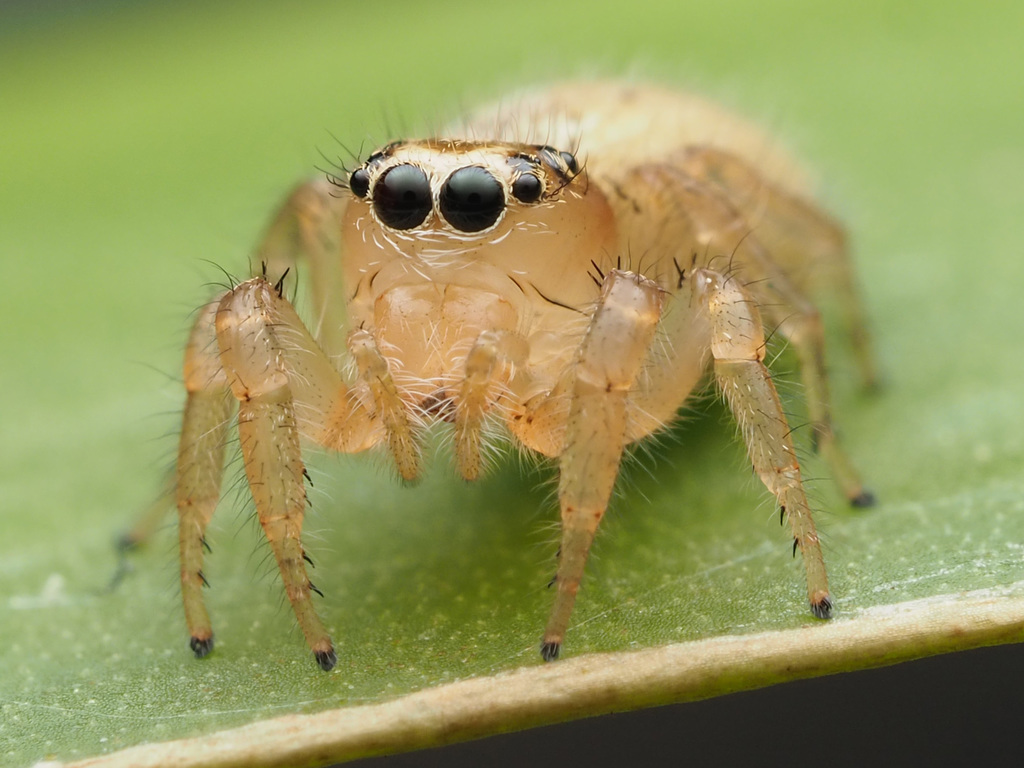
Adult females measure about 7 to 11 mm and males about 5 to 7 mm in length. They live in grassy areas during the warm months and are found from the Gulf Coast up through the eastern United States.
Source: Wikipedia
Size
Female spiders are roughly 7 to 11 mm long. Male spiders are roughly 5 to 7 mm long.
Source: Wikipedia
Where it lives
They are usually seen in grassy places during the warmer part of the year.
Source: Wikipedia
When you see it
They are most common in grassy areas during the warm months.
Source: Wikipedia
Where it comes from
This jumping spider lives in the eastern United States and Mexico.
Source: Wikipedia
Where it is found in the US
Recorded in 26 of 51 states and DC. Most records: Texas, Oklahoma, Florida, Georgia, Virginia, New Jersey, Ohio, Maryland.
Darker = more records. Counts are museum and citizen-science records, not population size.
Source: GBIF
Status: native in North America. Source: iNaturalist
Months it is reported in the US
Source: GBIF
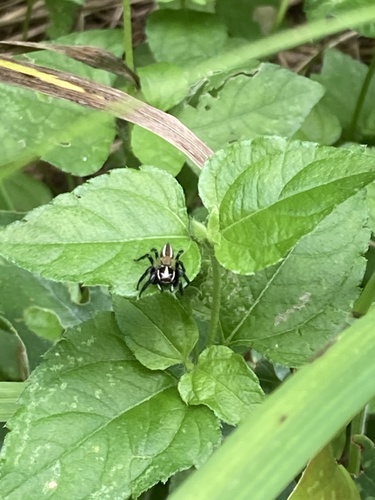
More photos
Questions people ask
What size are these spiders?
Females are about 7 to 11 mm long and males are about 5 to 7 mm long.
Source: Wikipedia
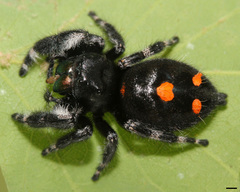
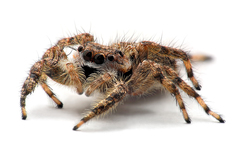
Same family (Salticidae)



Sources
- Wikipedia: https://en.wikipedia.org/wiki/Colonus_puerperus
Look it up elsewhere: GBIF · iNaturalist · BugGuide · ITIS · Wikipedia
Text written 2026-10-24 from the sources above and checked sentence by sentence against them. Data fetched 2026-10-24.