 Bug FAQ
Jumping spider
Habronattus pyrrithrix · Order: Araneae · Family: Salticidae
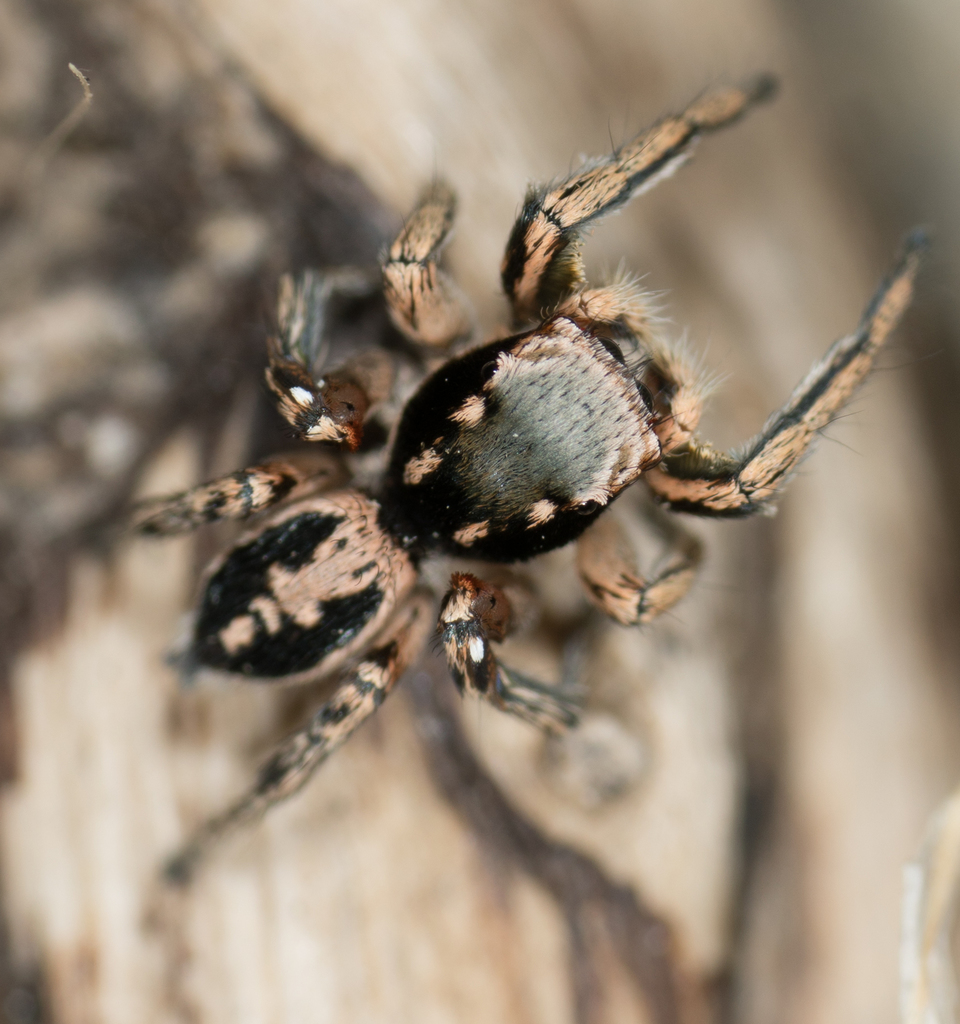
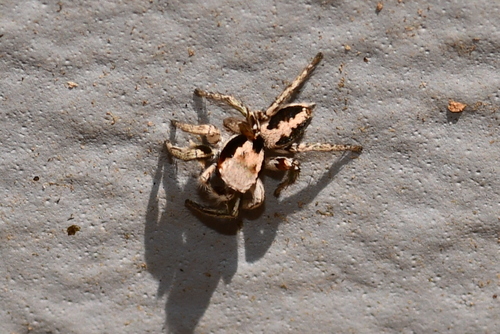
Male Habronattus pyrrithrix have bright red faces, green legs and bold black stripes, while females are uniformly coloured and larger than males, which can lead to cannibalism during courtship. Males perform visual and substrate-borne displays to increase mating success and reduce the chance of being eaten by unimpressed females.
Source: Wikipedia
How to recognize it
Males show bold black stripes and bright red faces with green legs; females have a uniform colour without stripes.
Source: Wikipedia
Size
Females are larger than males, which makes courting males vulnerable to cannibalism.
Source: Wikipedia
Where it lives
They are found in grassy spots covered with plant material or close to bodies of water. Courtship can happen in both open and shaded environments.
Source: Wikipedia
What it eats
They feed on a variety of prey such as flies, caterpillars, aphids and other spiders.
Source: Wikipedia
Life cycle
Males will court any female they encounter, which can provoke aggression from females of other species. Combining visual signals with substrate-borne displays improves male reproductive success and lowers the risk of cannibalism.
Source: Wikipedia
Where it comes from
Their range includes the southwestern United States and western Mexico.
Source: Wikipedia
Where it is found in the US
Recorded in 5 of 51 states and DC. Most records: California, Arizona, Hawaii, Nevada, Utah.
Darker = more records. Counts are museum and citizen-science records, not population size.
Source: GBIF
Status: native in North America; native in United States. Source: iNaturalist
Months it is reported in the US
Source: GBIF
More photos
Questions people ask
How can I tell male and female Habronattus pyrrithrix apart?
Males have bright red faces, green legs and bold black stripes, while females are uniformly coloured and larger.
Source: Wikipedia
Where does Habronattus pyrrithrix live?
They inhabit grassy areas with plant debris or near water in the southwestern US and western Mexico.
Source: Wikipedia
What do these spiders eat?
Their diet includes flies, caterpillars, aphids and other spiders.
Source: Wikipedia
Same family (Salticidae)



Sources
- Wikipedia: https://en.wikipedia.org/wiki/Habronattus_pyrrithrix
Look it up elsewhere: GBIF · iNaturalist · BugGuide · ITIS · Wikipedia
Text written 2026-10-23 from the sources above and checked sentence by sentence against them. Data fetched 2026-10-23.