 Bug FAQ
Julia's Skipper
Nastra julia · Order: Lepidoptera · Family: Hesperiidae
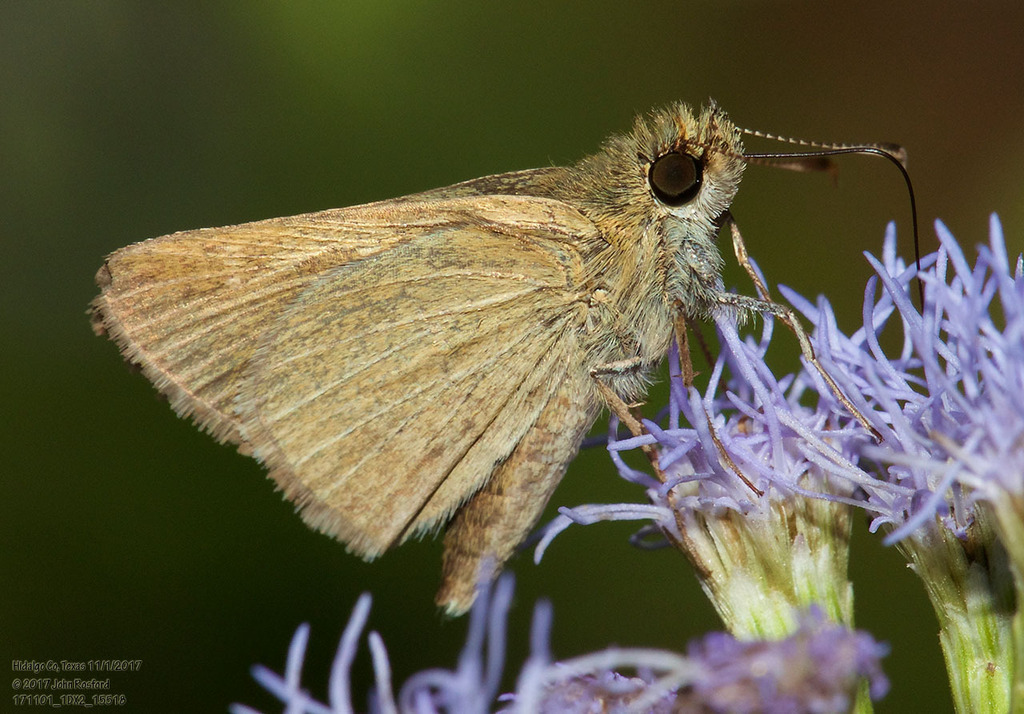
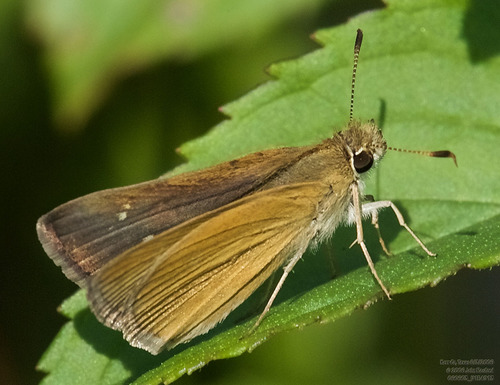
Julia's Skipper has a wingspan of about 24 to 29 mm (1½ to 1⅛ inches) and dark brown upper wings with two to five pale spots on the forewing, the hindwing being unmarked.
Source: Wikipedia
How to recognize it
The upper side of the wings is dark brown, and the forewing shows two to five pale spots while the hindwing lacks markings.
Source: Wikipedia
Size
Its wingspan measures about 24 to 29 mm, roughly 1½ to 1⅛ inches.
Source: Wikipedia
What it eats
Caterpillars feed on the grass Cynodon dactylon, and adults drink nectar from flowers.
Source: Wikipedia
When you see it
Adults can be seen flying all year in southern Texas, and from April through October elsewhere in its range.
Source: Wikipedia
Where it comes from
Its native range includes southern Texas through central Mexico in North America.
Source: Wikipedia
Where it is found in the US
Recorded in 5 of 51 states and DC. Most records: Texas, Arizona, California, Florida, South Carolina.
Darker = more records. Counts are museum and citizen-science records, not population size.
Source: GBIF
Months it is reported in the US
Source: GBIF
More photos
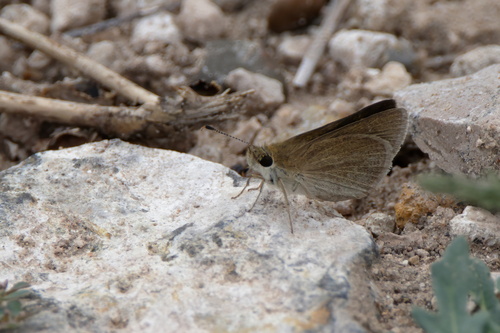
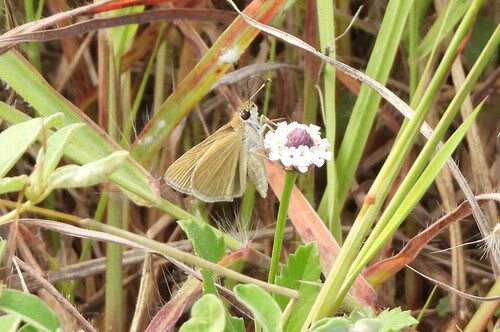
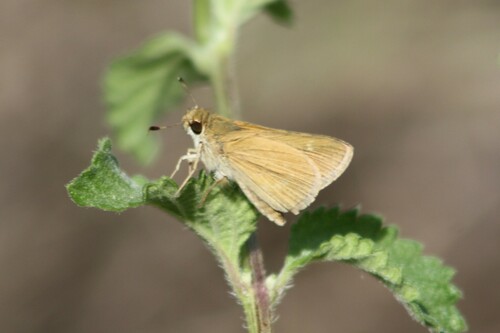
Questions people ask
What do adult Julia's Skippers look like?
They have dark brown upper wings with two to five pale spots on the forewing and an unmarked hindwing.
Source: Wikipedia
Same family (Hesperiidae)




Sources
- Wikipedia: https://en.wikipedia.org/wiki/Nastra_julia
Look it up elsewhere: GBIF · iNaturalist · BugGuide · ITIS · Wikipedia
Text written 2026-10-24 from the sources above and checked sentence by sentence against them. Data fetched 2026-10-24.