 Bug FAQ
Juba Skipper
Hesperia juba · Order: Lepidoptera · Family: Hesperiidae

Juba skippers have a wingspan of 32 to 42 mm and conspicuous white markings that are heavier than in other Hesperia species.
Source: Wikipedia
How to recognize it
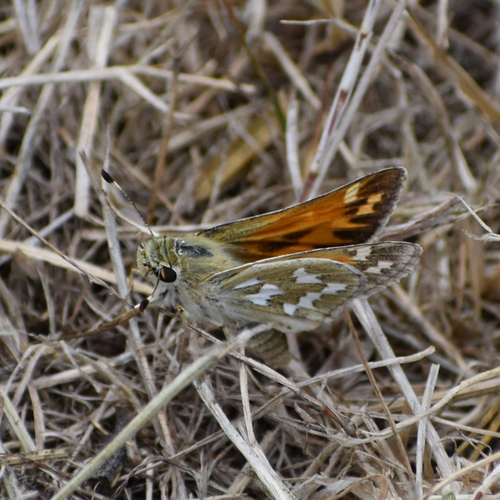
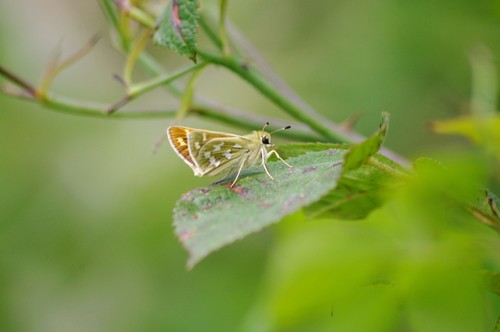
Juba skippers have prominent white markings that stand out more than in other Hesperia species. Males show bright orange-brown upper wings with toothed edges, while females have larger wings with vivid orange and yellow patterns.
Source: Wikipedia
Size
Their wingspan ranges from about 32 to 42 mm.
Source: Wikipedia
Where it lives
They are most common where bunchgrasses grow, which serve as their host plants.
Source: Wikipedia
What it eats
Adults sip nectar from many flowers, including rabbitbrush.
Source: Wikipedia
Life cycle
Larvae grow to the second instar in about a week and reach the fifth instar in roughly 35 days, depending on temperature.
Source: Wikipedia
When you see it
The species is bivoltine, showing a spring flight and an autumn flight.
Source: Wikipedia
Where it comes from
Their northern limit is British Columbia and the southern limit reaches northern Arizona and north-western New Mexico.
Source: Wikipedia
Lookalikes
Heavier white markings help tell it apart from other Hesperia species. Unlike its relatives, it does not habitually perch on hilltops or high ridges.
Source: Wikipedia
Where it is found in the US
Recorded in 16 of 51 states and DC. Most records: California, Washington, Idaho, Colorado, Oregon, Utah, Nevada, Wyoming.
Darker = more records. Counts are museum and citizen-science records, not population size.
Source: GBIF
Status: native in North America; native in Canada; native in United States. Source: iNaturalist
Months it is reported in the US
Source: GBIF
More photos


Same family (Hesperiidae)




Sources
- Wikipedia: https://en.wikipedia.org/wiki/Hesperia_juba
Look it up elsewhere: GBIF · iNaturalist · BugGuide · ITIS · Wikipedia
Text written 2026-10-23 from the sources above and checked sentence by sentence against them. Data fetched 2026-10-23.