 Bug FAQ
Javanese Grasshopper
Valanga nigricornis · Order: Orthoptera · Family: Acrididae
Also called: Javanese Bird Grasshopper
Source: Wikipedia
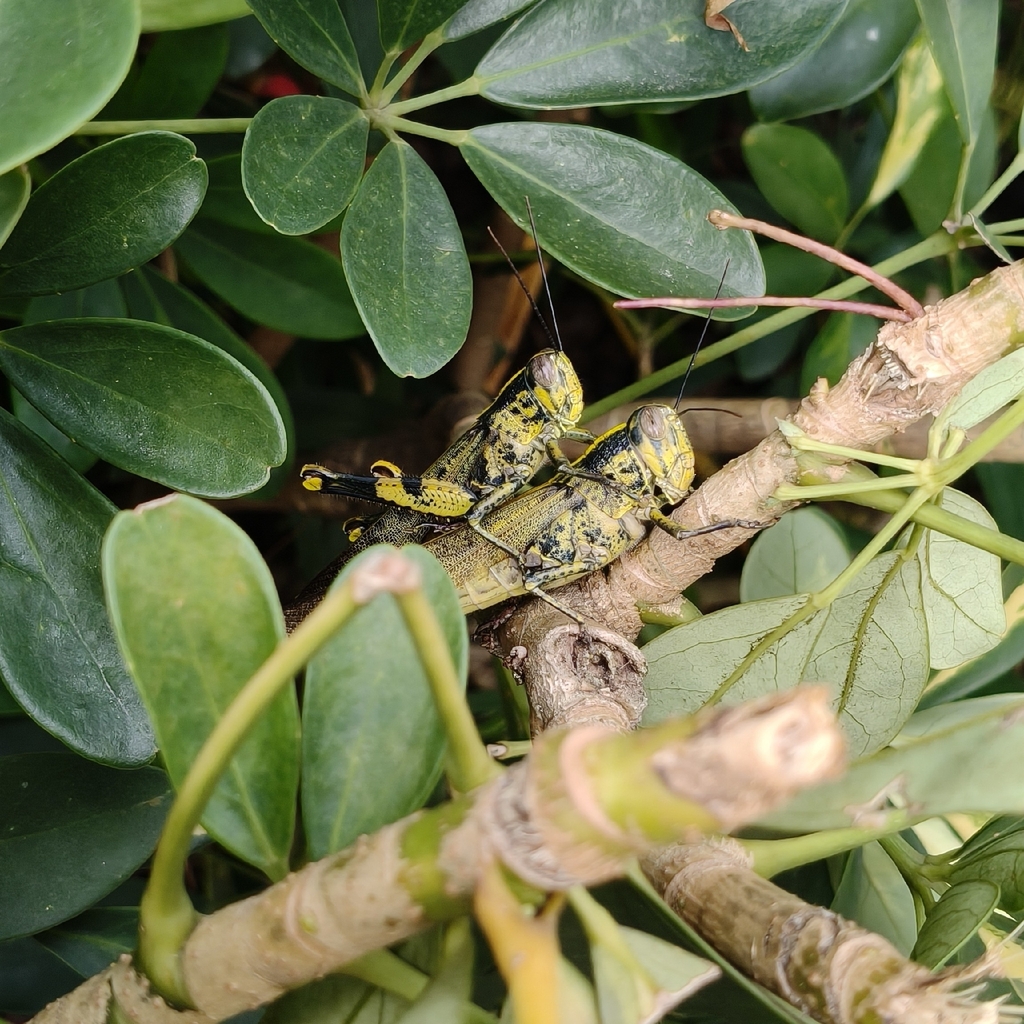
Adults are yellow-brown to green with bluish-black spots and rose-red hind wings that show in flight. Males are 45 to 55 mm long, females 15 to 75 mm, and they live in forest clearings, on trees and shrubs.
Source: Wikipedia
Size
Males measure 45 to 55 mm and females 15 to 75 mm in length.
Source: Wikipedia
How to get rid of it
Trap cropping and planting Pueraria phaseoloides can help control it.
Source: Wikipedia
Where it lives
It lives mainly in woodlands, especially in forest clearings and on trees and shrubs.
Source: Wikipedia
What it eats
Both nymphs and adults feed on tree foliage and are active in daylight.
Source: Wikipedia
Life cycle
There is one generation per year; eggs hatch into nymphs that pass through six or seven instars before becoming winged adults.
Source: Wikipedia
When you see it
In Java, eggs stay dormant through the dry season and hatch after six to eight months; in Thailand they hatch after about two months, grow in the wet season, and remain immature in the dry season.
Source: Wikipedia
More photos
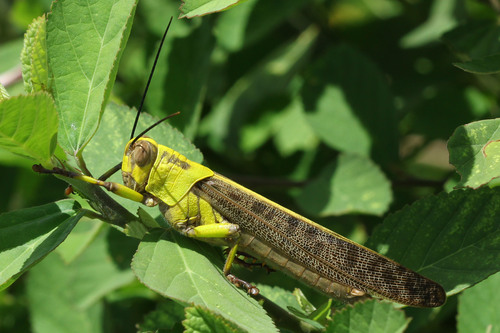
Questions people ask
How can I control Javanese grasshoppers in my garden?
Using trap crops or planting Pueraria phaseoloides can reduce their numbers.
Source: Wikipedia
What plants do Javanese grasshoppers damage?
They feed on the foliage of oil palm and rubber trees, causing serious damage in plantations.
Source: Wikipedia
When do Javanese grasshopper eggs hatch?
In Java they hatch after six to eight months of dormancy; in Thailand they hatch after about two months.
Source: Wikipedia
Same family (Acrididae)
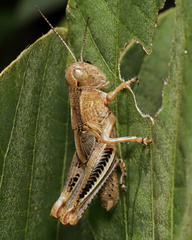 Differential GrasshopperMelanoplus differentialisDamages trees, gardens or crops
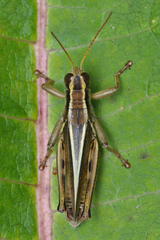 Two-striped GrasshopperMelanoplus bivittatusDamages trees, gardens or crops
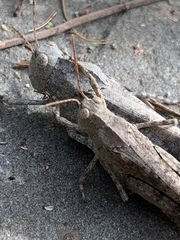 Carolina GrasshopperDissosteira carolinaDamages trees, gardens or crops
 Common Field GrasshopperChorthippus brunneus
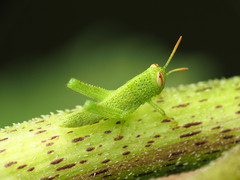 Egyptian Bird GrasshopperAnacridium aegyptium
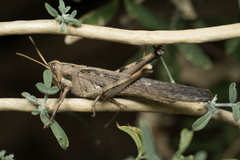 Gray Bird GrasshopperSchistocerca nitensDamages trees, gardens or crops
Sources
- Wikipedia: https://en.wikipedia.org/wiki/Valanga_nigricornis
Look it up elsewhere: GBIF · iNaturalist · BugGuide · Wikipedia
Text written 2026-10-22 from the sources above and checked sentence by sentence against them. Data fetched 2026-10-22.