 Bug FAQ
Japanese Assassin Bug
Agriosphodrus dohrni · Order: Hemiptera · Family: Reduviidae
Source: Wikipedia

The Japanese assassin bug is a large, glossy-black true bug with white wax spots and red markings on the abdomen (females red tip, males red patch). It lives on tree trunks near human areas in China, Southeast Asia and India, but has become invasive in Japan where it can sting people. Eggs hatch from early May to mid-June, and the nymphs develop quickly, hunting cooperatively on the tree surface.
Source: Wikipedia
How to recognize it
Adults are glossy black with white wax spots along the sides. Females have a red tip on the abdomen, while males show a red patch on the lower belly.
Source: Wikipedia
Size
Females can grow up to about 25 mm long, and males up to about 20 mm.
Source: Wikipedia
Is it a pest in the house?
In Japan they are classified as invasive because they prey on native arthropods and can deliver painful stings to humans.
Source: Wikipedia
Does it bite or sting?
Although not aggressive, they can sting people, causing a painful reaction.
Source: Wikipedia
How to get rid of it
Japanese authorities have not started any mitigation, control or eradication programs. They are being studied as natural enemies of other invasive insects such as fall webworm and Parasa lepida.
Source: Wikipedia
Where it lives
They are found on the trunks of trees such as poplar, willow and tree of heaven near parks and roadsides.
Source: Wikipedia
What it eats
They are considered for biological control of certain agricultural or forest insect pests. Nymphs stay together on tree trunks, hunt cooperatively and share captured prey.
Source: Wikipedia
Life cycle
Development includes hatching, molting and emergence.
Source: Wikipedia
Where it comes from
Their natural range includes mainland China, Southeast Asia and India. Despite the name, they are not native to Japan; they were first recorded there in 1930 and are now invasive.
Source: Wikipedia
More photos


Questions people ask
How big do they get?
Females reach up to about 25 mm and males up to about 20 mm in length.
Source: Wikipedia
Where are they native to?
They are native to mainland China, Southeast Asia and India, but are invasive in Japan.
Source: Wikipedia
Same family (Reduviidae)
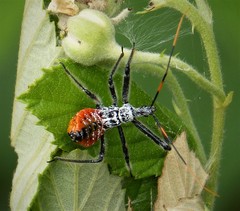 North American Wheel BugArilus cristatusCan bite
 Leafhopper Assassin BugZelus renardiiCan bite
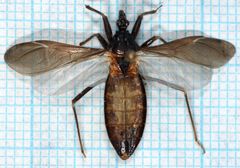 Masked HunterReduvius personatusCan bite
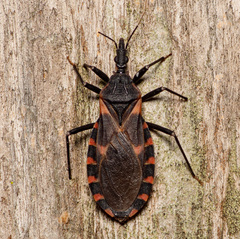 Eastern Bloodsucking ConenoseTriatoma sanguisugaCan spread germs or disease
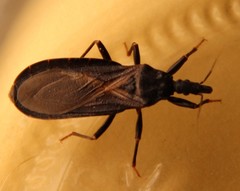 Western Bloodsucking ConenoseTriatoma protractaCan spread germs or disease
 Pale Green Assassin BugZelus luridusCan bite
Sources
- Wikipedia: https://en.wikipedia.org/wiki/Agriosphodrus
Look it up elsewhere: GBIF · iNaturalist · BugGuide · ITIS · Wikipedia
Text written 2026-10-23 from the sources above and checked sentence by sentence against them. Data fetched 2026-10-23.