 Bug FAQ
Jamaican Field Cricket
Gryllus assimilis · Order: Orthoptera · Family: Gryllidae
Source: Wikipedia
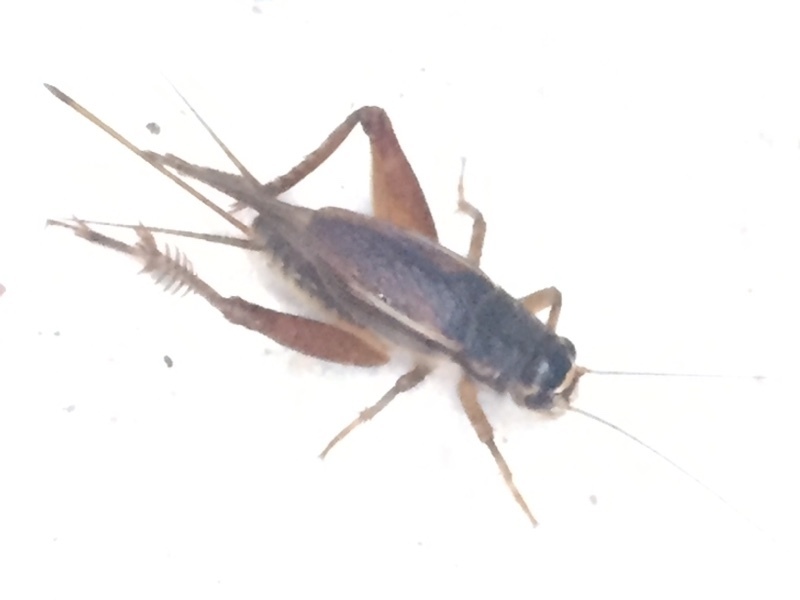
Females lay up to 400 eggs in damp soil and the nymphs develop for six to seven weeks before reaching adulthood.
Source: Wikipedia
Is it a pest in the house?
It is considered a pest in vegetable and flower gardens and citrus nurseries.
Source: Wikipedia
Where it lives
It lives in weedy fields, along roadsides, on lawns and in rough pasture.
Source: Wikipedia
What it eats
Adults sometimes eat eggs they find in the soil, including those of their own species.
Source: Wikipedia
Life cycle
Females can deposit as many as 400 eggs into moist soil using an ovipositor. Nymphs develop for about six to seven weeks before becoming sexually mature, after which males start calling for females.
Source: Wikipedia
Lookalikes
It is often confused with Gryllus locorojo, which differs in morphology and song and is known as the “crazy red” or “banana cricket.”
Source: Wikipedia
Where it is found in the US
Recorded in 31 of 51 states and DC. Most records: Arizona, Utah, Illinois, Nevada, Texas, Oklahoma, California, Colorado.
Darker = more records. Counts are museum and citizen-science records, not population size.
Source: GBIF
Status: introduced in United States. Source: iNaturalist
Months it is reported in the US
Source: GBIF
More photos


Questions people ask
How can I get rid of Jamaican field crickets?
Soil fumigation with calcium cyanide has been used historically to control them, though it is highly toxic.
Source: Wikipedia
What plants do they damage?
They are pests of vegetable and flower gardens and can also harm citrus nurseries.
Source: Wikipedia
How long does it take for them to become adults?
Nymphs mature in six to seven weeks before the males begin calling for mates.
Source: Wikipedia
What other cricket is it often mistaken for?
It is frequently confused with Gryllus locorojo, which has different markings and song.
Source: Wikipedia
Same family (Gryllidae)


Sources
- Wikipedia: https://en.wikipedia.org/wiki/Gryllus_assimilis
Look it up elsewhere: GBIF · iNaturalist · BugGuide · ITIS · Wikipedia
Text written 2026-10-24 from the sources above and checked sentence by sentence against them. Data fetched 2026-10-24.