 Bug FAQ
Jagged Ambush Bug
Phymata americana · Order: Hemiptera · Family: Reduviidae
Also called: American Ambush Bug

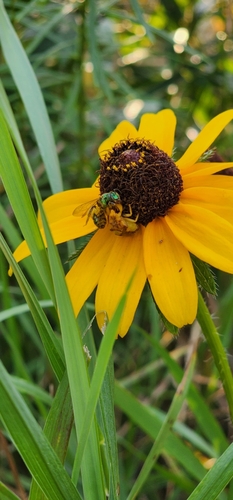
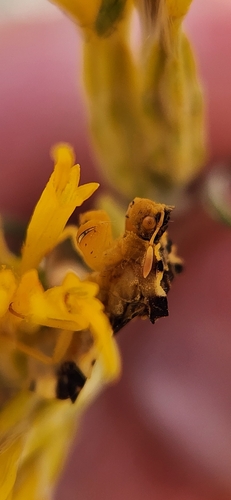
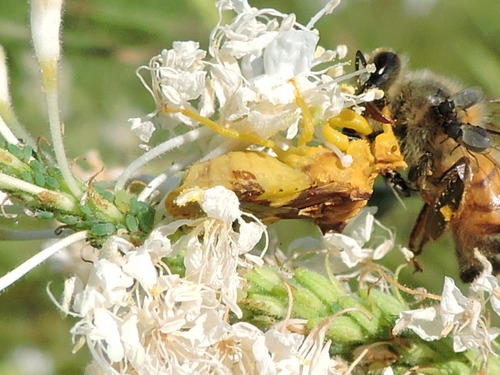
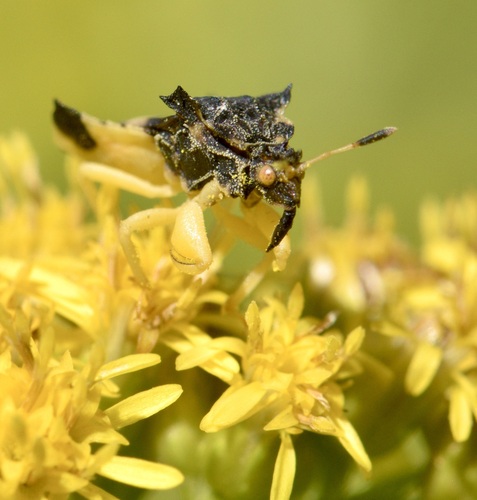
Jagged ambush bugs are sit-and-wait predators that perch on flower heads and snatch visiting insects with their large forelegs. Adults are found on flowering plants in open fields near forest edges, farms and urban areas across Central and North America. Males are generally darker than females and actively search for, and sometimes guard, females.
Source: Wikipedia
How to recognize it
Males tend to be darker than females, but only after they reach adulthood. Color patterns are not used for courtship or rivalry signaling.
Source: Wikipedia
What it eats
They eat a wide variety of insects, especially small bees, moths, and flies. They capture prey by ambushing insects that visit the flowers they sit on.
Source: Wikipedia
Life cycle
Males actively look for females during the breeding period. Males may also guard a female from rival males.
Source: Wikipedia
Where it comes from
Their range includes Central America and North America, where they wait on flowers for prey.
Source: Wikipedia
Where it is found in the US
Recorded in 47 of 51 states and DC. Most records: Colorado, Wisconsin, Illinois, Texas, Minnesota, Arizona, Vermont, California.
Darker = more records. Counts are museum and citizen-science records, not population size.
Source: GBIF
Status: native in North America; native in United States; native in Canada. Source: iNaturalist
Months it is reported in the US
Source: GBIF
More photos
Same family (Reduviidae)
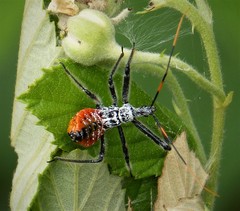 North American Wheel BugArilus cristatusCan bite
 Leafhopper Assassin BugZelus renardiiCan bite
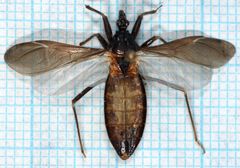 Masked HunterReduvius personatusCan bite
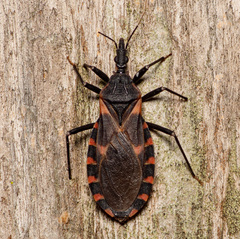 Eastern Bloodsucking ConenoseTriatoma sanguisugaCan spread germs or disease
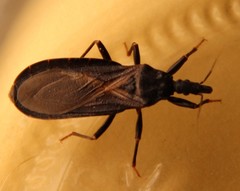 Western Bloodsucking ConenoseTriatoma protractaCan spread germs or disease
 Pale Green Assassin BugZelus luridusCan bite
Sources
- Wikipedia: https://en.wikipedia.org/wiki/Phymata_americana
Look it up elsewhere: GBIF · iNaturalist · BugGuide · ITIS · Wikipedia
Text written 2026-10-22 from the sources above and checked sentence by sentence against them. Data fetched 2026-10-22.