 Bug FAQ
Harlequin Red Bug
Dindymus versicolor · Order: Hemiptera · Family: Pyrrhocoridae
Source: Wikipedia
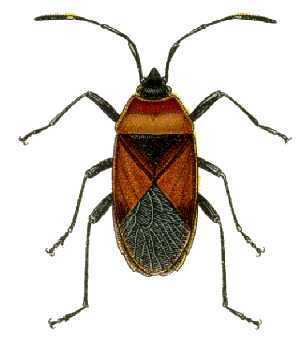
The harlequin red bug is about 12 mm long, has a black head and orange-red body with red triangles visible when the wings are folded. It feeds by sucking plant juices and can harm many crops and garden plants, including cotton, fruits, strawberries, vegetables and ornamental flowers.
Source: Wikipedia
Size
Adults grow up to about 12 mm long.
Source: Wikipedia
Is it a pest in the house?
They have a reputation as garden pests that can damage a wide range of plants.
Source: Wikipedia
Where it lives
In winter they hide in dark, shady spots such as under compost, timber, hedges or fence palings.
Source: Wikipedia
What it eats
These true bugs suck plant juices and are considered garden pests, damaging many plant species. They attack crops like cotton, pome and stone fruits, figs, grapes, strawberries, vegetables and ornamental plants such as wisteria, dahlias and violets.
Source: Wikipedia
When you see it
During winter they seek shelter in dark, moist locations.
Source: Wikipedia
Where it comes from
They are native to south-eastern Australia and Tasmania.
Source: Wikipedia
Questions people ask
What plants does the harlequin red bug damage?
It feeds on cotton, many fruits, strawberries, vegetables and ornamental flowers such as wisteria, dahlias and violets.
Source: Wikipedia
Where can I find them in winter?
In winter they hide in dark, shady places like under compost, timber, hedges or fence palings.
Source: Wikipedia
How can I recognise a harlequin red bug?
Look for a black head, orange-red body and two red triangles visible when the wings are folded.
Source: Wikipedia
Same family (Pyrrhocoridae)



Sources
- Wikipedia: https://en.wikipedia.org/wiki/Dindymus_versicolor
Look it up elsewhere: GBIF · iNaturalist · BugGuide · Wikipedia
Text written 2026-10-22 from the sources above and checked sentence by sentence against them. Data fetched 2026-10-22.