 Bug FAQ
Iberian Mantis
Apteromantis aptera · Order: Mantodea · Family: Amelidae
Also called: Wingless Mantis

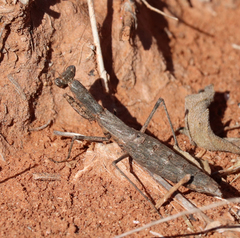
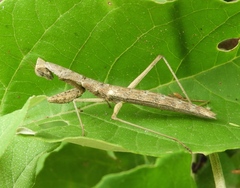
The Iberian mantis can be brown, grey or green and has very angular eyes that end in upward-pointing points. Young mantises stay low in grasses and jump quickly, making them easy to mistake for tiny grasshoppers. It is native to the Iberian Peninsula.
Source: Wikipedia
How to recognize it
Their eyes are sharply angular and taper to points that face upward and outward.
Source: Wikipedia
Where it lives
Nymphs hide low in grasses and can jump with agility.
Source: Wikipedia
Where it comes from
This species is endemic to the Iberian Peninsula.
Source: Wikipedia
Lookalikes
Because of their size and jumping ability, nymphs can be confused with small grasshoppers.
Source: Wikipedia
More photos


Same family (Amelidae)




Sources
- Wikipedia: https://en.wikipedia.org/wiki/Apteromantis_aptera
Look it up elsewhere: GBIF · iNaturalist · BugGuide · Wikipedia
Text written 2026-10-23 from the sources above and checked sentence by sentence against them. Data fetched 2026-10-23.