 Bug FAQ
Agile Ground Mantis
Litaneutria minor · Order: Mantodea · Family: Amelidae
Also called: Minor Ground Mantid
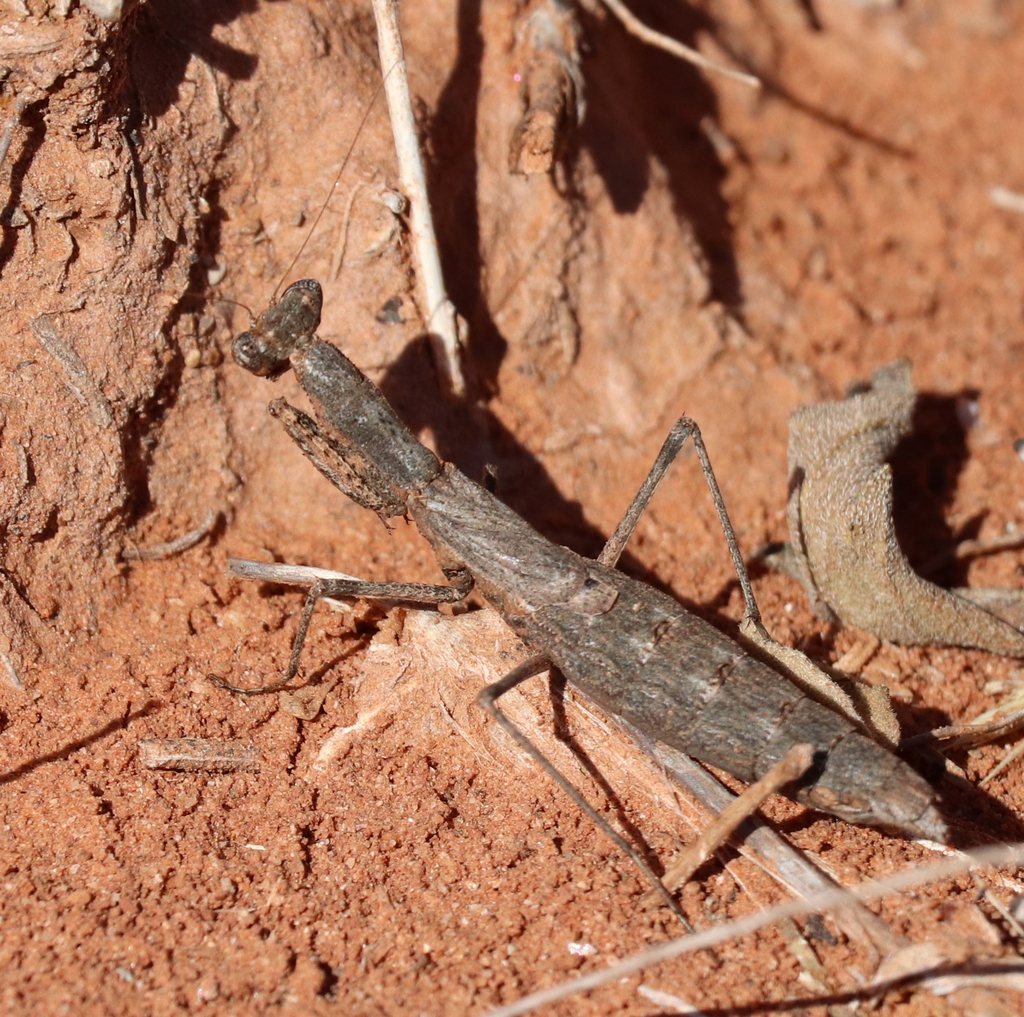
The agile ground mantis is about 30 mm long and dark grey or tan in color. It hunts on open ground or low shrubs in dry regions of the Midwest, Texas and Mexico from early spring to late summer, eating insects such as moths, flies, grasshoppers, katydids and crickets.
Source: Wikipedia
How to recognize it
Adults are generally dark grey or dark tan. Females have six abdominal segments, a rough pronotum, no wings, but may show wing pads.
Source: Wikipedia
Size
Adults measure about 30 mm (1.2 in) in length.
Source: Wikipedia
Where it lives
They are active hunters on open ground on sunny days. They also hunt on low shrubs a few centimeters above the ground.
Source: Wikipedia
What it eats
They eat moths, flies, grasshoppers, katydids and crickets. Young mantises mainly eat small flies; larger ones take any insect they can catch.
Source: Wikipedia
Life cycle
They are solitary and only meet to mate. Females lay eggs from late summer into early fall, dying later in the fall.
Source: Wikipedia
When you see it
Active hunters from early spring through late summer.
Source: Wikipedia
Where it comes from
Native to the drier parts of North America, especially the Midwest, Texas and Mexico.
Source: Wikipedia
Where it is found in the US
Recorded in 13 of 51 states and DC. Most records: Texas, Colorado, New Mexico, Oklahoma, Nebraska, Montana, Arizona, Utah.
Darker = more records. Counts are museum and citizen-science records, not population size.
Source: GBIF
Status: native in North America; native in United States. Source: iNaturalist
Months it is reported in the US
Source: GBIF
More photos
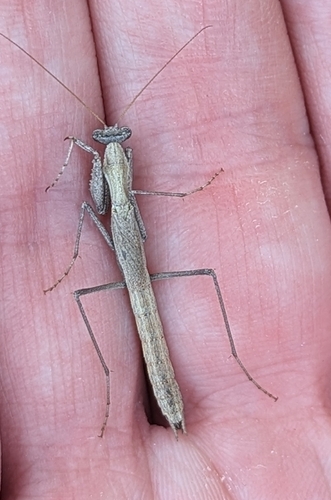
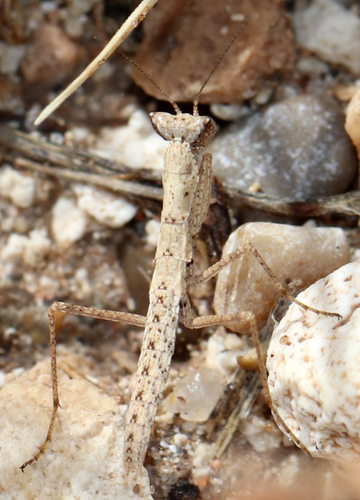
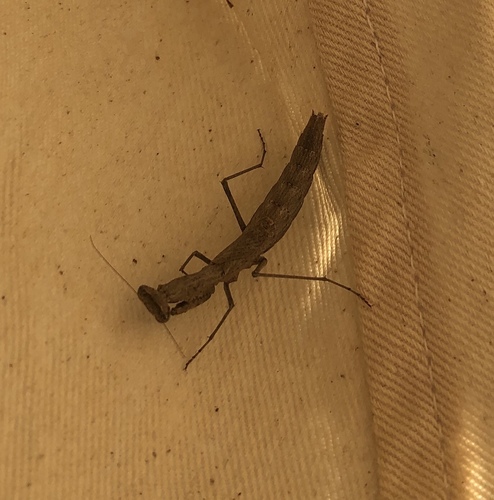
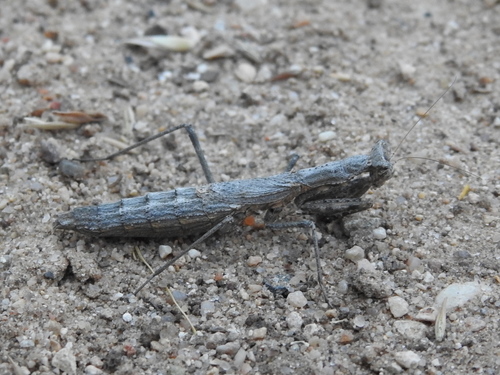
Same family (Amelidae)

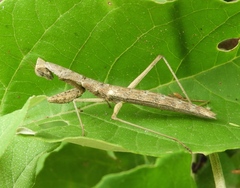
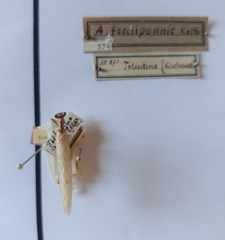
Sources
- Wikipedia: https://en.wikipedia.org/wiki/Litaneutria_minor
Look it up elsewhere: GBIF · iNaturalist · BugGuide · ITIS · Wikipedia
Text written 2026-10-23 from the sources above and checked sentence by sentence against them. Data fetched 2026-10-23.