 Bug FAQ
European Dwarf Mantis
Ameles spallanzania · Order: Mantodea · Family: Amelidae

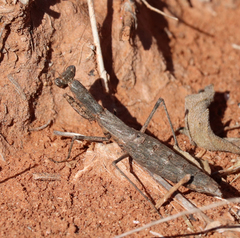
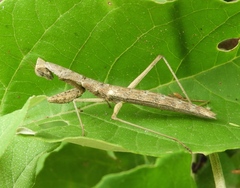
The European dwarf mantis grows to about 18 to 40 mm long and can be brown, green, ochre or grey, with slightly pointed eyes and thread-like antennae. It lives in warm, dry spots with sparse low vegetation across the Mediterranean region, from Portugal and Spain through Italy and Greece to North-African countries such as Morocco and Tunisia.
Source: Wikipedia
How to recognize it
Colours range from brown and green to ochre or grey; eyes are slightly pointed, antennae are thread-like, the pronotum is short and squared, and females have a broad abdomen that often curls upward.
Source: Wikipedia
Size
Adults reach a length of 18 to 40 mm (about 0.7 to 1.6 inches).
Source: Wikipedia
Where it lives
They prefer warm, dry places with sparse low vegetation.
Source: Wikipedia
Life cycle
Nymphs typically hatch in July and the ootheca is usually laid in September.
Source: Wikipedia
When you see it
Adults are present from late spring through late summer, with timing varying by latitude.
Source: Wikipedia
Where it comes from
Found throughout the Mediterranean, from Portugal and Spain across Italy, Greece and the Balkans to North-African countries such as Morocco, Algeria, Libya and Tunisia.
Source: Wikipedia
Lookalikes
Like the common mantis (Mantis religiosa), females may cannibalise males during mating.
Source: Wikipedia
More photos


Questions people ask
How big does the European dwarf mantis get?
Adults are 18 to 40 mm long (about 0.7 to 1.6 inches).
Source: Wikipedia
What colors and markings does it have?
It can be brown, green, ochre or grey, with slightly pointed eyes, thread-like antennae, a short squared pronotum, and females often have a curled-up abdomen.
Source: Wikipedia
Where is this mantis found?
It lives across the Mediterranean region, from Portugal and Spain through Italy, Greece and the Balkans to North-African countries such as Morocco, Algeria, Libya and Tunisia.
Source: Wikipedia
Same family (Amelidae)



Sources
- Wikipedia: https://en.wikipedia.org/wiki/Ameles_spallanzania
Look it up elsewhere: GBIF · iNaturalist · BugGuide · Wikipedia
Text written 2026-10-23 from the sources above and checked sentence by sentence against them. Data fetched 2026-10-22.