 Bug FAQ
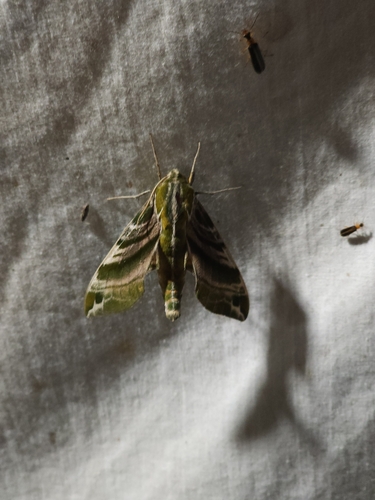
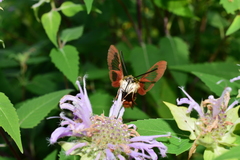
Hydrangea Sphinx
Darapsa versicolor · Order: Lepidoptera · Family: Sphingidae
Also called: Hydrangea Sphinx Moth
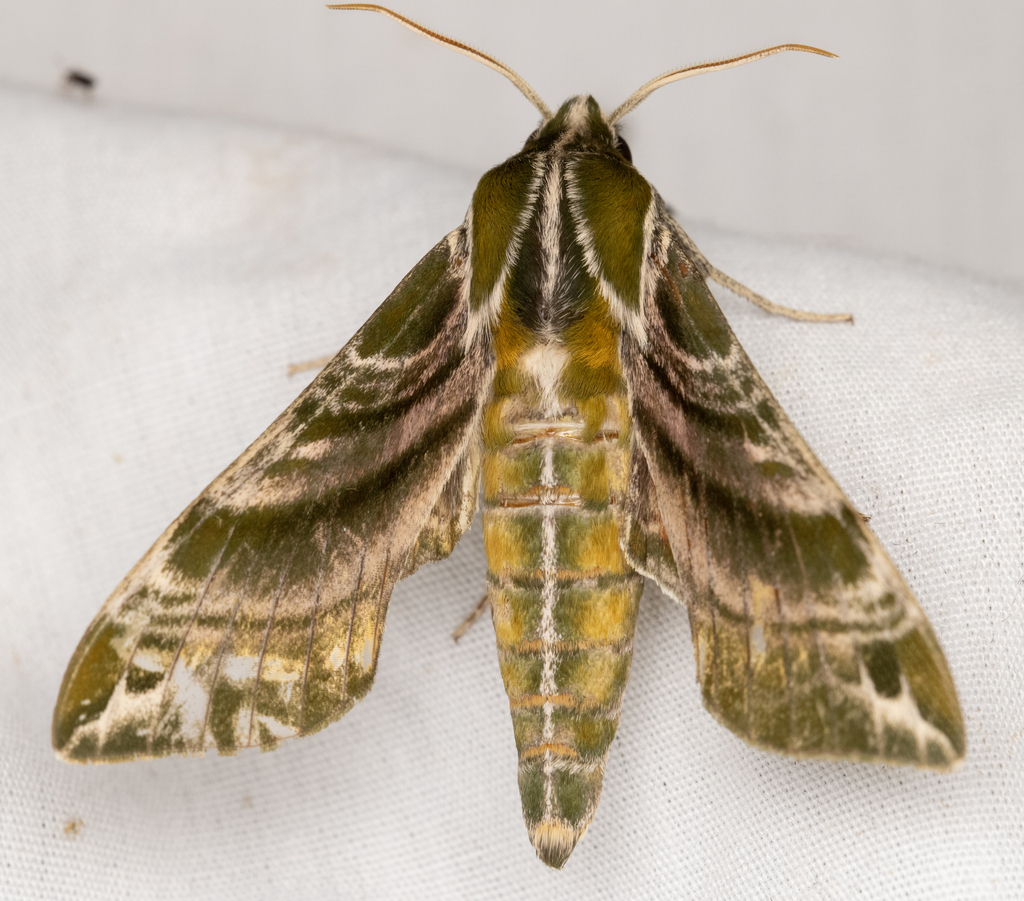
Caterpillars feed on wild hydrangea, buttonbush and water-willow, and adults are on the wing from June to July in the north and throughout the warm months farther south.
Source: Wikipedia
Size
Wingspan ranges from 58 mm to 80 mm.
Source: Wikipedia
Life cycle
In the northern part of its range there is one flight period from June to July; in the southern range adults appear during the warm months.
Source: Wikipedia
When you see it
Flight time mirrors the life-cycle timing: June-July up north and warm months farther south.
Source: Wikipedia
Where it is found in the US
Recorded in 30 of 51 states and DC. Most records: Massachusetts, Ohio, Florida, Michigan, Connecticut, North Carolina, Kentucky, New York.
Darker = more records. Counts are museum and citizen-science records, not population size.
Source: GBIF
Status: native in North America; native in Canada. Source: iNaturalist
Months it is reported in the US
Source: GBIF
More photos
Questions people ask
When are adult Hydrangea Sphinx moths active?
In the north they fly from June to July; in the south they are seen during the warm months.
Source: Wikipedia
What do the caterpillars eat?
They feed on wild hydrangea, buttonbush and water-willow.
Source: Wikipedia
Same family (Sphingidae)

Sources
- Wikipedia: https://en.wikipedia.org/wiki/Darapsa_versicolor
Look it up elsewhere: GBIF · iNaturalist · BugGuide · ITIS · Wikipedia
Text written 2026-10-25 from the sources above and checked sentence by sentence against them. Data fetched 2026-10-25.